
Android Find Hub trackers continue to ignore UWB – here’s why
Android Find Hub Trackers Skip UWB: The Hidden Battle Between Apple, Google, and Fragmentation
The Precision Finding Paradox: Why Your Android Tracker Probably Doesn’t Have Ultra-Wideband
When Apple unveiled AirTag’s “Precision Finding” feature, it seemed like the future of item tracking had arrived. Using Ultra-Wideband (UWB) technology, AirTag owners could point their iPhone in any direction and see exactly how far away their lost keys or wallet were—down to the centimeter. It was magic. It was revolutionary. And it’s the single most requested feature Android users want in their Find Hub trackers.
So why, in 2026, are we still waiting?
The UWB Dream: Precision That Changes Everything
Ultra-Wideband isn’t just another Bluetooth upgrade—it’s a fundamental shift in how devices communicate spatially. While Bluetooth can tell you “your keys are somewhere in this 30-foot radius,” UWB tells you “your keys are exactly 4.2 feet away, slightly to your left, behind the couch cushion.”
For tracking small, frequently lost items like wallets, keys, or AirPod cases, this precision is genuinely game-changing. You’re not just getting warmer or colder—you’re following an arrow on your screen that points directly to your lost item, with distance counting down in real-time as you approach.
It’s the difference between searching your entire living room and knowing your keys are specifically in the third drawer of your coffee table.
The Fragmentation Problem Nobody Talks About
Here’s the brutal truth: Android itself doesn’t prioritize UWB hardware.
While every iPhone since the iPhone 11 has shipped with UWB capabilities, Android’s flagship lineup tells a different story. The Pixel 10, Samsung’s mass-market Galaxy S25, OnePlus 15, Nothing Phone (3), Honor Magic 8 Pro, and Oppo Find X9—all $800+ devices—lack UWB entirely.
Even Samsung, one of Android’s biggest players, has actively restricted UWB functionality. The company limited UWB on older phones exclusively to its own Galaxy SmartTag ecosystem, blocking third-party trackers like Moto Tag from leveraging that hardware. This isn’t just neglect—it’s active obstruction.
As the smartphone market increasingly shifts toward premium devices, Android as a platform simply doesn’t make UWB a priority. And that creates a massive chicken-and-egg problem for tracker manufacturers.
Apple’s Walled Garden: The Real Reason UWB Is Missing
But hardware fragmentation is only half the story. The bigger reason Android trackers skip UWB? Apple.
UWB is an AirTag exclusive, and Apple seems determined to keep it that way. The company has a long history of severely limiting third-party accessory functionality—whether it’s smartwatches, headphones, or trackers. UWB is just the latest battleground.
Tile has been fighting this battle for years, even taking Apple to court over anti-competitive practices. The reality is simple: if you want to make a tracker for Apple’s Find My network, you’re limited to Bluetooth. Period.
This creates an impossible situation for manufacturers. Why would anyone building a tracker that supports both Apple’s Find My and Android’s Find Hub networks bother including UWB? It adds significant cost but only works for a fraction of potential users.
The Cost Problem: UWB Silicon Isn’t Cheap
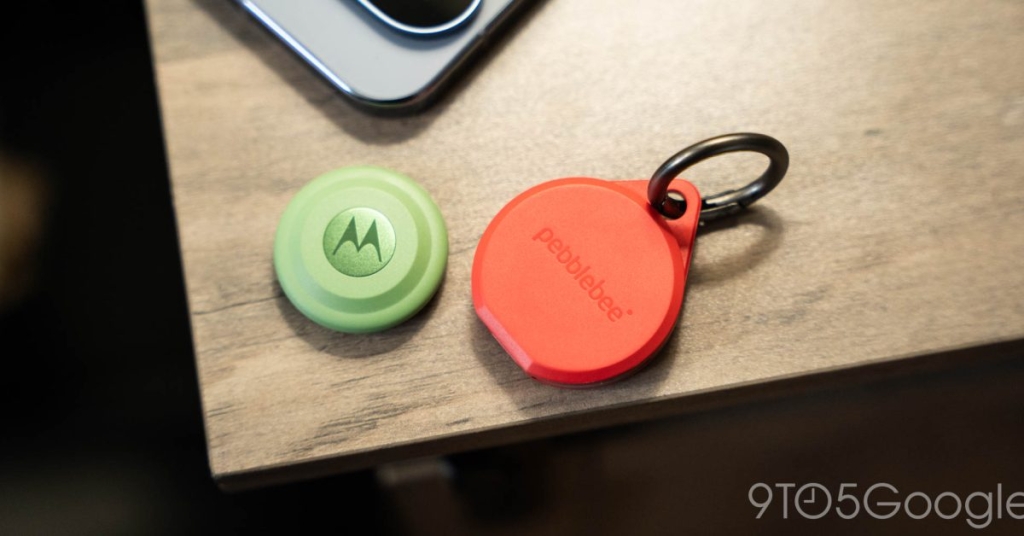
“Creating a version that only enables UWB on one platform (Android) but not the other (iOS) would be confusing for customers,” explains Daniel Daoura, founder and CEO of Pebblebee, one of Android’s leading tracker manufacturers.
But cost is the real killer. “UWB silicon still adds meaningful cost,” Daoura notes. In a market where AirTag already undercuts most third-party accessories ($29.99 vs Pebblebee’s $34.99), every additional dollar matters.
Instead of chasing UWB, Pebblebee has focused on what users actually want: “We consistently hear from users… that fast audible alerts and bright visual cues solve most real-world problems. People want their item to ring loudly or flash so they can find it quickly.”
The result? Pebblebee Clip 5 features a louder speaker and brighter LEDs than AirTag 2, solving the same problem through different means.
The Chicken-and-Egg Problem From Hell
Right now, UWB support for Android Find Hub trackers exists in a perfect storm of dysfunction:
- Tracker makers don’t have incentive to support UWB if Apple blocks it and most Android phones don’t support it anyway
- Android manufacturers don’t have incentive to include UWB hardware if there are no actual use cases
- Apple has no incentive to expand UWB to third-party devices because they want to sell you AirTags
It’s a three-way stalemate where everyone waits for someone else to move first.
The Double Network Problem
Things get even more complicated when you consider that most modern trackers support both Apple’s Find My and Android’s Find Hub networks. This dual compatibility is great for consumers but creates additional complexity for manufacturers.
We’ve heard from multiple sources that Apple’s terms explicitly block trackers from supporting both networks simultaneously. The current system—pairing to one network or the other and resetting to swap—is the best we’ll get for the foreseeable future.
This means any UWB implementation would need to work seamlessly across both ecosystems, adding another layer of complexity and cost.
What Users Actually Want (It’s Not UWB)
Here’s the irony: despite all the comments and forum posts demanding UWB, the data suggests users care more about practical functionality.
Pebblebee’s research shows that loud ringtones and bright visual indicators are what actually solve real-world problems. When your keys are lost somewhere in your house, you want something that makes noise until you find it, not a precise distance reading that tells you it’s somewhere within 10 feet.
The company’s latest Clip 5 tracker is specifically designed around these insights—louder speakers, brighter LEDs, and a design that’s impossible to miss. And it works. Users find their items faster with these practical features than they would with theoretical UWB precision.
The Moto Tag Exception: Why It Exists
There is one Android Find Hub tracker with UWB: the Moto Tag. And there’s a sequel, the Moto Tag 2, on the way.
Why did Motorola make this investment when others haven’t? Several factors align perfectly:
- Motorola is part of Lenovo, which has deep ties to UWB technology
- The company has less dependency on Apple’s ecosystem than pure consumer electronics brands
- Moto Tag is positioned as a premium, feature-complete option rather than a budget alternative
- Motorola can afford to take risks that smaller tracker manufacturers cannot
But even Moto Tag is the exception that proves the rule. One device in a sea of Bluetooth-only trackers.
The Future: Will UWB Ever Arrive?
Change is possible, but it requires movement from multiple players simultaneously:
- Android manufacturers need to make UWB standard across their device lineups
- Apple needs to open up UWB to third-party accessories (unlikely but not impossible)
- Tracker makers need to see clear ROI on UWB implementation
- Consumers need to demand UWB loudly enough to justify the cost
Realistically, we’re looking at a 3-5 year timeline before UWB becomes mainstream in Android tracking, assuming all parties move in the right direction.
The Bottom Line
UWB is genuinely revolutionary technology that could transform how we find lost items. The implementation in AirTag proves its potential. But the current state of the smartphone and accessory markets makes widespread adoption nearly impossible.
Hardware fragmentation, Apple’s walled garden, cost considerations, and practical user preferences all conspire to keep UWB out of most Android trackers. It’s not a conspiracy—it’s just the messy reality of a fragmented tech ecosystem.
For now, if you want Precision Finding, you’ll need to buy an iPhone and an AirTag. Everyone else will have to make do with Bluetooth, loud ringtones, and bright lights.
And surprisingly, that might be good enough.
Tags: #UWB #Android #FindHub #AirTag #PrecisionFinding #Fragmentation #Apple #Google #MotoTag #Pebblebee #TechNews #Smartphone #Tracking #Accessories #Hardware #Software #Ecosystem #Competition
Viral Sentences:
- “UWB is the future of tracking, but Apple won’t let Android have it”
- “Why your expensive Android phone probably doesn’t have UWB”
- “The real reason Android trackers skip Precision Finding”
- “Apple’s walled garden just got a new wall: UWB”
- “Fragmentation isn’t just about software anymore”
- “The chicken-and-egg problem killing Android tracking innovation”
- “Loud noises beat precise distances when you’re panicking over lost keys”
- “Moto Tag is the exception that proves the rule”
- “3-5 years until Android catches up to AirTag’s Precision Finding”
- “Sometimes the simple solution is better than the technically superior one”
,

Leave a Reply
Want to join the discussion?Feel free to contribute!