
Antarctica Has Lost Ice Equal to 10 Los Angeles–Sized Cities in 30 Years
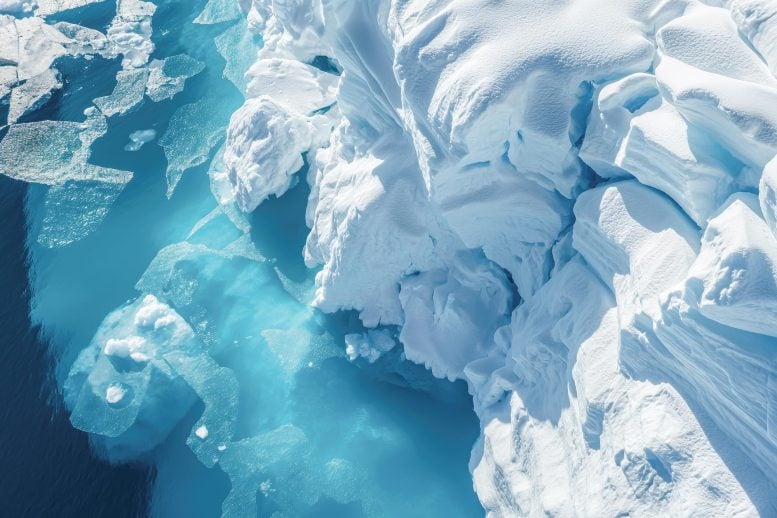
Antarctica’s Ice Retreat Mirrors the Loss of 10 Los Angeles–Sized Cities in Just Three Decades
In a sweeping, continent-wide investigation that spans 30 years of satellite data, glaciologists at the University of California, Irvine, have unveiled the first comprehensive map showing how Antarctica’s grounding line—the critical boundary where ice sheets detach from bedrock and begin floating on the ocean—has shifted over time. This groundbreaking research, published in Nature Geoscience, paints a sobering picture of the continent’s rapid transformation and offers new insights into the mechanisms driving global sea-level rise.
The study, which analyzed three decades of radar data from multiple satellite missions, reveals that Antarctica has lost ice mass equivalent to 10 cities the size of Los Angeles. To put that into perspective, the total ice loss amounts to over 37,000 square kilometers—an area larger than the state of Maryland. This dramatic reduction is not evenly distributed across the continent; instead, it is concentrated in regions where warm ocean currents are eroding the undersides of ice shelves, causing them to thin and retreat inland.
Grounding lines are crucial indicators of ice sheet stability. When these lines retreat, it often signals that ice is melting from below, accelerated by warming ocean waters. The UC Irvine team’s analysis found that the most significant changes have occurred in West Antarctica, particularly in the Amundsen Sea Embayment and the Antarctic Peninsula. Here, glaciers such as Thwaites and Pine Island have experienced some of the fastest grounding line retreats on the planet, with some sections moving inland by several kilometers per year.
What makes this study particularly significant is its scale and precision. By combining data from multiple satellite missions—including ESA’s ERS-1 and ERS-2, NASA’s ICESat, and the European Copernicus Sentinel-1 constellation—the researchers were able to track changes across the entire Antarctic coastline. This continent-wide approach provides a holistic view of how the ice sheet is responding to climate change, something that piecemeal studies could never achieve.
The implications of this ice loss are profound. As Antarctic ice melts and flows into the ocean, it contributes directly to global sea-level rise. Current estimates suggest that Antarctica’s contribution to rising seas has tripled over the past decade. If the current rate of ice loss continues, it could lead to significant increases in coastal flooding, threatening millions of people living in low-lying areas around the world.
But the story doesn’t end with ice loss. The retreat of grounding lines can also destabilize entire ice shelves, which act as natural barriers slowing the flow of glaciers into the ocean. Once these shelves collapse, glaciers can accelerate their flow, leading to even more rapid ice loss. This feedback loop is one of the key concerns among climate scientists, as it could push parts of Antarctica past irreversible tipping points.
The UC Irvine study also highlights the role of ocean warming in driving these changes. While atmospheric temperatures influence ice melt at the surface, it is the warming of deep ocean currents—particularly the Circumpolar Deep Water—that is most responsible for the rapid thinning of ice shelves from below. This underscores the interconnectedness of the Earth’s climate systems and the far-reaching impacts of greenhouse gas emissions.
Despite the alarming findings, the researchers emphasize that their work also provides a foundation for future monitoring and prediction. By establishing a detailed baseline of grounding line positions, scientists can now more accurately model how Antarctica will respond to ongoing and future climate change. This is crucial for improving projections of sea-level rise and for informing global climate policy.
The study’s lead author, Dr. Eric Rignot, a renowned glaciologist at UC Irvine, stressed the importance of continued observation. “Antarctica is changing faster than we ever imagined,” he said. “Our ability to monitor these changes from space has been critical, but we need to keep watching, because what happens in Antarctica doesn’t stay in Antarctica—it affects the entire planet.”
As the world grapples with the realities of climate change, this research serves as both a warning and a call to action. The loss of ice the size of 10 Los Angeles–sized cities is not just a statistic; it is a tangible sign of the profound changes underway at the Earth’s poles. With sea levels rising and coastal communities increasingly at risk, the need for urgent, coordinated global efforts to reduce emissions and adapt to climate impacts has never been clearer.
Tags/Viral Phrases:
Antarctica ice loss, grounding line retreat, sea-level rise, climate change impact, West Antarctica glaciers, Thwaites Glacier, Pine Island Glacier, ice shelf collapse, global warming, ocean warming, satellite radar data, UC Irvine glaciology, Antarctic Peninsula, Amundsen Sea Embayment, irreversible tipping points, coastal flooding, climate policy, Earth’s poles, urgent climate action, greenhouse gas emissions, Circumpolar Deep Water, satellite monitoring, ice sheet stability, planetary transformation.
,
Leave a Reply
Want to join the discussion?Feel free to contribute!