
Antarctica Will See a Rare ‘Ring of Fire’ Solar Eclipse This Week : ScienceAlert
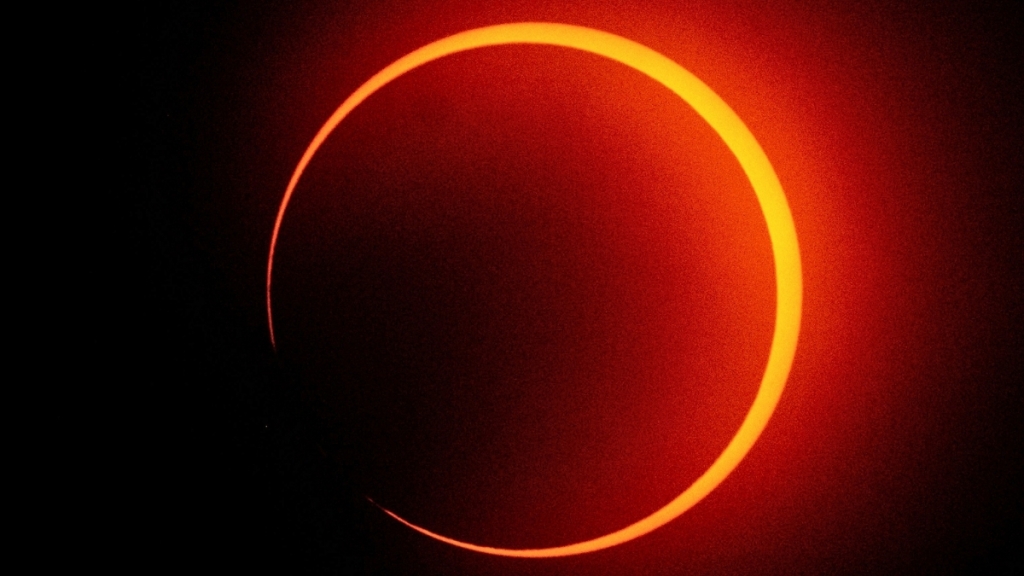
In a celestial spectacle that will unfold far from the crowds and city lights, the first solar eclipse of the year is set to dazzle only the most remote—and perhaps the most adorable—audience on Earth. On Tuesday, an annular solar eclipse, often called the “ring of fire,” will paint the skies above Antarctica in a mesmerizing display, leaving behind a glowing halo as the Moon partially obscures the Sun. While most of the world will miss out on the full show, those stationed at research outposts in the southernmost continent—and the penguins that call it home—will have front-row seats to this astronomical marvel.
“This is one of those rare cosmic coincidences that makes you appreciate the elegance of our solar system,” said Emily Rice, astrophysicist at the City University of New York. “The Moon, though much smaller than the Sun, appears almost exactly the same size in our sky because of its distance. When they align perfectly, magic happens.”
Unlike a total solar eclipse, where the Moon completely covers the Sun, an annular eclipse occurs when the Moon is slightly farther from Earth in its elliptical orbit. This leaves a brilliant ring—or annulus—of sunlight visible around the Moon’s dark silhouette. “It’s as if the Sun gets its core taken out,” explained Joe Llama, astronomer at Lowell Observatory. “What remains is this breathtaking ring of fire in the sky.”
For those lucky enough to be in Antarctica, the experience will be unforgettable. Researchers stationed at bases like McMurdo or Amundsen-Scott South Pole Station will witness the event in one of the most pristine and isolated environments on the planet. And according to Llama, the local wildlife is in for a treat too. “The penguins down there are going to have a great show,” he quipped, imagining the tuxedoed birds gazing skyward in bewildered awe.
While the full annular eclipse will only be visible in Antarctica, a partial eclipse will be visible across parts of South America and southeastern Africa. Observers in the southern tips of Chile and Argentina, as well as in Madagascar, Lesotho, and South Africa, will see a “bite” taken out of the Sun—a celestial appetizer for the main course enjoyed by Antarctic denizens.
Solar eclipses occur when the Sun, Moon, and Earth align in perfect syzygy, with the Moon casting its shadow onto Earth’s surface. These events are relatively rare for any given location, making each one a highly anticipated astronomical event. The last total solar eclipse swept across North America in 2024, and another is on the horizon for August, promising a total eclipse visible from Greenland, Iceland, Spain, Russia, and parts of Portugal, with a partial view for much of Europe, Africa, and North America.
Of course, witnessing a solar eclipse—whether total, annular, or partial—requires proper eye protection. Looking directly at the Sun, even when it’s mostly covered, can cause severe and permanent eye damage. Certified eclipse glasses that meet ISO 12312-2 safety standards are essential. Be wary of counterfeit glasses, which may claim compliance but fail to provide adequate protection. Regular sunglasses, no matter how dark, are not safe for eclipse viewing.
For those who prefer a more indirect approach, there are creative ways to experience the eclipse safely. Crafting a pinhole projector using cardboard and aluminum foil, or simply holding up a colander or cheese grater to the sunlight, can project the crescent or ring shapes onto the ground, allowing you to watch the eclipse’s progress without risking your eyesight.
As the countdown to this rare Antarctic eclipse begins, astronomers and skywatchers alike are reminded of the delicate dance of celestial mechanics that makes such events possible. Whether you’re bundled up on the icy plains of Antarctica, gazing from the southern reaches of South America, or crafting a pinhole viewer in your backyard, this “ring of fire” promises to be a moment of cosmic wonder—a fleeting reminder of our place in the vast, beautiful universe.
#SolarEclipse2025 #RingOfFire #AntarcticaEclipse #CelestialEvents #SpaceScience #AstronomyLovers #PenguinEclipse #Skywatching #CosmicCoincidence #EclipseSafety #SolarPhenomenon #Astrophysics #MoonAndSun #NatureWonders #RareCelestialEvent #ScienceAlert #EclipseGlasses #PinholeProjector #SolarAlignment #Eclipse2025 #AntarcticResearch #SpaceExploration #CosmicMagic #SolarSystem #EclipseChasers #NatureLovers #ScienceNews #AstronomicalEvent #EclipseMania #SkyGazersUnite,


Leave a Reply
Want to join the discussion?Feel free to contribute!