
Antarctica’s ‘Gravity Hole’ Has Been Quietly Growing Stronger
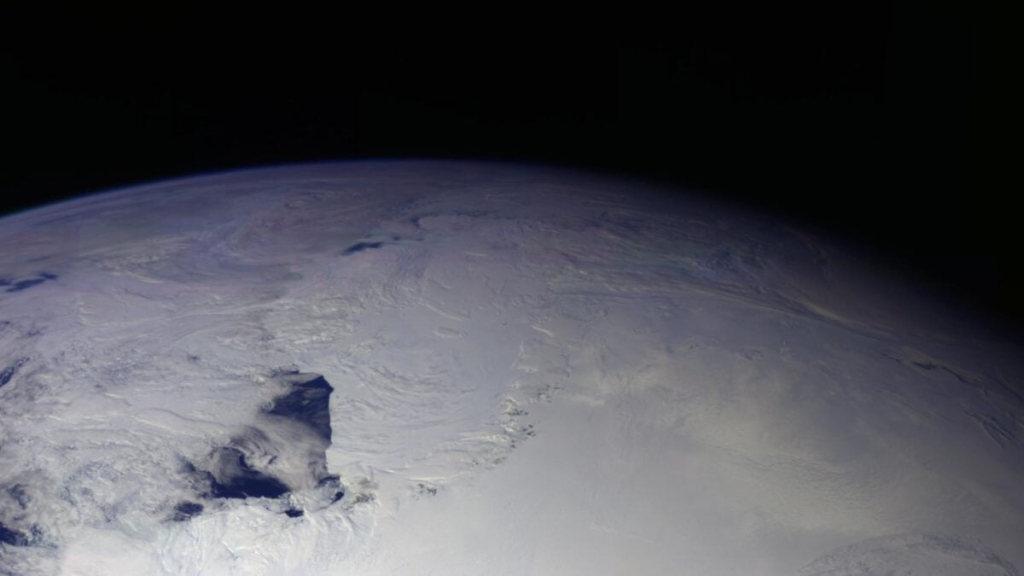
Scientists Uncover the Mystery Behind Antarctica’s Massive Gravity Hole—And It Could Change Everything We Know About Climate Change
For decades, scientists have puzzled over a bizarre anomaly lurking beneath Antarctica—a “gravity hole” where Earth’s gravitational pull is significantly weaker than anywhere else on the planet. Now, a groundbreaking new study may finally explain this cosmic mystery, and the implications could be far more significant than anyone imagined.
The Discovery That’s Shaking the Scientific World
Picture this: an invisible depression in Earth’s gravitational field, stretching across the frozen continent of Antarctica. This isn’t science fiction—it’s a real phenomenon that has baffled researchers for years. The gravity hole, formally known as a “gravity low,” represents a broad depression in Earth’s gravity field caused by a deficit of mass at depth.
What makes this discovery particularly alarming is its timing. As Antarctica faces unprecedented threats from climate change, with ice sheets melting at alarming rates and sea levels rising globally, understanding these gravitational anomalies has become more critical than ever.
The Hidden Forces Shaping Our Planet
The geoid—Earth’s irregular ocean surface shaped by gravitational influence—isn’t uniform across the globe. While these differences are subtle enough that you’d never notice them in your daily life (no one’s flying off into space or getting crushed by gravitational anomalies), they have profound effects on our planet’s oceans and climate systems.
Water naturally flows toward areas of stronger gravity, which means regions with lower gravity, like Antarctica, typically experience lower-than-expected sea levels. This gravitational dance between Earth’s interior and its surface waters plays a crucial role in global climate patterns.
A Journey 70 Million Years in the Making
The recent study, published in Scientific Reports, took an unprecedented approach to understanding this phenomenon. Researchers essentially performed a CT scan of the entire Earth, but instead of X-rays, they used earthquakes as their illuminating “light.”
“Imagine doing a CT scan of the whole Earth, but we don’t have X-rays like we do in a medical office. We have earthquakes,” explained Alessandro Forte, the study’s senior author and a geophysicist at the University of Florida. “Earthquake waves provide the ‘light’ that illuminates the interior of the planet.”
By analyzing global earthquake recordings and combining seismic, geodynamic, and mineral-physics data, the team reconstructed the 3D structure inside Earth. They then used sophisticated techniques to “rewind the flow of rocks in the interior and track changes back 70 million years.”
The Ancient Origins of Today’s Mystery
The simulations revealed a fascinating story of Earth’s interior dynamics. Initially, a cold, dense material sinking into the deep mantle drove the gravity low near Antarctica. But between roughly 50 and 30 million years ago, something dramatic happened: hotter, lighter mantle began rising from deep inside, redistributing mass across the continent.
This combination of cold, sinking mantle and hot, rising mantle created an amplified deficit of mass below Antarctica, explaining the gravity hole we observe today. It’s a perfect example of how Earth’s interior processes, occurring over millions of years, continue to shape our planet’s surface and climate.
Why This Matters More Than Ever
The implications of this discovery extend far beyond academic curiosity. Since sea levels and tide dynamics influence climate patterns, understanding the gravity hole could provide crucial insights into Antarctica’s geological history and its future under climate change.
“If we can better understand how Earth’s interior shapes gravity and sea levels, we gain insight into factors that may matter for the growth and stability of large ice sheets,” Forte emphasized.
This research comes at a critical time when Antarctica’s ice sheets are under unprecedented stress. The West Antarctic Ice Sheet alone contains enough ice to raise global sea levels by about 3.3 meters if completely melted. Understanding the gravitational anomalies beneath this ice could help scientists better predict how these massive ice formations will respond to warming temperatures.
The Bigger Picture: Earth’s Hidden Engine
This discovery reminds us that Earth is a dynamic, living planet with complex systems operating on timescales far beyond human perception. The gravity hole isn’t just a curiosity—it’s a window into the planet’s deep interior processes that continue to influence surface conditions today.
As climate change accelerates and Antarctica faces mounting threats, every piece of knowledge about this remote continent becomes crucial. The gravity hole represents just one of many mysteries hidden beneath the ice, each potentially holding keys to understanding our planet’s past, present, and future.
Tags: Antarctica gravity hole, climate change mystery, Earth’s gravitational anomalies, seismic research breakthrough, polar science discovery, climate change Antarctica, gravity field depression, Earth interior dynamics, rising sea levels, ice sheet stability, geological history, mantle convection, climate science breakthrough, planetary physics, environmental crisis
Viral Phrases: “Earth’s biggest gravity mystery finally solved,” “Antarctica’s hidden force that could change climate science forever,” “The gravity hole that’s been hiding under Antarctica for millions of years,” “Scientists use earthquakes to X-ray the entire planet,” “Climate change’s secret weapon: Earth’s interior,” “The invisible force shaping Antarctica’s future,” “70 million years of Earth’s secrets revealed,” “Gravity anomaly that could predict sea level rise,” “The cosmic mystery beneath the ice,” “Earth’s CT scan reveals climate change clues”
,


Leave a Reply
Want to join the discussion?Feel free to contribute!