
Ants attack their nest-mates because pollution changes their smell
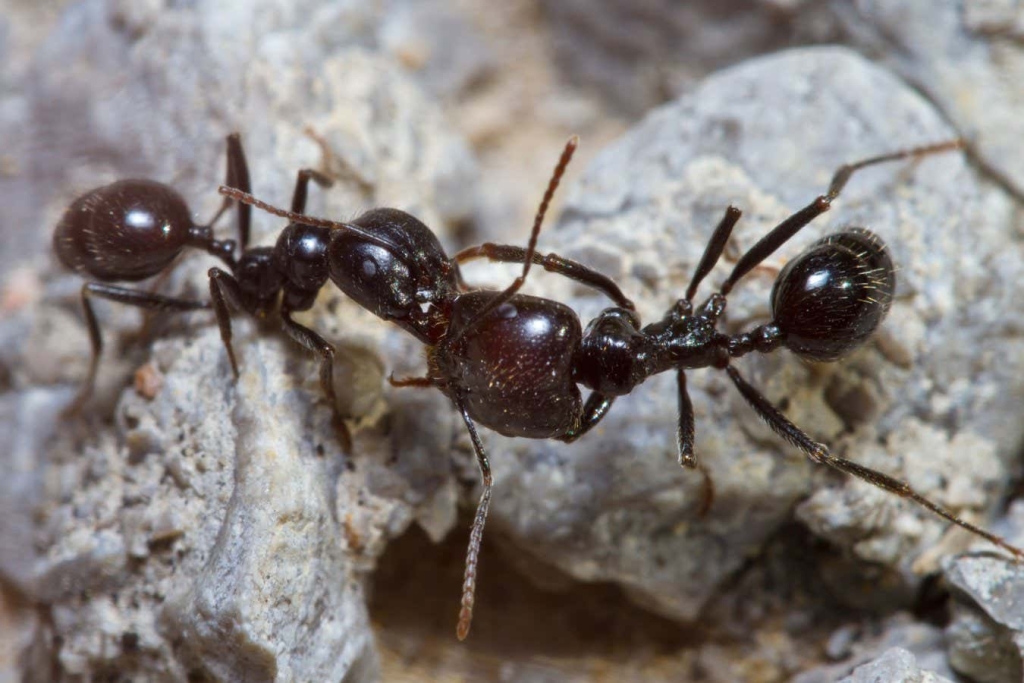
Air Pollution Turns Ants into Traitors: How Ozone Is Disrupting the Chemical Language of Nature’s Tiny Warriors
In a startling discovery that could have far-reaching consequences for ecosystems worldwide, researchers have uncovered that common air pollutants—particularly ozone—are literally changing the way ants smell, causing them to attack their own nest-mates as if they were foreign invaders.
The research, conducted by scientists at the Max Planck Institute for Chemical Ecology in Jena, Germany, reveals a disturbing new dimension to the global air pollution crisis. When exposed to ozone levels comparable to those found in many urban areas during summer months, ants undergo chemical changes that transform their scent profiles, effectively turning them into strangers to their own colonies.
The Chemical Language of Ant Society
Ants have evolved an extraordinarily sophisticated chemical communication system. Each colony develops a unique scent signature composed of various chemical compounds, particularly alkenes, which allows members to distinguish between friend and foe with remarkable precision. When an ant encounters another individual whose scent doesn’t match the colony’s signature, the response is immediate and aggressive: biting, wrestling, and in some cases, lethal attacks.
This chemical recognition system has been refined over millions of years of evolution, creating tightly knit societies where cooperation and collective defense are paramount. Worker ants will sacrifice their lives to protect the colony, and the entire social structure depends on accurate chemical identification.
Ozone: The Invisible Saboteur
Ozone, a greenhouse gas produced primarily by vehicle emissions and industrial activities, acts as a chemical saboteur. When ants are exposed to ozone, the gas breaks down the molecular structure of alkenes—the very compounds that form the foundation of their colony-specific scents.
Markus Knaden, who led the research team, described the findings as unexpected. “I did not expect it, I have to say,” Knaden admitted. “Because knowing that alkenes are such a minor part [of the ants’ scent], we knew that whatever we did with ozone would only change maybe 2 per cent or 5 per cent of the blend.”
Yet even these seemingly minor chemical alterations proved sufficient to trigger aggressive responses from nest-mates who suddenly perceived their companions as intruders.
Laboratory Experiments Reveal a Troubling Pattern
The research team conducted controlled experiments using six different ant species, creating artificial colonies in laboratory settings. Individual ants were removed from their colonies and placed in glass chambers filled with various concentrations of ozone. Some chambers contained ozone levels matching those measured in Jena during summer months—levels that many urban areas around the world routinely experience.
When these ozone-exposed ants were returned to their colonies, the results were dramatic. Their nest-mates immediately recognized something was wrong with their scent and launched aggressive attacks, biting and attempting to drive away what they perceived as dangerous intruders.
Beyond Simple Aggression: Ecosystem-Wide Implications
The implications extend far beyond ants attacking each other. Daniel Kronauer, a researcher at The Rockefeller University who was not involved in the study, emphasized that alkenes play crucial roles in multiple ant behaviors beyond nest-mate recognition. These chemical compounds are essential for trail following, larval care, and communication between different life stages within the colony.
The research found that ozone exposure caused adult clonal raider ants (Ooceraea biroi) to neglect their larvae—a potentially devastating outcome for colony survival. If adult ants cannot properly care for their young due to chemical confusion, entire colonies could collapse.
Ants: The Unsung Heroes of Terrestrial Ecosystems
Kronauer stressed the critical importance of ants to global ecosystems: “If you took the ants out of most terrestrial ecosystems, they would probably collapse.” This isn’t hyperbole—ants perform essential ecological services that maintain the balance of life on Earth.
Ants are nature’s primary seed dispersers, moving countless seeds across landscapes and facilitating plant reproduction. They are master soil engineers, aerating earth, mixing nutrients, and creating channels that allow water and air to penetrate deep into the ground. Many species have evolved mutualistic relationships with other organisms, from protecting aphids in exchange for honeydew to dispersing the seeds of specific plants.
The loss or disruption of ant populations would trigger cascading effects throughout food webs, potentially leading to ecosystem collapse in many regions.
A Growing Crisis for Insect Populations
This research adds to mounting evidence that air pollution is a significant factor in the global decline of insect populations. Insects worldwide are experiencing dramatic population crashes, with some studies suggesting that up to 40% of insect species could face extinction in the coming decades.
While habitat loss, pesticide use, and climate change have been identified as primary drivers of this decline, the impact of air pollutants like ozone represents a newly recognized threat. Unlike pesticides that directly kill insects, ozone pollution causes subtle but profound disruptions to their behavior, communication, and survival strategies.
The Hidden Costs of Modern Air Quality
The findings raise troubling questions about current air quality standards. While ozone levels that trigger these ant behavioral changes may not yet pose direct threats to human health, the research demonstrates that atmospheric pollution has costs we’ve barely begun to understand.
“We just should know that what we are doing has additional costs that we have maybe not thought about before,” Knaden cautioned. The study reveals that even pollution levels considered acceptable for human health may be silently undermining the chemical communication systems that countless species depend upon for survival.
Future Research Challenges
Understanding the full scope of ozone’s impact on ant colonies and ecosystems presents significant research challenges. Laboratory experiments can demonstrate immediate behavioral changes, but capturing the long-term effects on colony efficiency, reproduction, and survival in natural settings requires complex field studies that are difficult to design and execute.
The research team acknowledges that while ozone exposure clearly triggers aggressive responses, the broader implications for colony function and ecosystem health need further investigation. However, the potential for widespread disruption is significant, given the fundamental role that chemical communication plays in insect societies.
A Call for Broader Environmental Protection
This research underscores the need for environmental protection policies that consider the impacts of air pollution on all species, not just humans. Current air quality standards focus primarily on human health outcomes, but the evidence suggests that atmospheric pollutants may be causing subtle yet profound disruptions to the natural world.
As urbanization continues and air pollution levels rise in many parts of the world, the chemical language of nature faces increasing interference. From disrupting ant communication to altering plant-pollinator interactions, ozone and other pollutants may be silently rewriting the rules of ecological interaction.
The study serves as a stark reminder that in our interconnected world, changes to the atmosphere affect every living thing, from the smallest insect to the largest ecosystem. The chemical conversations that have guided life on Earth for millions of years are being disrupted, and the consequences may be far more severe than we currently understand.
Tags: ozone pollution, ant behavior, chemical communication, ecosystem disruption, insect decline, air quality, Max Planck Institute, climate change, biodiversity loss, environmental science, colony collapse, atmospheric chemistry, ecological impact, pollinators, soil health, seed dispersal, chemical ecology, urban pollution, greenhouse gases, environmental protection
Viral Sentences: Ants attacking their own family due to air pollution, Ozone is making insects go to war with each other, The invisible chemical war happening in our atmosphere, When pollution makes nature’s tiny warriors turn on each other, Ants are the unsung heroes keeping our ecosystems alive, This discovery changes everything we thought we knew about air pollution, The hidden cost of clean air standards, Nature’s chemical language is being hacked by human pollution, Ants could disappear and take entire ecosystems with them, The domino effect that could collapse terrestrial life, Science just found another reason why insects are vanishing worldwide, Ozone is the silent killer of insect communication, When good air quality isn’t good enough for nature, The chemical confusion causing insect society to break down, Ants are more important than you ever realized, This is why we can’t ignore air pollution anymore, The butterfly effect starting with confused ants, Nature’s most sophisticated society is being disrupted, The unexpected way pollution is destroying insect populations, Ants are telling us something important about our atmosphere
,

Leave a Reply
Want to join the discussion?Feel free to contribute!