
Apple almost rebuilt Siri around Claude
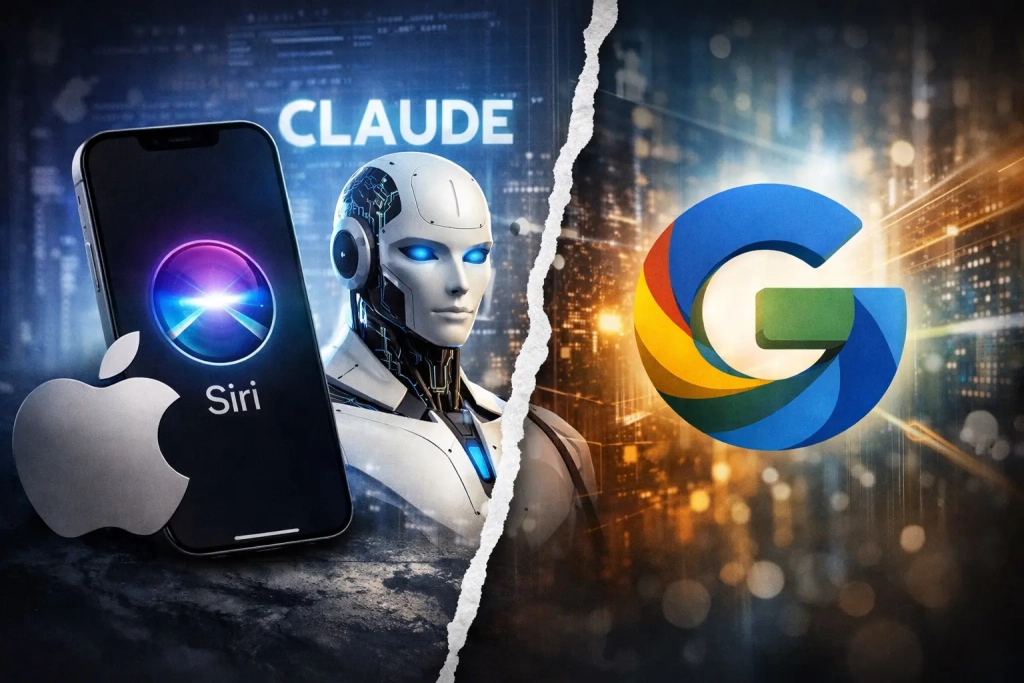
Apple’s Secret AI Arsenal: How Anthropic’s Claude Powers the Tech Giant from Within
In a stunning revelation that’s sending shockwaves through the tech industry, Apple—the company famously slow to embrace artificial intelligence—has been quietly building its empire on Anthropic’s cutting-edge AI technology. While consumers watch Apple’s public AI partnerships unfold, the Cupertino giant has been running a parallel operation that makes Silicon Valley’s biggest players look like they’re stuck in the Stone Age.
The Claude Connection: Apple’s Internal AI Revolution
According to Bloomberg’s Mark Gurman, Apple has gone “all-in” on Anthropic’s Claude, with the AI powerhouse now “powering a lot of the stuff Apple’s doing internally in terms of product development and a lot of their internal tools.” This isn’t just some casual adoption—Apple has Claude running on dedicated in-house servers, creating what amounts to a private AI ecosystem that fuels everything from software development to product innovation.
The scale of this operation is mind-boggling. While Apple publicly partners with Google Gemini for consumer-facing features like the next-generation Siri, behind closed doors, Claude has become the company’s secret weapon. It’s the digital brain that helps engineers code faster, designers iterate more efficiently, and product teams make data-driven decisions at lightning speed.
The Siri Saga: When Apple Almost Bet Everything on Claude
Here’s where the story gets truly fascinating. Apple didn’t just want to use Claude internally—they were ready to rebuild Siri from the ground up around Anthropic’s technology. This would have been a seismic shift in the AI landscape, potentially dethroning ChatGPT and establishing Claude as the voice assistant of choice for hundreds of millions of Apple devices worldwide.
But then came the plot twist that no one saw coming. Anthropic, flush with confidence in their revolutionary technology, demanded what Apple insiders are calling “a crap ton of money”—specifically, several billion dollars annually, with the price doubling each year for the next three years. It was a bold move that ultimately backfired spectacularly.
The Billion-Dollar Breakdown
Let’s break down what Anthropic was asking for:
- Year 1: Several billion dollars (exact figures remain confidential)
- Year 2: Double the Year 1 amount
- Year 3: Double the Year 2 amount
That’s right—Anthropic wanted Apple to commit to a pricing structure that would have seen the cost multiply by eight times over just three years. For a company as cost-conscious as Apple, this was simply untenable. It would have meant dedicating an ever-increasing percentage of their massive revenue to a single AI provider, creating a dependency that could have crippled their financial flexibility.
Google Gemini to the Rescue
With the Claude deal imploding, Apple found itself at a crossroads. They needed an AI partner for Siri, but their options were suddenly limited. Google Gemini wasn’t even in the running initially, especially given the ongoing legal battles between the two tech giants over their search partnership arrangements.
However, everything changed with the November 2025 release of Gemini 3. This update delivered “impressive gains” that caught Apple’s attention and put Google firmly back in contention. The timing couldn’t have been better—Google was willing to accept Apple’s financial terms, while Anthropic’s demands had become increasingly unreasonable.
Why Claude? The Technical Edge
So why did Apple choose Claude for their internal operations in the first place? The answer lies in Claude’s unique strengths. Unlike other AI models that excel at general conversation or creative writing, Claude stands out for its “coding and agentic capabilities.” In other words, Claude is exceptional at writing code, debugging software, and acting as an autonomous agent that can complete complex tasks with minimal human oversight.
For a company like Apple, which employs thousands of engineers working on everything from iOS to macOS to their custom silicon chips, having an AI that can understand, write, and optimize code is invaluable. It’s like having a team of brilliant junior developers working 24/7, catching errors, suggesting optimizations, and accelerating the development process.
The Creator Studio Connection
Interestingly, while Apple uses Claude internally, some of their new AI features in the Creator Studio bundle are actually powered by OpenAI’s technology. This highlights Apple’s pragmatic approach to AI partnerships—they’re not married to any single provider but instead choose the best tool for each specific job.
This strategy makes perfect sense. Claude might be ideal for coding and internal tools, while OpenAI’s models might be better suited for creative applications or consumer-facing features. Apple’s willingness to work with multiple AI providers demonstrates their commitment to delivering the best possible experience, regardless of which company’s technology powers it.
The Bigger Picture: Apple’s AI Strategy
Apple’s approach to AI reveals a company that’s playing the long game. While competitors rush to market with flashy AI features, Apple is building a robust foundation that will support their AI ambitions for years to come. By using Claude internally, they’re gaining valuable experience with cutting-edge AI technology while maintaining control over their destiny.
The decision to partner with Google for Siri, rather than Anthropic, also makes strategic sense. Google brings massive computational resources, years of AI research, and deep integration with Apple’s existing services. It’s a partnership that could evolve over time, potentially incorporating Claude or other AI models as the technology landscape shifts.
What This Means for the Future
Apple’s AI strategy has profound implications for the tech industry. It shows that even the most valuable company in the world recognizes AI as a critical competitive advantage. By building their internal operations around Claude while maintaining flexibility in their consumer offerings, Apple is positioning itself to lead the AI revolution rather than simply participate in it.
For Anthropic, the failed Siri deal is undoubtedly a setback, but their technology remains deeply embedded in Apple’s operations. This could lead to future partnerships or even an acquisition down the line, especially if Anthropic can demonstrate continued technological superiority.
For consumers, this behind-the-scenes maneuvering means that Apple devices will likely become increasingly intelligent and capable over time. Whether through Google-powered Siri improvements or Claude-enhanced internal tools that lead to better software and hardware, users stand to benefit from Apple’s AI investments.
The Competitive Landscape
Apple’s AI strategy also highlights the intense competition in the AI space. While OpenAI’s ChatGPT grabbed headlines and Anthropic’s Claude impressed with its coding abilities, Google’s Gemini has proven it can compete at the highest level. The fact that Apple seriously considered all three options—and ultimately chose Google for Siri—demonstrates just how competitive this market has become.
Each company brings something unique to the table: OpenAI’s general-purpose excellence, Anthropic’s coding prowess and safety focus, and Google’s massive scale and integration capabilities. Apple’s willingness to work with all three suggests they see value in each approach and aren’t content to put all their eggs in one basket.
Looking Ahead
As we move deeper into 2026 and beyond, Apple’s AI strategy will likely continue to evolve. The company has shown it’s willing to make bold moves when necessary—whether that’s investing billions in internal AI infrastructure or pivoting to new partnerships when deals fall through.
One thing is certain: Apple’s approach to AI is far more sophisticated and strategic than many observers realize. By building a diverse AI ecosystem that combines internal Claude deployment with external partnerships, Apple is creating a foundation for AI leadership that could define the next decade of technology.
The tech world will be watching closely to see how this strategy unfolds. Will Apple eventually bring Claude-powered features to consumers? Will their Google partnership deepen or evolve? And most importantly, how will Apple’s AI investments translate into products and experiences that delight users around the world?
Only time will tell, but one thing is clear: Apple’s AI journey is just beginning, and it promises to be one of the most fascinating stories in technology for years to come.
Tags & Viral Phrases: Apple AI strategy, Anthropic Claude, Siri AI upgrade, Google Gemini partnership, Apple internal tools, AI coding capabilities, tech industry secrets, billion-dollar AI deals, Apple product development, future of artificial intelligence, Silicon Valley drama, AI competition 2026, Apple vs Google AI, Claude vs ChatGPT, Siri next generation, Apple’s AI revolution, internal AI infrastructure, tech giant strategies, AI market competition, Apple’s secret weapon, breakthrough AI technology, game-changing AI partnerships, the future of voice assistants, Apple’s competitive edge, AI development behind the scenes, major tech collaborations, AI pricing wars, Silicon Valley power moves, cutting-edge AI implementation, Apple’s AI master plan, revolutionary AI adoption, the AI arms race, tech industry insider secrets, Apple’s AI infrastructure, AI technology showdown, the business of artificial intelligence, Apple’s AI ecosystem, next-gen AI capabilities, AI industry transformation, Apple’s AI investments, the future of tech giants, AI partnership strategies, Apple’s AI vision, breakthrough AI developments, AI technology evolution, Apple’s AI roadmap, the AI revolution continues, tech industry AI adoption, Apple’s AI leadership, AI technology trends 2026.
,

Leave a Reply
Want to join the discussion?Feel free to contribute!