
Apple integrates Anthropic’s Claude and OpenAI’s Codex into Xcode 26.3 in push for ‘agentic coding’

Apple Unleashes AI Coding Revolution with Xcode 26.3 — But Experts Warn of “Catastrophic Explosions” Ahead
Cupertino, CA — February 11, 2026 — Apple has dropped a bombshell on the software development world with the release of Xcode 26.3, a massive update that transforms its flagship development tool into an AI-powered coding powerhouse. The move signals Apple’s aggressive push into “agentic coding” — the controversial practice of letting artificial intelligence agents build entire applications with minimal human oversight.
The Game-Changing Features That Have Developers Buzzing
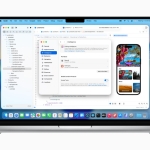
Xcode 26.3 integrates Anthropic’s Claude Agent and OpenAI’s Codex directly into Apple’s development environment, granting AI systems unprecedented control over the entire app-building process. Unlike previous AI features that offered simple code suggestions, these agents can now autonomously write code, build projects, run tests, and visually verify their own work — all with minimal human intervention.
During a live demonstration, Apple engineers showed how the Claude agent could receive a simple prompt like “add a weather feature to show conditions at landmarks” and then independently analyze the project structure, consult Apple’s documentation, write the necessary code, build the project, and take screenshots to verify the results matched the requested design.
The integration uses the Model Context Protocol (MCP), an open standard developed by Anthropic that allows AI agents to connect with external tools. This means any compatible agent — not just Claude or Codex — can now interact with Xcode’s capabilities, from project discovery and change management to building and testing apps.
Why This Changes Everything for Apple Developers
Apple says the key innovation is the depth of integration between AI agents and development tools. Previous AI features had a “limited aperture,” answering questions based on what developers provided but lacking full project context and unable to take autonomous action.
The new system creates automatic checkpoints as developers interact with AI, allowing them to roll back changes if results prove unsatisfactory — a crucial safeguard given the unpredictable nature of AI-generated code. Apple worked directly with Anthropic and OpenAI to optimize the experience, focusing on reducing token usage and improving tool-calling efficiency.
Developers can download new agents with a single click, and they update automatically. The system also supports both API keys and direct account credentials from OpenAI and Anthropic, giving developers flexibility in managing their AI subscriptions.
The “Vibe Coding” Phenomenon That’s Taking Over Tech
Apple’s announcement comes as “vibe coding” — the practice of delegating software creation to large language models — has exploded from a niche curiosity into a full-blown cultural phenomenon. The term, coined by AI researcher Andrej Karpathy in early 2025, has transformed how software gets built.
LinkedIn recently announced it will offer official certifications in AI coding skills, drawing on usage data from platforms like Lovable and Replit. Job postings requiring AI proficiency have doubled in the past year, with Indeed reporting that 4.2% of U.S. job listings now mention AI-related keywords.
The productivity gains are real. Technology journalist Casey Newton recently built a complete personal website using Claude Code in about an hour — a task that previously required expensive subscriptions and years of frustrated attempts with various website builders. Google engineer Jaana Dogan posted that she gave Claude Code “a description of the problem” and “it generated what we built last year in an hour,” a post that accumulated over 8 million views.
But Security Experts Are Sounding the Alarm
The rapid adoption of agentic coding has sparked significant concerns among security researchers and software engineers. David Mytton, CEO of developer security provider Arcjet, warned that the proliferation of AI-generated applications “into production will lead to catastrophic problems for organizations that don’t properly review AI-developed software.”
“In 2026, I expect more and more vibe-coded applications hitting production in a big way,” Mytton wrote. “That’s going to be great for velocity… but you’ve still got to pay attention. There’s going to be some big explosions coming!”
Simon Willison, co-creator of the Django web framework, drew an even starker comparison: “I think we’re due a Challenger disaster with respect to coding agent security.” He noted that developers are running these coding agents “practically as root” and letting them do all sorts of potentially dangerous operations.
A pre-print paper from researchers warned that vibe coding could pose existential risks to the open-source software ecosystem. The study found that AI-assisted development pulls user interaction away from community projects, reduces visits to documentation websites and forums, and makes launching new open-source initiatives significantly harder.
The Hidden Mental Health Cost of AI-Assisted Development
Even enthusiastic adopters have begun acknowledging the darker aspects of AI-assisted development. Peter Steinberger, creator of the viral AI agent originally known as Clawdbot (now OpenClaw), revealed he had to step back from vibe coding after it consumed his life.
“I was out with my friends and instead of joining the conversation in the restaurant, I was just like, vibe coding on my phone,” Steinberger said in a recent podcast interview. “I decided, OK, I have to stop this more for my mental health than for anything else.”
Steinberger warned that the constant building of increasingly powerful AI tools creates the “illusion of making you more productive” without necessarily advancing real goals. “If you don’t have a vision of what you’re going to build, it’s still going to be slop,” he added.
Apple’s Gamble: Can Deep IDE Integration Make AI Coding Safe?
Apple appears to be betting that the benefits of deep IDE integration can mitigate many of these concerns. By giving AI agents access to build systems, test suites, and visual verification tools, the company is essentially arguing that Xcode can serve as a quality control mechanism for AI-generated code.
Susan Prescott, Apple’s vice president of Worldwide Developer Relations, framed the update as part of Apple’s broader mission: “Our goal is to make tools that put industry-leading technologies directly in developers’ hands so they can build the very best apps. Agentic coding supercharges productivity and creativity, streamlining the development workflow so developers can focus on innovation.”
However, significant limitations remain. While Xcode has a powerful debugger built in, there’s no direct MCP tool for debugging. Developers can run the debugger and manually relay information to the agent, but the AI cannot yet independently investigate runtime issues — a limitation that could prove significant as the complexity of AI-generated code increases.
The update also doesn’t currently support running multiple agents simultaneously on the same project, though Apple noted that developers can open projects in multiple Xcode windows using Git worktrees as a workaround.
What This Means for the Future of Software Development
Xcode 26.3 is available immediately as a release candidate for members of the Apple Developer Program, with a general release expected soon on the App Store. The release candidate designation means developers who download today will automatically receive the finished version when it ships.
The integration represents nothing less than a fundamental reimagining of how software comes into existence. For the world’s most valuable company, the calculus is straightforward: Apple’s ability to attract and retain developers has always underpinned its platform dominance. If agentic coding delivers on its promise of radical productivity gains, early and deep integration could cement Apple’s position for another generation.
As Apple conceded during Tuesday’s press conference, with what may prove to be unintentional understatement: “Large language models, as agents sometimes do, sometimes hallucinate.”
Millions of lines of code are about to find out how often.
Tags: #Xcode263 #Apple #AI #AgenticCoding #VibeCoding #Claude #Codex #MachineLearning #SoftwareDevelopment #TechNews #AppleDeveloper #FutureOfCoding #AIAssistant #DeveloperTools #Innovation
Viral Sentences:
- “Xcode 26.3 just dropped and the AI coding revolution is HERE!”
- “Apple just gave AI agents the keys to the kingdom — and developers are freaking out”
- “This isn’t just an update, it’s a fundamental shift in how we build software”
- “The future of coding is here, and it’s vibe-coded”
- “Apple’s betting big on AI — and the stakes have never been higher”
- “When your IDE becomes your AI co-pilot, who’s really writing the code?”
- “The Challenger disaster of coding security might be coming sooner than we think”
- “Xcode just got a brain transplant — and it’s running Claude and Codex”
- “The mental health cost of vibe coding: when productivity becomes an addiction”
- “Apple’s open protocol move is HUGE — this could be the new standard for AI development”
- “From autocomplete to autonomous coding — how far is too far?”
- “The line between developer and supervisor is officially blurred”
- “Xcode 26.3: The update that might change software development forever”
- “When AI can build entire apps, what’s left for human developers?”
- “The AI coding gold rush is on — and Apple just dropped the motherlode”
,

Leave a Reply
Want to join the discussion?Feel free to contribute!