
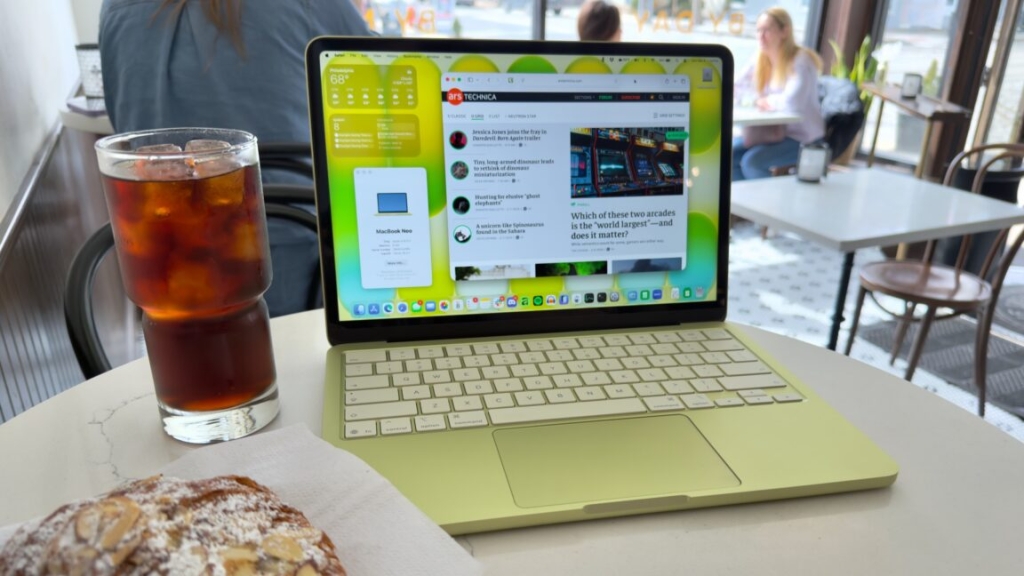
Apple MacBook Neo review: Can a Mac get by with an iPhone’s processor inside?
Tech Alert: 8GB RAM Is No Longer Enough for Modern Computing
In the ever-evolving world of technology, one truth remains constant: what was once considered “enough” memory for a computer is now barely sufficient to keep up with today’s demanding applications. As someone who has spent years selling, servicing, and writing about computers, I’ve witnessed the memory landscape transform dramatically. From the days of 512MB and 1GB to the more recent 4GB and 8GB standards, the bar has been steadily rising. And now, in 2026, we find ourselves at a critical juncture where 8GB of RAM is no longer the “sweet spot” it once was.
The 8GB Dilemma: A Step Too Far?
For years, 8GB of RAM was the go-to recommendation for most users. It was enough to handle everyday tasks like browsing the web, streaming videos, and running basic productivity apps. But as software becomes more sophisticated and resource-intensive, 8GB is starting to feel like a relic of the past. Sure, you can still boot up your computer and run an app or two, but the experience is far from seamless.
Take, for example, the latest games. Titles like Cyberpunk 2077 are pushing the boundaries of what’s possible in gaming, and they’re not shy about demanding more memory. If you’re running on 8GB, you might find yourself unable to play certain games altogether. But it’s not just gaming that’s the issue. Even everyday tasks can become a headache when you’re low on RAM.
The Memory Pressure Problem
One of the most telling signs that your system is struggling with 8GB of RAM is what Apple calls “memory pressure.” This is a metric in macOS’s Activity Monitor that indicates how hard your system is working to manage memory. When you have enough RAM, the memory pressure timeline is green, and everything runs smoothly. But when you’re pushing the limits of your available memory, the timeline turns yellow, and you start to feel the strain.
Memory pressure doesn’t mean your computer is about to crash or become completely unresponsive. Instead, it’s a subtle but noticeable slowdown. Apps take longer to load, browser tabs refresh unexpectedly when you switch back to them, and video calls start dropping frames. It’s like trying to run a marathon with a pebble in your shoe—you can still finish, but it’s not exactly comfortable.
The MacBook Neo: A Case Study
To illustrate the challenges of 8GB RAM in 2026, let’s take a look at the MacBook Neo. This sleek, lightweight laptop is designed for portability and efficiency, but its 8GB of RAM is a double-edged sword. While it’s enough to handle basic tasks, users often find themselves hitting the memory ceiling when multitasking or running more demanding applications.
In our tests, the MacBook Neo frequently experienced memory pressure, especially when running multiple browser tabs, streaming services, and productivity apps simultaneously. The system would compensate by moving data to the disk, a process known as swapping, but this comes at a cost. The resources tied up in managing memory are no longer available for the user, leading to a sluggish experience.
The 16GB Sweet Spot
So, what’s the solution? For most users, 16GB of RAM is the new “don’t need to think about it” amount. With 16GB, you can comfortably run multiple apps, browse the web with dozens of tabs open, and even dabble in light gaming without breaking a sweat. It’s the amount of memory that allows you to focus on your work or entertainment without constantly worrying about closing apps or tabs to free up space.
Of course, there are scenarios where even 16GB might not be enough. Power users, gamers, and professionals working with large datasets or high-resolution media might benefit from 32GB or more. But for the average user, 16GB is the sweet spot that strikes the right balance between performance and cost.
The Future of RAM
As we look ahead, it’s clear that the demand for memory will only continue to grow. With the rise of AI, virtual reality, and other cutting-edge technologies, the need for more RAM is inevitable. In the coming years, we might see 32GB become the new standard, with 64GB or even 128GB for high-end systems.
But for now, the message is clear: if you’re buying a new computer in 2026, don’t settle for 8GB of RAM. It might save you a few bucks upfront, but the frustration and limitations it brings are not worth it. Invest in 16GB or more, and you’ll thank yourself later.
Tags & Viral Phrases
- 8GB RAM is dead, long live 16GB!
- Memory pressure: The silent killer of productivity
- Why your 8GB MacBook Neo is holding you back
- The RAM revolution: Why 16GB is the new normal
- Don’t let memory pressure ruin your day
- Upgrade your RAM, upgrade your life
- The future of computing: More memory, more power
- Is 8GB RAM enough? Spoiler: No.
- 16GB RAM: The sweet spot for 2026
- Memory pressure: What it is and how to avoid it
- The MacBook Neo: Sleek but struggling with 8GB
- Why 32GB might be the next big thing in RAM
- AI, VR, and the growing demand for RAM
- The cost of cutting corners: Why 8GB isn’t worth it
- RAM wars: The battle for more memory
- From 512MB to 16GB: The evolution of computer memory
- The hidden cost of 8GB RAM: Frustration and slowdowns
- Why 16GB is the new 8GB
- The RAM dilemma: How much do you really need?
- Memory pressure: The canary in the coal mine for your computer
,

Leave a Reply
Want to join the discussion?Feel free to contribute!