
Apple’s AI Wearables Expected to Lean Heavily on Visual Intelligence
Apple’s Visual Intelligence Poised to Revolutionize Next-Gen AI Wearables
Apple’s Visual Intelligence feature, already making waves on iPhone 15 Pro models, is set to become the cornerstone of the company’s ambitious push into AI-powered wearable technology. According to Bloomberg’s Mark Gurman, this sophisticated visual processing capability will be central to Apple’s upcoming lineup of AI wearables, which reportedly includes smart glasses, a pendant-style device, and next-generation AirPods with built-in cameras.
The strategic importance of Visual Intelligence to Apple’s wearable future becomes clear when examining CEO Tim Cook’s recent communications. Gurman notes that Cook’s emphasis on the feature follows a familiar pattern—similar to how he highlighted health sensors before the Apple Watch launch and AR capabilities before the Vision Pro announcement. This calculated positioning suggests Apple views Visual Intelligence as more than just another feature; it’s potentially the defining characteristic of their AI wearable ecosystem.
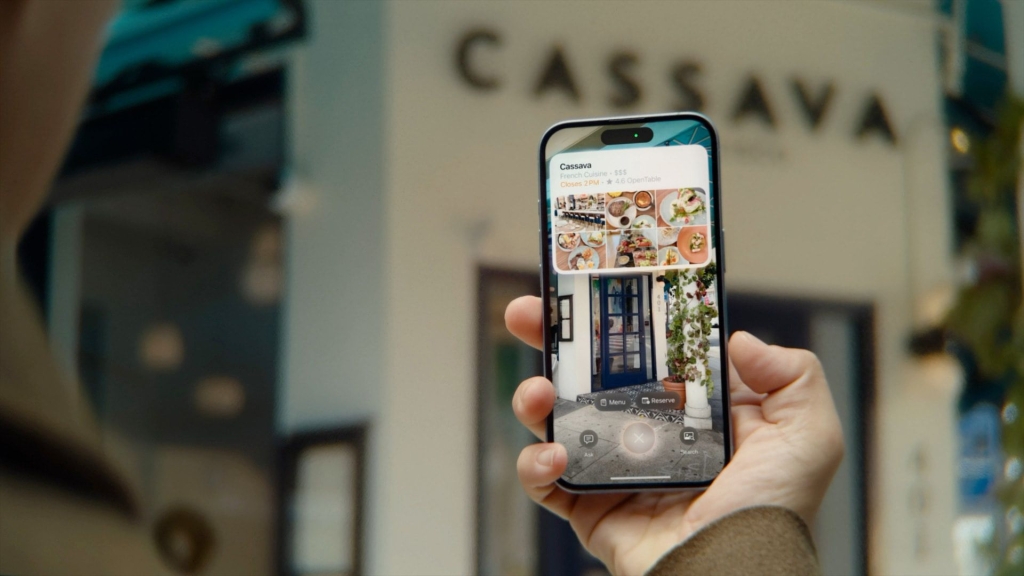
Currently available on iPhone 15 Pro and newer devices, Visual Intelligence transforms the camera into a powerful information-gathering tool. Users can point their camera at objects or text to receive instant translations, have text read aloud, search for products online, access ChatGPT for deeper queries, and receive contextual information about their surroundings. The feature essentially turns the iPhone into an intelligent visual assistant, capable of understanding and interacting with the physical world in real-time.
The upcoming smart glasses represent the most advanced implementation of this technology. According to Gurman’s reporting, these glasses will feature a sophisticated dual-camera system. The primary high-resolution camera will capture photos and videos, while a secondary camera will continuously feed visual data to Siri and provide environmental context. This setup mirrors the functionality of current Visual Intelligence but in a hands-free, always-available format.
In contrast, Apple’s rumored AI pin—if it reaches production—will take a different approach. The device is expected to include a lower-resolution camera designed specifically for AI processing rather than content creation. This camera would provide visual awareness to the AI assistant while recording the wearer’s surroundings continuously. The always-on nature of this camera raises interesting questions about privacy and data collection, though Apple has not commented on these aspects.
The AirPods with cameras represent yet another variation on the Visual Intelligence theme. These enhanced earbuds would incorporate low-resolution cameras primarily for information processing rather than photography. This design choice suggests Apple is prioritizing functionality over image quality, focusing on how visual data can enhance the audio experience rather than replace dedicated cameras.
Cook’s enthusiasm for Visual Intelligence extends beyond public statements. During Apple’s recent all-hands meeting about AI initiatives, the CEO reportedly highlighted Visual Intelligence as a standout feature of Apple Intelligence, despite its reliance on OpenAI and Google technologies. This emphasis is particularly noteworthy given Apple’s typically guarded approach to acknowledging partnerships with competitors. Gurman interprets Cook’s focus as a clear signal that Apple plans to accelerate development in this area.
The company’s wearable roadmap reveals an aggressive timeline. AirPods with cameras could arrive as early as this year, representing the first wave of Visual Intelligence-enabled wearables. The AI pin, still in early development stages, might launch in 2027 if the project continues. However, Apple’s history of canceling products means this device is not guaranteed to reach consumers.
The smart glasses project appears most advanced, with Apple’s hardware engineering team recently receiving prototypes. The company has set an ambitious target of December 2026 for production to begin, aiming for a 2027 launch. This timeline positions Apple to compete directly with Meta’s Ray-Ban smart glasses, though Apple’s integration of Visual Intelligence could provide a significant competitive advantage.
What makes Visual Intelligence particularly compelling is its versatility. On current iPhones, it serves multiple purposes: educational (identifying plants, animals, or landmarks), practical (translating signs or menus), and entertainment (recognizing products or artwork). Translating these capabilities to wearable form factors opens up new possibilities for ambient computing—technology that’s present but unobtrusive, ready to assist when needed but invisible when not.
The feature’s popularity on iPhone 15 Pro models, which Cook recently called “one of our most popular features,” provides a strong foundation for its expansion into wearables. Users have already embraced the convenience of point-and-learn functionality, suggesting they’ll welcome similar capabilities in devices that don’t require manual operation.
Apple’s approach to Visual Intelligence also reflects a broader trend in AI development: the move from text-based interactions to multimodal systems that can process and respond to visual, auditory, and contextual information simultaneously. By building this capability into their wearable lineup, Apple is positioning itself at the forefront of this transition.
The integration of Visual Intelligence across multiple device categories also suggests Apple is developing a unified AI architecture that can adapt to different form factors while maintaining consistent functionality. Whether through glasses, earbuds, or a pendant, users would access the same intelligent visual processing capabilities, creating a cohesive experience across Apple’s ecosystem.
As Apple continues to refine these technologies, the line between digital assistance and environmental awareness continues to blur. Visual Intelligence represents not just a feature upgrade but a fundamental shift in how users interact with technology—moving from active engagement with screens to passive, ambient assistance that enhances rather than interrupts daily life.
The coming years will reveal whether Apple’s bet on Visual Intelligence-powered wearables pays off. If successful, these devices could redefine personal technology, making AI assistance as natural and ubiquitous as wearing glasses or listening to music. Given Apple’s track record of transforming niche technologies into mainstream essentials, the tech world will be watching closely as these products move from concept to reality.
#Apple #VisualIntelligence #AIWearables #SmartGlasses #AppleAirPods #TechInnovation #FutureOfTech #WearableTech #AppleAI #TechNews
visual intelligence, apple wearables, ai glasses, smart earbuds, tech revolution, future technology, apple innovation, wearable devices, artificial intelligence, tech trends, smart accessories, camera technology, hands-free tech, ambient computing, device ecosystem, tech advancement, consumer electronics, digital assistant, augmented reality, product development
Cook’s enthusiasm for Visual Intelligence extends beyond public statements. During Apple’s recent all-hands meeting about AI initiatives, the CEO reportedly highlighted Visual Intelligence as a standout feature of Apple Intelligence, despite its reliance on OpenAI and Google technologies. Gurman interprets Cook’s focus as a clear signal that Apple plans to accelerate development in this area.
The company’s wearable roadmap reveals an aggressive timeline. AirPods with cameras could arrive as early as this year, representing the first wave of Visual Intelligence-enabled wearables. The AI pin, still in early development stages, might launch in 2027 if the project continues. However, Apple’s history of canceling products means this device is not guaranteed to reach consumers.
The smart glasses project appears most advanced, with Apple’s hardware engineering team recently receiving prototypes. The company has set an ambitious target of December 2026 for production to begin, aiming for a 2027 launch. This timeline positions Apple to compete directly with Meta’s Ray-Ban smart glasses, though Apple’s integration of Visual Intelligence could provide a significant competitive advantage.
What makes Visual Intelligence particularly compelling is its versatility. On current iPhones, it serves multiple purposes: educational (identifying plants, animals, or landmarks), practical (translating signs or menus), and entertainment (recognizing products or artwork). Translating these capabilities to wearable form factors opens up new possibilities for ambient computing—technology that’s present but unobtrusive, ready to assist when needed but invisible when not.
The feature’s popularity on iPhone 15 Pro models, which Cook recently called “one of our most popular features,” provides a strong foundation for its expansion into wearables. Users have already embraced the convenience of point-and-learn functionality, suggesting they’ll welcome similar capabilities in devices that don’t require manual operation.
Apple’s approach to Visual Intelligence also reflects a broader trend in AI development: the move from text-based interactions to multimodal systems that can process and respond to visual, auditory, and contextual information simultaneously. By building this capability into their wearable lineup, Apple is positioning itself at the forefront of this transition.
The integration of Visual Intelligence across multiple device categories also suggests Apple is developing a unified AI architecture that can adapt to different form factors while maintaining consistent functionality. Whether through glasses, earbuds, or a pendant, users would access the same intelligent visual processing capabilities, creating a cohesive experience across Apple’s ecosystem.
As Apple continues to refine these technologies, the line between digital assistance and environmental awareness continues to blur. Visual Intelligence represents not just a feature upgrade but a fundamental shift in how users interact with technology—moving from active engagement with screens to passive, ambient assistance that enhances rather than interrupts daily life.
The coming years will reveal whether Apple’s bet on Visual Intelligence-powered wearables pays off. If successful, these devices could redefine personal technology, making AI assistance as natural and ubiquitous as wearing glasses or listening to music. Given Apple’s track record of transforming niche technologies into mainstream essentials, the tech world will be watching closely as these products move from concept to reality.
#Apple #VisualIntelligence #AIWearables #SmartGlasses #AppleAirPods #TechInnovation #FutureOfTech #WearableTech #AppleAI #TechNews
visual intelligence, apple wearables, ai glasses, smart earbuds, tech revolution, future technology, apple innovation, wearable devices, artificial intelligence, tech trends, smart accessories, camera technology, hands-free tech, ambient computing, device ecosystem, tech advancement, consumer electronics, digital assistant, augmented reality, product development,


Leave a Reply
Want to join the discussion?Feel free to contribute!