
Astronomers used AI to find 1,400 ‘anomalous objects’ from Hubble archives
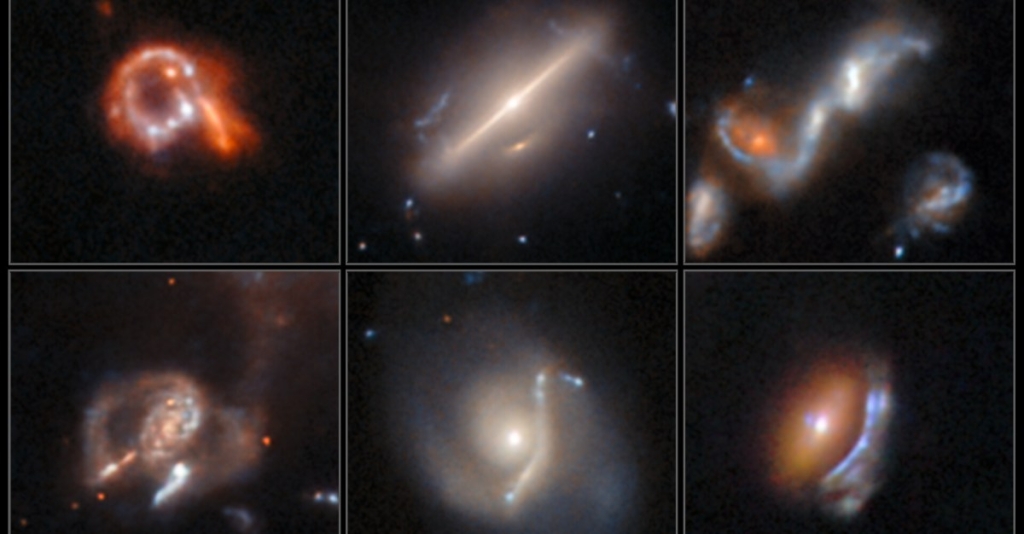
In a cosmic twist that feels straight out of a science fiction blockbuster, a team of astronomers at the European Space Agency (ESA) has uncovered more than 800 previously unknown “astrophysical anomalies” lurking in the depths of the Hubble Space Telescope’s 35-year-old archive. This groundbreaking discovery, achieved by leveraging the power of artificial intelligence, has sent shockwaves through the scientific community and reignited excitement about the untapped potential of space exploration.
The masterminds behind this astronomical breakthrough are David O’Ryan and Pablo Gómez, two researchers who dared to ask: What if the secrets of the universe have been hiding in plain sight all along? To answer this question, they trained an AI model—dubbed AnomalyMatch—to meticulously comb through Hubble’s vast dataset, hunting for strange and unusual objects that might have slipped past human eyes. The result? A treasure trove of cosmic curiosities that could redefine our understanding of the universe.
Studying the cosmos is no small feat. Space is vast, noisy, and brimming with data that can easily overwhelm even the most seasoned researchers. And let’s face it—space is weird. Really weird. From galaxies that look like they’ve been stretched and twisted by some cosmic hand to light that bends in ways that defy explanation, the universe is full of surprises. This is where AI steps in, acting as the ultimate cosmic detective, sifting through mountains of data to spot patterns and flag anomalies that might otherwise go unnoticed.
AnomalyMatch took on the Herculean task of scanning nearly 100 million image cutouts from the Hubble Legacy Archive, marking the first time this dataset has been systematically searched for anomalies. The AI model worked its magic in just two and a half days—a feat that would have taken human researchers months, if not years, to accomplish. It’s a testament to the power of technology and a glimpse into the future of astronomical research.
The findings, published in the prestigious journal Astronomy & Astrophysics, revealed nearly 1,400 “anomalous objects,” each more fascinating than the last. Among the discoveries were galaxies merging or interacting, gravitational lenses (where light is warped into mesmerizing circles or arcs by massive objects), jellyfish galaxies (which sport dangling “tentacles” of gas), and galaxies with large clumps of stars. But perhaps the most intriguing of all were the dozens of objects that defied classification altogether—cosmic enigmas that could hold the key to unlocking new mysteries of the universe.
“This is a fantastic use of AI to maximize the scientific output of the Hubble archive,” said Gómez. “Finding so many anomalous objects in Hubble data, where you might expect many to have already been found, is a great result. It also shows how useful this tool will be for other large datasets.”
The implications of this discovery are staggering. Not only does it highlight the untapped potential of existing astronomical data, but it also underscores the transformative role AI is playing in advancing our understanding of the cosmos. As we continue to push the boundaries of space exploration, tools like AnomalyMatch could become indispensable in uncovering the universe’s deepest secrets.
So, what’s next for O’Ryan, Gómez, and their team? The sky’s the limit—literally. With this AI-powered approach, the possibilities for future discoveries are endless. As we peer deeper into the cosmos, one thing is clear: the universe is full of surprises, and thanks to the power of AI, we’re just beginning to scratch the surface.
Tags and Viral Phrases:
- AI uncovers cosmic secrets
- Hubble Space Telescope’s hidden treasures
- Astronomers discover 800+ anomalies in space
- AI model AnomalyMatch revolutionizes space research
- Gravitational lenses and jellyfish galaxies
- Cosmic enigmas defy classification
- European Space Agency’s groundbreaking discovery
- The future of space exploration is here
- AI-powered astronomy: A game-changer
- Mysteries of the universe unlocked
- Space is weird, and AI is here to prove it
- Astronomers harness AI to explore the cosmos
- Hubble’s 35-year archive holds untold secrets
- Gravitational lensing: Nature’s cosmic magnifying glass
- Jellyfish galaxies: The strangest objects in space
- AI and astronomy: A match made in the stars
- The universe is full of surprises
- Cosmic anomalies: What are they, and why do they matter?
- ESA’s AI breakthrough: A new era for astronomy
- From Hubble to AI: The evolution of space exploration
,


Leave a Reply
Want to join the discussion?Feel free to contribute!