
Atmospheric pollution caused by space junk could be a huge problem
SpaceX Rocket’s Fiery Demise Unleashes Metal Pollution Across Europe: A Wake-Up Call for the Space Industry
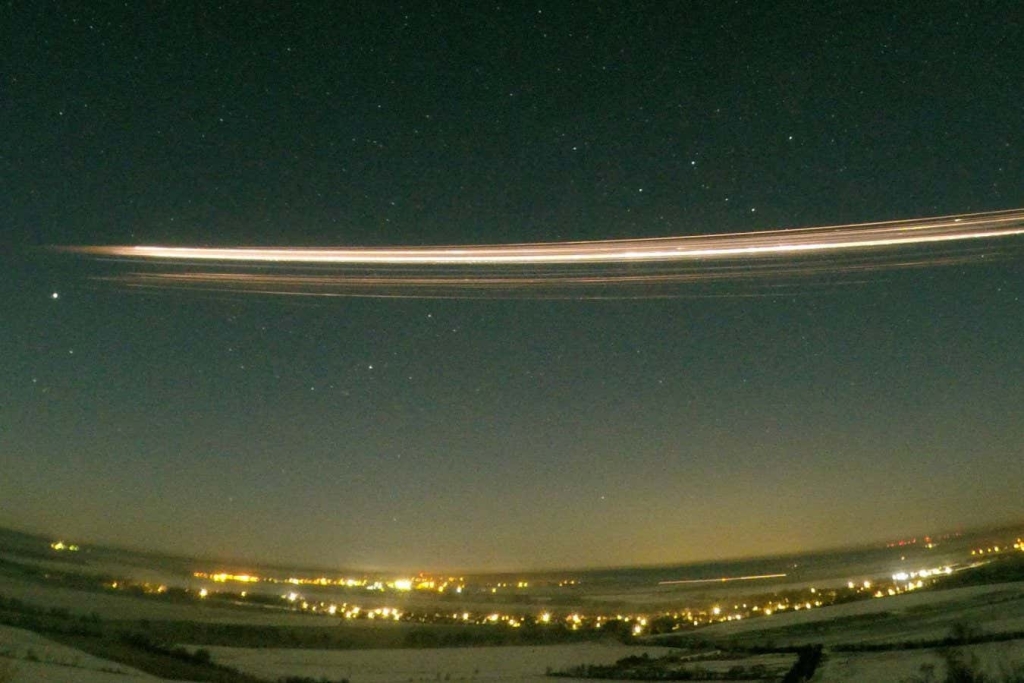
In a stunning display of cosmic fireworks, a SpaceX Falcon 9 rocket’s upper stage re-entry over Europe in February 2025 has sparked alarm among scientists and environmentalists alike. The spectacular event, which saw fiery debris streaking across the night sky and crashing behind a warehouse in Poland, has revealed a hidden consequence of our rapidly expanding space industry: atmospheric metal pollution.
The Falcon 9, designed to be reusable and typically splash down in the Pacific Ocean, lost control due to an engine failure. As it plummeted from orbit over the North Atlantic, it burned up in Earth’s atmosphere, releasing a plume of vaporized metals that drifted over 1,600 kilometers across Europe. This unprecedented event has given researchers a rare opportunity to trace high-altitude pollution directly to a specific spacecraft re-entry.
Robin Wing, an atmospheric physicist at the Leibniz Institute of Atmospheric Physics in Germany, and his team were quick to respond to this celestial spectacle. Turning on their lidar (Light Detection and Ranging) instrument, they detected a staggering 10-fold spike in lithium levels in the upper atmosphere just 20 hours after the rocket’s demise. Lithium, a key component in rocket hulls, was found to be present in much higher concentrations than normal, indicating the widespread dispersal of the vaporized metal plume.
This discovery is more than just a scientific curiosity; it’s a wake-up call for the burgeoning space industry. As commercial space launches skyrocket and companies like SpaceX and Amazon expand their mega-constellations of satellites, the amount of space debris and potential atmospheric pollution is growing at an alarming rate. With over 14,500 satellites already in orbit and SpaceX recently applying to launch 1 million more for Elon Musk’s ambitious plans for orbital data centers to power artificial intelligence, the sky is quite literally filling up.
The implications of this metal pollution are far-reaching and potentially devastating. The tiny metal particles released during spacecraft re-entry could be catalyzing ozone destruction, creating clouds in the stratosphere and mesosphere, and affecting how sunlight travels through the atmosphere. However, these potential effects are still understudied, leaving scientists and policymakers in the dark about the full extent of the problem.
Daniel Cziczo, an atmospheric scientist at Purdue University, Indiana, emphasizes the need for caution and thorough analysis. “There is a misconception that space debris burns up in the atmosphere and disappears,” he warns. “Let’s tap the brakes here, and let’s really do some thorough analysis of what effect this material could have.”
The Falcon 9 plume contained an estimated 30 kilograms of lithium, but given the composition of rocket hull alloys, it would have contained a far greater amount of aluminum. When vaporized aluminum reacts with atmospheric oxygen, it forms aluminum oxide particles. These particles provide a surface where chlorine compounds can more easily break down, freeing chlorine radicals that react with and destroy ozone molecules in the stratosphere.
Researchers estimate that spacecraft burn-up is releasing 1,000 tonnes of aluminum oxide into the atmosphere each year, and this figure is growing. This poses a significant threat to the ozone layer, particularly the southern hemisphere’s ozone hole, which has been shrinking as countries phase out ozone-depleting refrigerant gases. The loss of ozone could allow more of the sun’s ultraviolet rays to reach Earth’s surface, increasing the risk of skin cancer and other health issues.
Eloise Marais, an atmospheric chemist at University College London, puts the situation into perspective: “In terms of metals, we’re sort of moving into this new paradigm where the upper atmosphere is increasingly more influenced by anthropogenic pollution than natural sources. Space debris is starting to undo the progress with the ozone hole.”
The metal oxide particles released during spacecraft re-entry can also serve as nuclei for water vapor condensation, potentially forming cirrus clouds in the upper troposphere. These clouds tend to trap heat, which could exacerbate global warming. While the impact of this phenomenon would still be small compared to greenhouse gases like carbon dioxide, it adds another layer of complexity to our understanding of climate change.
Scientists are now racing to understand the full implications of this new form of pollution. “There is a lot of scientific evidence that this material could be having deleterious effects on our atmosphere, and now it’s on us as scientists to figure out if those effects are taking place and how bad they are,” says Cziczo.
The space industry and policymakers are faced with a dilemma. On one hand, the expansion of satellite constellations and space exploration offers immense benefits in terms of communication, Earth observation, and scientific discovery. On the other hand, the potential environmental consequences of increased space activity cannot be ignored.
Some potential solutions are being explored. These include building satellites out of alternative materials like wood (although this could still release black carbon soot upon re-entry) or retiring more satellites to high-altitude “graveyard orbits” to minimize atmospheric pollution.
As Robin Wing aptly puts it, “We need to take a little bit of time and think about what we’re doing before we do it. This explosion of satellites… it’s very fast, and we don’t know the consequences.”
The SpaceX Falcon 9 incident serves as a stark reminder that our actions in space have very real consequences for our planet. As we continue to push the boundaries of space exploration and satellite technology, we must also develop a deeper understanding of the environmental impact of our activities. The future of our atmosphere, and indeed our planet, may depend on it.
Tags:
SpaceX, Falcon 9, space debris, atmospheric pollution, metal pollution, ozone layer, climate change, satellite constellations, space industry, environmental impact, lidar technology, lithium, aluminum oxide, cirrus clouds, global warming, space exploration, orbital data centers, Elon Musk, Amazon, Starlink, graveyard orbits
Viral Sentences:
- “The sky is filling up: SpaceX’s rocket debris reveals shocking metal pollution across Europe!”
- “Space junk alert: How SpaceX’s fiery re-entry is threatening our ozone layer”
- “From orbit to atmosphere: The hidden cost of our satellite obsession”
- “Metal rain from space: Scientists uncover alarming new form of pollution”
- “The final frontier’s dirty secret: How space exploration is impacting Earth’s atmosphere”
- “Rocket science meets climate science: The unexpected link between space debris and global warming”
- “SpaceX’s million-satellite plan: Innovation or environmental catastrophe?”
- “When satellites fall: The unseen consequences of our spacefaring future”
- “Atmospheric alchemy: How vaporized rocket parts are changing our sky”
- “Space race 2.0: Balancing technological progress with planetary protection”
,


Leave a Reply
Want to join the discussion?Feel free to contribute!