
Avalanche thinks the fusion power industry should think smaller
Nuclear Fusion Just Got a Desktop-Sized Upgrade—And It Could Change Everything
When you think of nuclear fusion, your mind probably jumps to massive reactors or sprawling laser arrays stretching across entire facilities. But what if the future of clean, limitless energy was small enough to fit on your desk?
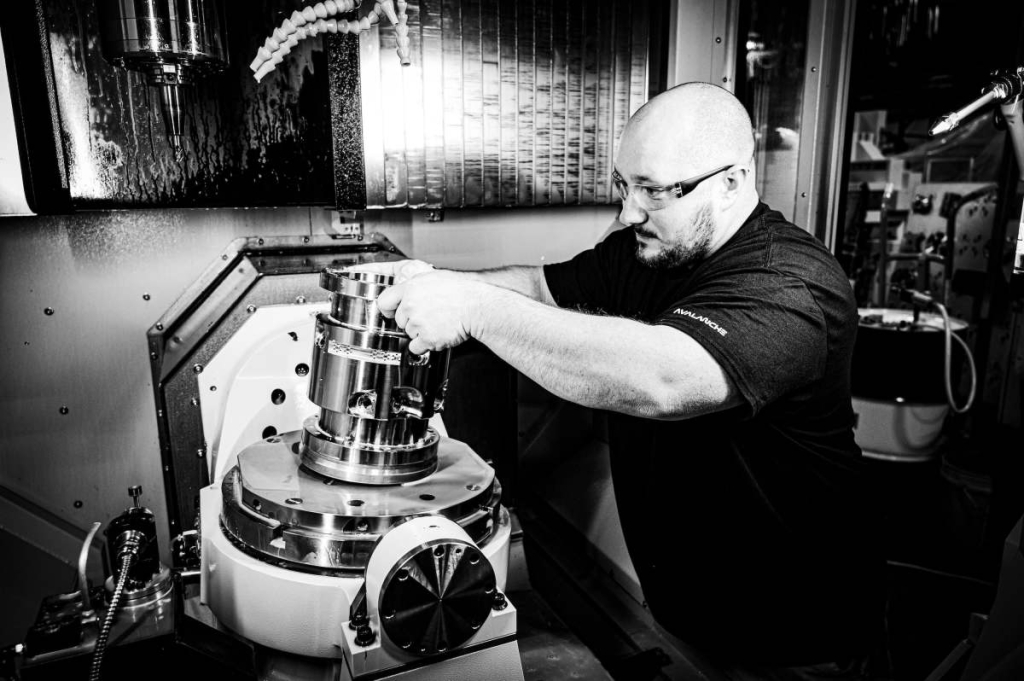
That’s exactly what Robin Langtry, co-founder and CEO of Avalanche Energy, is betting on. For the past several years, Langtry and his team have been quietly developing a compact, desktop-scale fusion reactor—and they’re not just doing it for the novelty. Their approach could revolutionize how we experiment with and ultimately harness the power of the stars.
“We’re using the small size to learn quickly and iterate quickly,” Langtry told TechCrunch, emphasizing the speed and agility that miniaturization brings to an otherwise slow-moving field.
Fusion power has long been touted as the holy grail of clean energy. It promises vast amounts of heat and electricity without the carbon emissions or long-lived radioactive waste associated with nuclear fission. But getting there is no small feat. Fusion requires heating and compressing plasma—superheated matter—so that atomic nuclei collide and fuse, releasing enormous amounts of energy in the process.
The problem? Fusion is notoriously difficult. The physics is mind-bendingly complex, the materials science is cutting-edge, and the power requirements are often enormous. Traditional fusion experiments involve massive, expensive machines that are slow to build and even slower to modify. That’s where Avalanche’s approach stands out.
Instead of relying on giant magnets (like Commonwealth Fusion Systems’ tokamaks) or powerful lasers (like those used by companies such as First Light Fusion), Avalanche uses high-voltage electric currents to draw plasma particles into a tight orbit around an electrode. As the particles speed up and their orbits tighten, they collide and fuse. It’s a clever twist on the classic fusion challenge, and it’s enabled by the company’s compact design.
This small-is-better philosophy has clearly resonated with investors. Avalanche recently closed a $29 million funding round led by R.A. Capital Management, with participation from notable names like Founders Fund, Lowercarbon Capital, and Toyota Ventures. To date, the company has raised $80 million—a modest sum compared to some fusion giants that have attracted hundreds of millions or even billions. But Avalanche’s backers clearly see the potential in its nimble, iterative approach.
Langtry’s experience at Blue Origin, Jeff Bezos’ space technology company, heavily influenced Avalanche’s strategy. “We’ve figured out that using this sort of SpaceX ‘new space’ approach is that you can iterate really quickly, you can learn really quickly, and you can solve some of these challenges,” he explained. The parallels are clear: just as SpaceX disrupted aerospace with rapid prototyping and bold experimentation, Avalanche aims to do the same for fusion energy.
Right now, Avalanche’s reactor is a mere nine centimeters in diameter. But the next iteration will grow to 25 centimeters and is expected to produce about 1 megawatt of power. “That’s going to give us a significant bump in confinement time, and that’s how we’re actually going to get plasmas that have a chance of being Q>1,” Langtry said. In fusion parlance, Q refers to the ratio of energy output to input. A Q greater than one means the reactor is producing more energy than it consumes—a critical milestone often called “breakeven.”
To accelerate their experiments, Avalanche has built FusionWERX, a commercial testing facility where they not only conduct their own research but also rent space to competitors. By 2027, the site will be licensed to handle tritium, a key hydrogen isotope used as fuel in many fusion designs.
When asked about timelines for achieving net-positive energy, Langtry was cautious but optimistic. “I think there’s going to be a lot of really exciting things happening in fusion in 2027 to 2029,” he said, placing Avalanche on a similar trajectory to industry leaders like Commonwealth Fusion Systems and Helion Energy, the latter backed by OpenAI’s Sam Altman.
The implications of Avalanche’s work are profound. If desktop-scale fusion reactors can be made to work reliably, it could democratize access to fusion research, accelerate innovation, and bring us closer to a world powered by clean, abundant energy. And in a field where progress has often been measured in decades, that’s a future worth watching closely.
#fusion #nuclearfusion #cleanenergy #renewableenergy #innovation #techcrunch #avalancheenergy #startups #energy #futuretech #greenenergy #technology #science #engineering #breakthrough #desktoptfusion #energytransition #sustainability #cleantech #physics #research #investment #venturecapital #emergingtech #energyrevolution,


Leave a Reply
Want to join the discussion?Feel free to contribute!