
Bacteria Play Previously Unknown Role in Kidney Stones, Study Finds : ScienceAlert
Here’s the rewritten news article with a tech-focused, viral tone and approximately 1200 words, followed by a list of viral tags and phrases:
Breaking: Kidney Stones Aren’t Just Mineral Rocks – They’re Living, Breathing Biofilms!
In a mind-blowing discovery that’s sending shockwaves through the medical community, researchers have uncovered a shocking secret hiding inside the most common type of kidney stones. These painful mineral formations aren’t just lifeless crystals – they’re actually teeming with live bacteria and complex biofilms!
For centuries, humanity has been battling kidney stones, those excruciating mineral deposits that can bring even the toughest person to their knees. But here’s the kicker: we’ve been completely wrong about what they’re made of this whole time.
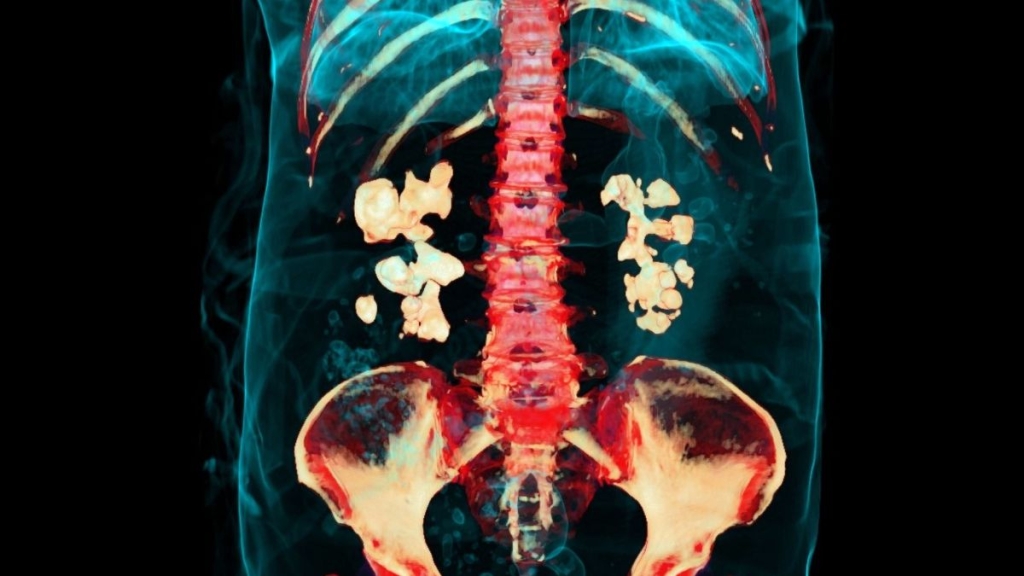
A groundbreaking study from UCLA has revealed that calcium oxalate kidney stones – which account for a whopping 80% of all kidney stone cases – contain living bacteria and biofilms embedded within their crystalline structure. That’s right, these stones aren’t just sitting there like inert rocks; they’re actually biological hotspots!
“This is revolutionary,” says Dr. Kymora Scotland, the UCLA urologist leading the research. “We’ve always assumed these stones formed purely through chemical processes, but now we’re seeing that bacteria are not just present – they might actually be actively contributing to stone formation.”
Using cutting-edge electron and fluorescence microscopy techniques, the research team discovered that bacteria and their biofilm components are woven throughout the stone’s structure, alternating with crystal layers like some kind of microscopic lasagna. These aren’t just surface contaminants – they’re embedded deep within the stone itself!
The implications are staggering. This discovery could completely change how we understand and treat kidney stones, which affect tens of millions of people worldwide. It might even explain why some people suffer from recurring stones despite following all the recommended dietary and lifestyle changes.
Here’s where it gets really interesting: the researchers suggest we should start thinking of kidney stones as “organic-inorganic biocomposites” rather than just mineral deposits. In other words, they’re part living, part mineral – a hybrid material that’s been hiding in plain sight!
This finding also sheds new light on the connection between urinary tract infections and kidney stone formation. It’s long been known that bacteria play a role in the formation of struvite stones (a rarer type), but this is the first time we’ve seen bacteria playing such a prominent role in the most common type.
The discovery opens up exciting new possibilities for treatment. Instead of just focusing on preventing crystal formation through diet and medication, we might be able to develop therapies that target the bacterial component of stones. Imagine being able to “disinfect” a kidney stone before it even fully forms!
But wait, there’s more! This research might just be the tip of the iceberg. While the study focused on calcium-based stones, other types of kidney stones remain poorly understood. Could bacteria be playing hidden roles in those formations too? The scientific community is buzzing with speculation.
The study, published in the prestigious Proceedings of the National Academy of Sciences (PNAS), represents a major shift in our understanding of kidney stone disease. It’s the kind of discovery that makes you wonder: what else have we been missing about our own bodies?
As Dr. Scotland puts it: “We’re now working to understand exactly how bacteria and calcium-based kidney stones interact. What makes some patients particularly susceptible to recurrent stone formation? What is it about these specific bacterial species that allows them to nucleate these stones?”
These are the questions that will drive the next phase of research, and they could lead to revolutionary new treatments for a condition that has plagued humanity since ancient times.
This discovery is more than just a scientific curiosity – it’s a potential game-changer for millions of people who suffer from kidney stones. It’s a reminder that even in well-studied areas of medicine, there are still fundamental mysteries waiting to be uncovered.
The next time you hear about someone dealing with kidney stones, remember: they’re not just fighting a mineral formation. They’re up against a living, breathing biofilm – a miniature ecosystem hiding inside their body. And thanks to this groundbreaking research, we’re finally starting to understand what we’re really dealing with.
Stay tuned, because this story is just getting started. The world of kidney stone research will never be the same!
KidneyStoneDiscovery #MedicalBreakthrough #BacteriaInStones #UCLAResearch #BiofilmScience #MedicalInnovation #HealthTech #ScienceRevolution #KidneyHealth #MedicalResearch
Viral tags and phrases:
- Mind-blowing medical discovery
- Game-changing kidney stone research
- Living stones: The bacteria hiding in your kidneys
- Revolutionary biofilm findings
- Kidney stones are ALIVE?!
- Scientific shock: Bacteria in kidney stones
- Medical mystery solved after centuries
- The hidden ecosystem in your body
- Groundbreaking UCLA research
- Kidney stones: Not what we thought
- Living mineral formations
- Bacterial conspiracy in your kidneys
- Ancient problem, modern solution
- The future of kidney stone treatment
- Science just got interesting
- Medical paradigm shift
- Hidden biology revealed
- Stone secrets uncovered
- The bacteria-stone connection
- Next-level medical research
- Health tech breakthrough
- Body mysteries decoded
- Scientific revolution
- Medical innovation unleashed
- Kidney stone conspiracy revealed
,


Leave a Reply
Want to join the discussion?Feel free to contribute!