
Beyond Amyloid Plaques: Scientists Reveal Broader Chemical Disruptions in Alzheimer’s
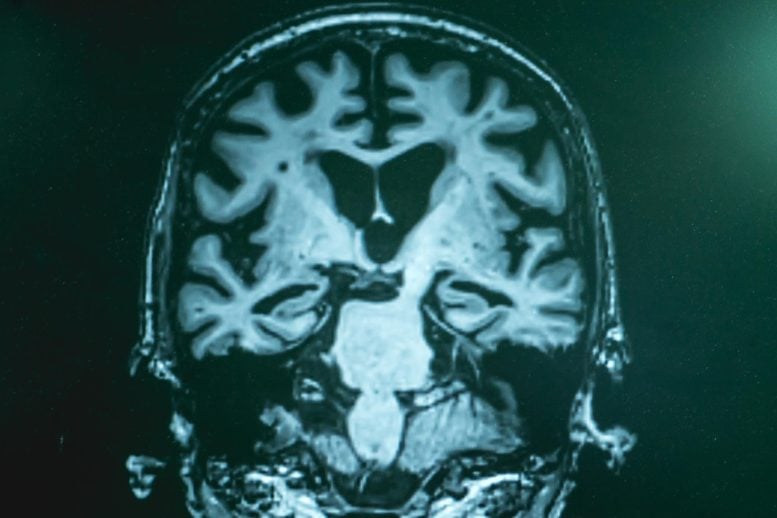
A groundbreaking new imaging technique is shining an unprecedented light on the molecular landscape of Alzheimer’s disease, offering researchers a brain-wide “chemical map” that could transform how we understand, diagnose, and ultimately treat this devastating neurodegenerative condition.
In a landmark study, scientists at Rice University have unveiled what they describe as the first comprehensive, label-free molecular atlas of an Alzheimer’s-affected brain in an animal model. This pioneering work moves far beyond the traditional focus on amyloid plaques—those infamous protein clumps long considered the hallmark of Alzheimer’s—and instead captures a broader, more intricate chemical portrait of the disease.
The technique at the heart of this discovery is known as stimulated Raman histology (SRH), a sophisticated form of light-based imaging that allows scientists to visualize the distribution of molecules throughout the brain without the need for chemical labels or dyes. This is a significant leap forward, as conventional methods often rely on tagging specific proteins or compounds, which can inadvertently alter or obscure the very molecular interactions researchers are trying to study.
By using SRH, the Rice team was able to generate a detailed, three-dimensional chemical map of the entire mouse brain affected by Alzheimer’s. This map reveals not just the location of amyloid plaques, but also the distribution of lipids, proteins, and other biomolecules that play crucial roles in brain health and disease. In essence, it provides a panoramic view of the molecular chaos that underlies Alzheimer’s, highlighting disruptions that were previously invisible to researchers.
One of the most striking findings from this study is the discovery of widespread chemical alterations beyond the well-known amyloid plaques. The researchers observed significant changes in lipid metabolism and protein composition in regions of the brain not typically associated with plaque formation. These findings suggest that Alzheimer’s disease is not simply a matter of plaque accumulation, but rather a complex, systemic disruption of brain chemistry that affects multiple pathways and cell types.
This broader perspective is crucial. For decades, the search for effective Alzheimer’s treatments has been dominated by strategies aimed at reducing or removing amyloid plaques. While some drugs targeting these plaques have shown promise in early trials, many have failed to produce meaningful improvements in patients’ symptoms or slow the progression of the disease. The new molecular atlas suggests that these failures may be due, in part, to an overly narrow focus on plaques, at the expense of understanding the full spectrum of molecular changes occurring in the Alzheimer’s brain.
The implications of this research are profound. By providing a more complete picture of the disease’s molecular underpinnings, the Rice team’s work opens the door to new therapeutic strategies that target not just amyloid plaques, but also the broader network of chemical disruptions that contribute to neurodegeneration. This could lead to the development of more effective drugs, earlier and more accurate diagnostic tools, and ultimately, better outcomes for the millions of people affected by Alzheimer’s worldwide.
Moreover, the label-free nature of the SRH technique means that it can be used to study living brain tissue, offering the potential for real-time monitoring of disease progression and treatment response. This could revolutionize clinical trials, allowing researchers to track the effects of experimental therapies with unprecedented precision and speed.
The Rice University team’s achievement also underscores the power of interdisciplinary collaboration in modern science. The development of the molecular atlas required expertise in chemistry, physics, biology, and computational modeling, highlighting the importance of bringing together diverse perspectives and skill sets to tackle complex problems.
As the global population ages, the need for effective Alzheimer’s treatments has never been more urgent. With no cure currently available and existing therapies offering only modest benefits, the search for new approaches is a race against time. The new molecular atlas represents a major step forward, providing scientists with a powerful new tool to unravel the mysteries of Alzheimer’s and, hopefully, to bring us closer to a world where this devastating disease can be prevented, treated, or even cured.
Looking ahead, the Rice team plans to expand their work to study Alzheimer’s in human brain tissue, as well as to investigate other neurodegenerative diseases such as Parkinson’s and Huntington’s. The hope is that the label-free imaging approach will prove equally valuable in mapping the molecular landscapes of these conditions, paving the way for a new era of precision medicine in neurology.
In the words of the researchers, this is just the beginning. The molecular atlas is not an endpoint, but a launching pad for a new generation of studies that will deepen our understanding of Alzheimer’s and related disorders. As scientists around the world begin to explore the rich data contained in this atlas, we can expect a surge of new insights, hypotheses, and discoveries that will bring us closer to solving one of the greatest challenges in modern medicine.
Tags and Viral Phrases:
- Revolutionary Alzheimer’s imaging breakthrough
- First full molecular atlas of Alzheimer’s brain
- Label-free brain mapping technology
- Beyond amyloid plaques: new Alzheimer’s insights
- Light-based imaging reveals hidden disease patterns
- Rice University Alzheimer’s research milestone
- Game-changing tool for neurodegenerative disease study
- Unlocking the secrets of Alzheimer’s chemistry
- New hope for Alzheimer’s diagnosis and treatment
- Molecular chaos: the real face of Alzheimer’s
- Precision medicine for brain diseases
- Interdisciplinary science drives Alzheimer’s discovery
- Real-time brain disease monitoring possible
- Next-gen Alzheimer’s therapies on the horizon
- Brain-wide chemical map transforms research
- Alzheimer’s: it’s more than just plaques
- Cutting-edge imaging reveals disease complexity
- Future of Alzheimer’s treatment just got brighter
- Scientists unveil unprecedented brain disease tool
- Alzheimer’s research enters a new era
,


Leave a Reply
Want to join the discussion?Feel free to contribute!