
Big Tech is pouring $650 billion into AI — and it’s about to affect almost everything you use
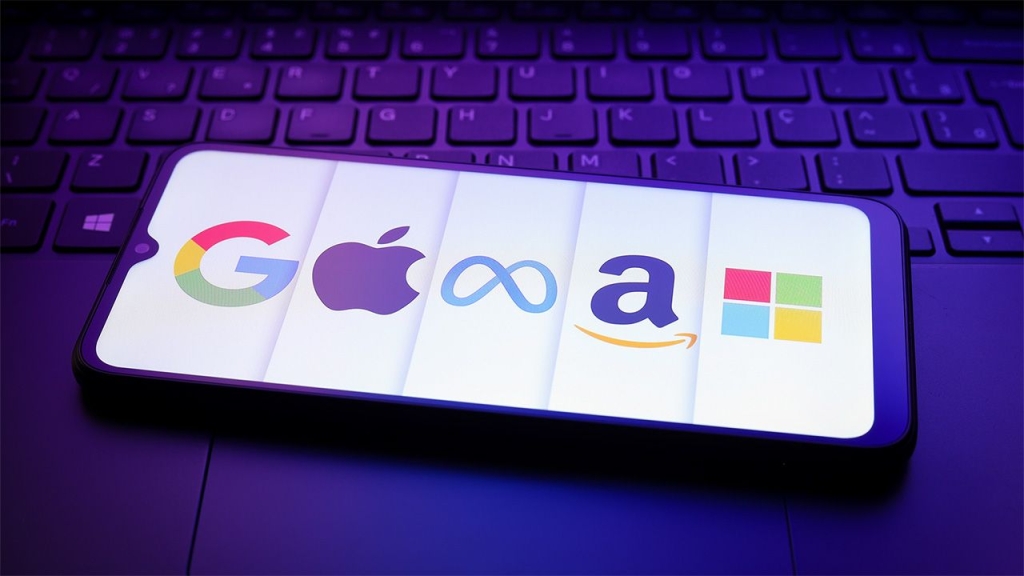
The $650 Billion AI Revolution: How Tech’s Biggest Bet Will Change Everything You Do
If you’ve noticed your smartphone seems smarter, your apps more intuitive, and your digital life more automated, you’re not imagining things. The world’s largest technology companies are pouring an estimated $650 billion into artificial intelligence by 2026, and this massive investment is about to transform every aspect of how we live, work, and interact with technology.
That’s not just a big number—it’s bigger than the GDP of many countries. To put it in perspective, $650 billion is more than the combined market value of Apple, Microsoft, and Google. It’s enough to buy every professional sports team in America and still have hundreds of billions left over. This isn’t just another tech trend; it’s the most significant technological investment in human history.
Where All That Money Is Actually Going
The $650 billion tsunami of investment isn’t disappearing into some black hole—it’s fueling three critical areas that will directly impact your daily life.
First, there’s the hardware revolution. We’re talking about building entirely new types of computer chips designed specifically for AI workloads. These aren’t your standard processors; they’re specialized neural processing units that can handle billions of calculations simultaneously. Companies like NVIDIA, AMD, and custom silicon from Apple and Google are racing to create chips that can run increasingly complex AI models without draining your battery in minutes.
Then there are the massive data centers—think football-field-sized warehouses filled with servers, cooling systems, and enough power infrastructure to light up small cities. These facilities are the brains behind the AI operations, training models on everything from medical research to your photo library. The scale is mind-boggling: a single modern AI data center can consume as much electricity as 50,000 homes.
Finally, there’s the software layer—the actual AI models and applications that will become part of your everyday experience. This includes everything from the large language models that power chatbots to specialized AI that can edit your photos, write your emails, or help you code.
The Invisible AI Revolution
Here’s what’s fascinating: you probably won’t see most of this infrastructure being built, but you’ll definitely feel its effects. The goal isn’t to make AI obvious—it’s to make it invisible, woven seamlessly into the fabric of your digital life.
Remember when using AI felt like talking to a robot? Those days are numbered. The massive investment means AI will stop giving you vague, robotic responses and start feeling genuinely helpful and human. It’s the difference between asking a basic calculator for help versus having a conversation with an expert who understands context.
This invisible integration is already happening. AI is quietly embedding itself into the apps you already use daily. Your email client will start drafting responses that sound like you. Your photo app will automatically enhance images in ways that would have required professional software last year. Your documents will auto-summarize themselves. Your calendar will intelligently schedule meetings based on your habits and preferences.
On-Device AI: Your Phone Becomes Your Personal Assistant
A significant portion of AI spending is flowing directly into on-device processing—meaning the AI works directly on your phone, tablet, or computer rather than relying on cloud servers. This shift has profound implications for speed, privacy, and functionality.
Your camera will soon auto-enhance photos in real-time as you shoot them, applying professional-grade adjustments that used to require desktop software and hours of work. Voice assistants will understand context better than ever—imagine asking “What’s the weather like?” in the morning and getting a different, more relevant answer than if you asked the same question at noon.
Real-time language translation will become so seamless that having a conversation with someone speaking a different language will feel natural. Perhaps most importantly, many AI features will work even without internet connectivity, making powerful tools available anywhere, anytime.
Search Is Dead—Long Live AI Answers
Perhaps the most visible transformation will be in how we find information online. The traditional search model—type keywords, get a list of links, click through multiple pages—is rapidly becoming obsolete.
We’re entering what experts call the “answer layer” of the internet. Instead of sending you to a list of links, tools like Google’s AI Overviews, ChatGPT’s search features, and specialized engines like Perplexity AI increasingly deliver complete, synthesized answers directly on the page.
Need to compare two products? AI will give you a side-by-side analysis pulling from dozens of reviews. Want instructions for a complex task? You’ll get step-by-step guidance without clicking through multiple tutorial sites. Have a nuanced question? AI will provide context and explanations without requiring you to piece information together yourself.
This is undeniably convenient for everyday tasks. But there’s a trade-off: when AI condenses multiple sources into a single summary, you often lose the context explaining why something is recommended, transparency into how information was tested or who reported it, and the ability to evaluate credibility yourself.
The result is a faster internet—but potentially a thinner one, where speed comes at the cost of depth and critical thinking.
The Real Cost of AI
Let’s be honest: this AI infrastructure is expensive to build and operate. Running advanced AI models requires massive computing resources and enormous amounts of energy. Training a single large language model can consume as much electricity as 100 American homes use in a year.
The spending race is driven by competition to control the next computing platform—one where AI becomes the primary interface between humans and technology. This competition will benefit users in the short term, with smarter free tools and more compelling paid upgrades.
We’re likely to see a split emerge: premium tiers offering more powerful AI assistants, advanced reasoning capabilities, and automation features, while free tools provide better baseline AI than ever before, supported by ads, partnerships, or ecosystem lock-in strategies.
Work Will Change Faster Than Job Titles
The biggest shift won’t be a wave of brand-new roles appearing overnight. Instead, it will be a quiet rewrite of what’s expected from the roles people already have.
AI is rapidly becoming the invisible layer beneath everyday work, handling the time-consuming tasks that used to fill entire afternoons. Rather than replacing workers outright, it’s reshaping how quickly work gets done—and how much output is expected in the same amount of time.
AI is increasingly taking on first drafts of emails, reports, and presentations; research summaries and background briefs; data cleanup, categorization, and organization; scheduling, planning, and task prioritization; meeting notes and action items; and repetitive workflows and administrative tasks.
This shift might create a widening productivity gap. Workers who learn to delegate routine work to AI can move faster, think more strategically, and focus on higher-value decisions. Those who avoid these tools may find themselves spending hours on tasks others complete in minutes.
In other words, the future of work may not belong to the people who work the hardest—but to those who work alongside AI the smartest.
The Bottom Line: AI Becomes the Operating System of Life
We won’t see $650 billion worth of servers or data centers being built, but we will see the effects everywhere: tools that think ahead, answers that arrive instantly, devices that anticipate what you need, and workplaces that expect more in less time.
This surge of investment represents a rewiring of the digital world as we know it. AI is being built into everything we use, from the smallest smartwatch to the largest enterprise systems. Artificial intelligence isn’t just a feature anymore; it’s becoming the operating system of modern life.
The question isn’t whether AI will change your world—it’s whether you’ll be ready when it does.
$650 billion AI investment
Tech companies spending on AI
AI everywhere revolution
Invisible AI integration
On-device AI processing
AI-powered search answers
Answer layer internet
AI workplace transformation
Productivity gap AI
Future of work AI
AI hardware revolution
Data centers AI infrastructure
AI software development
AI chips neural processing
Real-time AI translation
AI photo enhancement
Voice assistants context awareness
AI meeting automation
Email drafting AI
Report generation AI
Data organization AI
Scheduling automation AI
Meeting notes AI
Workflow automation AI
AI premium tiers
Free AI tools
AI energy consumption
AI electricity usage
Next computing platform
AI interface technology
Job title transformation
Strategic AI thinking
AI decision support
AI anticipation technology
Digital world rewiring
AI operating system
Modern life AI
AI readiness
Tech investment impact
AI infrastructure spending
AI model training costs
AI server requirements
AI cooling systems
AI power infrastructure
AI model reasoning
AI hallucination reduction
Long document handling AI
Complex task AI
Auto-summary AI
Smart replies AI
Contextual assistance AI
AI ecosystem lock-in
AI ad-supported models
AI partnership strategies
AI critical thinking
Information credibility AI
Internet speed vs depth
AI competition benefits
AI user experience
AI battery efficiency
Specialized AI processors
Apple silicon AI
Google Tensor AI
NVIDIA AI chips
AMD AI processors
AI training systems
AI response speed
AI accuracy improvement
AI context understanding
AI human-like interaction
AI seamless integration
AI built-in features
AI auto-editing tools
AI contextual help
AI offline functionality
AI language translation
AI web navigation
AI direct answers
AI information synthesis
AI source transparency
AI evaluation tools
AI model costs
AI computing resources
AI energy efficiency
AI platform control
AI tool accessibility
AI automation expectations
AI output quality
AI routine task handling
AI strategic focus
AI value creation
AI digital transformation
AI modern infrastructure
AI technological revolution
AI life integration
AI future preparation
,


Leave a Reply
Want to join the discussion?Feel free to contribute!