
Bird retinas work without oxygen, and now scientists know how
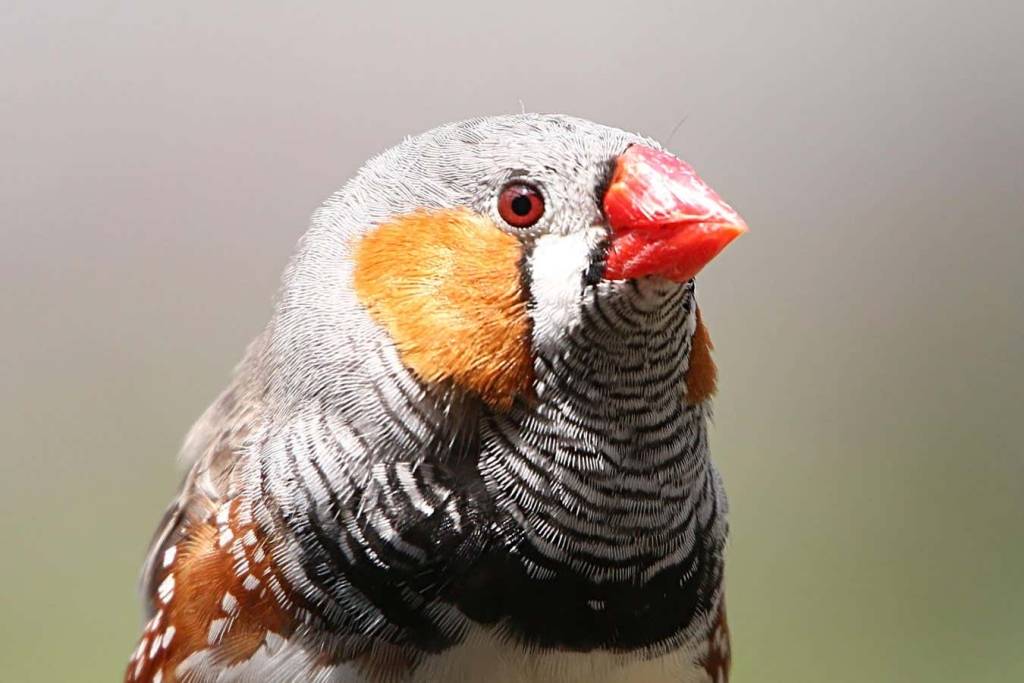
Birds’ Eyes Defy Biology: How Zebra Finches Thrive Without Oxygen in Their Retinas
In a discovery that rewrites the rules of vertebrate physiology, researchers have uncovered a biological anomaly in birds’ eyes that has puzzled scientists for over 400 years. Zebra finches (Taeniopygia guttata), those small, melodious birds commonly found in gardens and aviaries worldwide, possess a retina that operates without oxygen—a feat previously thought impossible in vertebrate animals.
The 400-Year-Old Mystery Solved
For centuries, biologists have marveled at the unique anatomy of bird eyes. Unlike mammals and most other vertebrates, birds possess a structure called the pecten oculi—a comb-like arrangement of blood vessels that projects into the eye from the optic nerve. While this structure was discovered long ago, its exact function remained elusive, with many researchers assuming it delivered oxygen to the retina.
“We have the first evidence that some neurons can work without any oxygen, and they’re found in the birds that fly around in our gardens,” says Christian Damsgaard, lead researcher at Aarhus University in Denmark. This revelation represents nothing short of a neurobiological paradigm shift.
The Oxygen-Free Zone
The retina, a light-sensitive layer at the back of the eye, is one of the most energy-demanding tissues in any animal. In mammals, it receives constant nourishment through a dense network of blood vessels. However, bird retinas present a paradox: they are extraordinarily thick, yet completely devoid of blood vessels within the tissue itself.
Using miniature oxygen sensors implanted in zebra finches’ eyes, Damsgaard’s team made a startling discovery. The inner layers of the retina weren’t just low on oxygen—they were completely oxygen-free.
“They get oxygen from the back of the eye, but it cannot diffuse all the way through the retina,” explains Damsgaard. This finding immediately ruled out the long-held assumption that the pecten oculi functioned as an oxygen delivery system.
The Sugar-Powered Alternative
Instead of oxygen, the oxygen-free regions of the bird retina rely on an ancient metabolic pathway: glycolysis. This process breaks down glucose into energy without requiring oxygen, but it comes at a steep cost—it’s approximately 15 times less efficient than oxygen-based metabolism.
“You need 15 times more glucose to generate the same amount of energy,” Damsgaard notes. This inefficiency raises a critical question: how do birds obtain enough sugar to power their vision?
The answer lies in the pecten oculi. Rather than delivering oxygen, this structure acts as a glucose pump, bathing the retina in sugar at concentrations four times higher than what brain cells typically consume. This sugary solution fuels the retina’s “ravenous glycolysis engine,” enabling vision despite the complete absence of oxygen in critical areas.
Evolutionary Trade-offs and Advantages
Luke Tyrrell, a biologist at the State University of New York at Plattsburgh, expresses surprise at this evolutionary solution. “The retina—especially a bird retina—is one of the most energy-needy tissues in all of the animal kingdom,” he says. “It’s remarkable that birds would evolve to rely on such an inefficient process for their vision.”
The research team proposes that the thick, avascular retina may have evolved to enhance visual acuity—the sharpness of vision. By eliminating blood vessels from the light path, birds achieve superior optical clarity, making the energy inefficiency worthwhile.
This adaptation may also explain how some bird species accomplish extraordinary high-altitude migrations. With their vision unimpaired by low oxygen conditions that would cripple mammalian eyes, these birds can navigate across the Himalayas and other oxygen-poor environments with remarkable precision.
Evolution’s Counterintuitive Solutions
Pavel Němec, a neurobiologist at Charles University in Prague, views the findings as a testament to evolution’s creative problem-solving. “This is a clear case that reminds us that evolution brings very counterintuitive solutions” to physical hurdles, he observes.
The discovery challenges fundamental assumptions about cellular metabolism and opens new avenues for understanding how life can adapt to extreme conditions. While most vertebrate cells die within minutes without oxygen, bird retinal neurons have evolved to thrive in its complete absence.
Potential Applications for Human Medicine
Beyond its implications for evolutionary biology, this discovery could have profound medical applications. Damsgaard and his colleagues speculate that understanding how bird cells tolerate oxygen-free conditions might lead to therapies for human conditions where oxygen deprivation causes cellular damage.
Stroke victims, for instance, suffer extensive brain damage when blood flow—and thus oxygen—is interrupted. If human cells could be modified to temporarily switch to oxygen-independent metabolism, similar to bird retinal cells, it might significantly reduce the damage caused by strokes and other ischemic events.
The Broader Implications
This research exemplifies how even well-studied biological systems can harbor fundamental surprises. For 400 years, scientists observed the pecten oculi without understanding its true function. The structure’s role in glucose delivery rather than oxygen transport represents a complete inversion of previous assumptions.
The findings also highlight the diverse solutions that evolution can produce when faced with similar challenges. While mammals solved the problem of retinal energy supply through vascularization, birds took a radically different path—one that sacrifices metabolic efficiency for optical clarity and altitude tolerance.
As research continues, scientists are eager to determine whether other bird species share this unique retinal metabolism and whether similar adaptations exist in other oxygen-sensitive tissues. The zebra finch’s eyes may be just the beginning of uncovering nature’s alternative strategies for sustaining life under extreme conditions.
Tags: bird vision, zebra finch, retina, oxygen-free metabolism, glycolysis, pecten oculi, avian biology, neurobiology, evolutionary adaptation, high-altitude flight, medical applications, stroke research, optical clarity, vertebrate physiology, biological anomaly
Viral Sentences:
- Birds’ eyes work without oxygen—defying 400 years of biological understanding
- The retina that powers vision on pure sugar alone
- How zebra finches fly higher than their eyes should allow
- Evolution’s counterintuitive solution to the oxygen problem
- The rake-shaped structure that changed everything we knew about vision
- 15 times more sugar for 1/15th the efficiency—worth it for perfect sight
- What bird eyes teach us about surviving without oxygen
- The medical breakthrough hiding in your garden birds
- When nature chooses clarity over efficiency
- The metabolic hack that lets birds see where mammals would go blind
,
![How to disable privacy indicators on external displays connected to your Mac [Video]](https://techno-news.org/wp-content/uploads/2026/02/Hide-Privacy-Indicators-macOS-Mac-Tip-1-150x150.jpg "How to disable privacy indicators on external displays connected to your Mac [Video]")

Leave a Reply
Want to join the discussion?Feel free to contribute!