
Bitcoin, Ethereum, Crypto News & Price Indexes
Chainlink Co-Founder Sergey Nazarov Declares This Bear Market Unlike Any Other—Here’s Why the Crypto Industry Just Got Stronger
In a bold statement that’s sending shockwaves through the cryptocurrency community, Chainlink co-founder Sergey Nazarov has declared that the current crypto market downturn represents something fundamentally different from previous bear markets. While Bitcoin and altcoins have collectively shed nearly $2 trillion in market value since October’s all-time highs, Nazarov sees this correction as evidence of an industry that’s matured beyond the catastrophic collapses that have defined previous cycles.
The crypto market has experienced a brutal 44% decline from its October peak of $4.4 trillion, with billions of dollars evaporating from the ecosystem in just four months. Yet according to Nazarov, this pain is fundamentally different from what investors experienced during the FTX collapse of 2022 or the crypto lending crisis that followed.
No Major Institutional Failures—And That’s a Big Deal
“What separates this cycle from previous ones is the absence of systemic risk events,” Nazarov explained in a Tuesday post on X. “There have been no large risk management failures leading to large institutional failures or widespread systemic risks.”
This observation cuts to the heart of why this bear market might actually represent progress rather than regression. In previous cycles, the crypto industry has been defined by spectacular failures—Mt. Gox, FTX, Celsius, and countless others that shook investor confidence to its core. This time, despite the significant price decline, the infrastructure has held.
The absence of major institutional collapses during this drawdown demonstrates that the industry has developed more robust risk management practices and can now handle volatility more reliably. This resilience could be the foundation for the next wave of institutional adoption.
Real-World Assets Are Thriving—Regardless of Crypto Prices
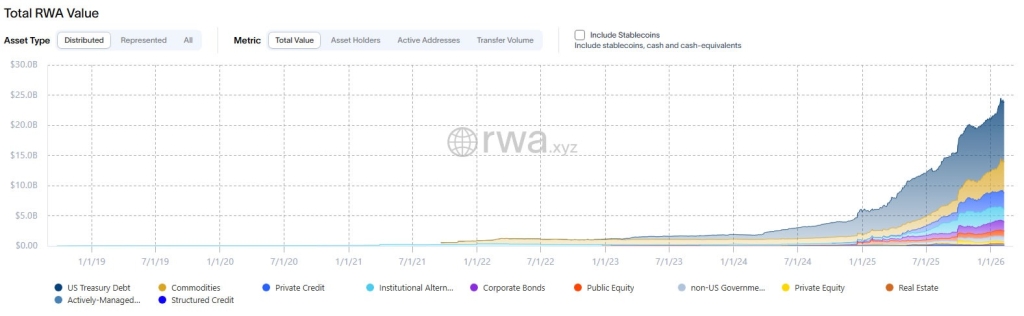
Perhaps even more significant than the lack of failures is what Nazarov identifies as the continued acceleration of tokenized real-world assets (RWAs). While Bitcoin and Ethereum prices have tumbled, the tokenization of traditional assets has surged forward at an unprecedented pace.
According to data from RWA.xyz, the total value of tokenized real-world assets has increased by an astonishing 300% over the past 12 months. This growth trajectory shows no signs of slowing, even as crypto prices have plummeted.
“This signals that having real-world assets on-chain is not tightly coupled to cryptocurrency prices but provides its own unique value that can grow irrespective of market pricing of Bitcoin or other crypto assets,” Nazarov emphasized.
The implications are profound. For years, critics have dismissed blockchain technology as nothing more than a speculative vehicle for cryptocurrencies. The continued growth of RWAs suggests that blockchain’s utility extends far beyond trading digital tokens—it’s becoming the infrastructure for the next generation of financial markets.
Chainlink’s Own Token Tells a Different Story
Ironically, despite Nazarov’s optimistic outlook on the broader industry trends, Chainlink’s native token LINK has suffered significantly during this downturn. The oracle token has tanked 67% since its October peak and is down a staggering 83% from its 2021 all-time high, currently trading below $9 at bear market lows.
This disconnect between Nazarov’s bullish thesis and LINK’s price performance highlights a common phenomenon in crypto markets where fundamental developments often lag behind token price movements. The infrastructure that supports the tokenization of trillions in real-world assets may be gaining momentum, but that doesn’t necessarily translate to immediate price appreciation for the tokens that power that infrastructure.
The Convergence of Trends Reshaping Crypto’s Future
Nazarov sees several converging trends that will fundamentally reshape what the cryptocurrency industry represents. On-chain perpetual contracts and tokenization offer unique advantages that traditional finance simply cannot match: 24/7 markets, on-chain collateral, and real-time data feeds that enable entirely new forms of trading and asset management.
“As complex RWAs require more sophisticated on-chain systems, infrastructure demand will surge,” Nazarov predicted. “Institutional adoption will be driven by this fundamental utility rather than speculation alone.”
The Chainlink co-founder believes these trends point toward a future where the total value locked in tokenized real-world assets will eventually surpass the value of cryptocurrencies themselves. This would represent a fundamental shift in what the crypto industry is actually about—moving from a focus on digital currencies to becoming the infrastructure layer for the global financial system.
“If these trends continue, I believe what I have been saying for years will happen: on-chain RWAs will surpass cryptocurrency in the total value in our industry, and what our industry is about will fundamentally change,” Nazarov stated.
Industry Analysts Echo the Optimistic Sentiment
Nazarov isn’t alone in his assessment that this bear market is different. Bernstein analyst Gautam Chhugani echoed the sentiment in a Monday note, writing that the current environment represents “the weakest Bitcoin bear case in its history.”
“The current Bitcoin price action is a mere crisis of confidence. Nothing broke, no skeletons will show up,” Chhugani’s team wrote, suggesting that the market is experiencing a correction without the fundamental problems that have plagued previous downturns.
Jeff Mei, chief operating officer at the BTSE exchange, offered additional perspective on why this sell-off feels different. “This sell-off is different in that it was caused largely by non-crypto catalysts,” Mei told Cointelegraph.
Those catalysts include fears that a faltering AI tech boom could trigger a broader stock market crash, compounded by concerns about liquidity following the appointment of Kevin Warsh to Federal Reserve chair. The crypto market is being dragged down by macroeconomic factors rather than internal weaknesses—a significant distinction that suggests the industry’s fundamentals remain intact.
Why This Matters for Crypto’s Long-Term Trajectory
The convergence of these factors—absence of major failures, continued RWA growth, and external market pressures—suggests that the crypto industry may be entering a new phase of maturity. Rather than being defined by boom-and-bust cycles driven by speculation and fraud, the industry appears to be developing the infrastructure and use cases that could support sustained growth.
The tokenization of real-world assets represents perhaps the most significant development in this maturation process. By bringing traditional assets like real estate, commodities, and securities onto blockchain networks, the crypto industry is expanding beyond its origins as a purely digital phenomenon.
This expansion creates a buffer against the volatility that has characterized crypto markets. When the value of tokenized assets is driven by the underlying properties of real-world commodities or securities rather than pure speculation, the entire ecosystem becomes more resilient to market shocks.
The Road Ahead: Infrastructure, Adoption, and Transformation
Looking forward, the crypto industry appears poised for a transformation that could make current debates about Bitcoin’s price or Ethereum’s dominance seem quaint by comparison. As more traditional assets become tokenized and more institutions build on-chain infrastructure, the lines between crypto and traditional finance will continue to blur.
The demand for sophisticated infrastructure to support complex real-world assets will drive innovation in areas like oracles, cross-chain interoperability, and compliance tools. Companies like Chainlink, which provide the connective tissue between on-chain and off-chain systems, stand to benefit enormously from this trend.
Meanwhile, the continued growth of tokenized assets regardless of crypto market conditions suggests that blockchain technology has achieved product-market fit beyond its original use case. This diversification of utility could be the key to the industry’s long-term survival and growth.
As Nazarov’s analysis suggests, the current bear market might be remembered not as another painful cycle, but as the moment when crypto grew up—shedding its reputation for catastrophic failures and establishing itself as the infrastructure for the next generation of global finance.
Tags
Chainlink #SergeyNazarov #CryptoBearMarket #RealWorldAssets #RWA #Tokenization #Blockchain #Crypto #Bitcoin #Ethereum #LINK #CryptoNews #MarketAnalysis #CryptoAdoption #InstitutionalCrypto #CryptoInfrastructure #BlockchainTechnology #CryptoInnovation #DigitalAssets #OnChain #CryptoFuture #MarketRecovery #CryptoTrends #BlockchainRevolution
ViralSentences
This bear market is different—no major collapses, just growing strength
Real-world asset tokenization is booming while crypto prices crash
Chainlink’s LINK token down 83% but the underlying thesis is stronger than ever
The crypto industry just proved it can handle volatility without breaking
Tokenized RWAs grew 300% in a year while Bitcoin fell 44%
Institutional adoption is coming through utility, not speculation
What if this correction is actually crypto growing up?
Blockchain is becoming the infrastructure for global finance, not just digital gold
The future of crypto isn’t about coins—it’s about tokenizing the real world
This is the weakest Bitcoin bear case in history, and that’s actually bullish
No skeletons in the closet this time—just a crisis of confidence
Crypto’s maturation is happening right before our eyes
The lines between traditional finance and crypto are disappearing
Infrastructure demand will surge as complex RWAs require sophisticated systems
On-chain RWAs will eventually surpass cryptocurrency in total value
The crypto industry is evolving from speculation to utility
This downturn proves crypto can survive without major institutional failures
Tokenization offers 24/7 markets and real-time data that traditional finance can’t match
The future of finance is being built on blockchain right now
Crypto’s next wave isn’t about price—it’s about transforming how assets work
,


Leave a Reply
Want to join the discussion?Feel free to contribute!