
Bubble feeding trick spreads through humpback whale social groups
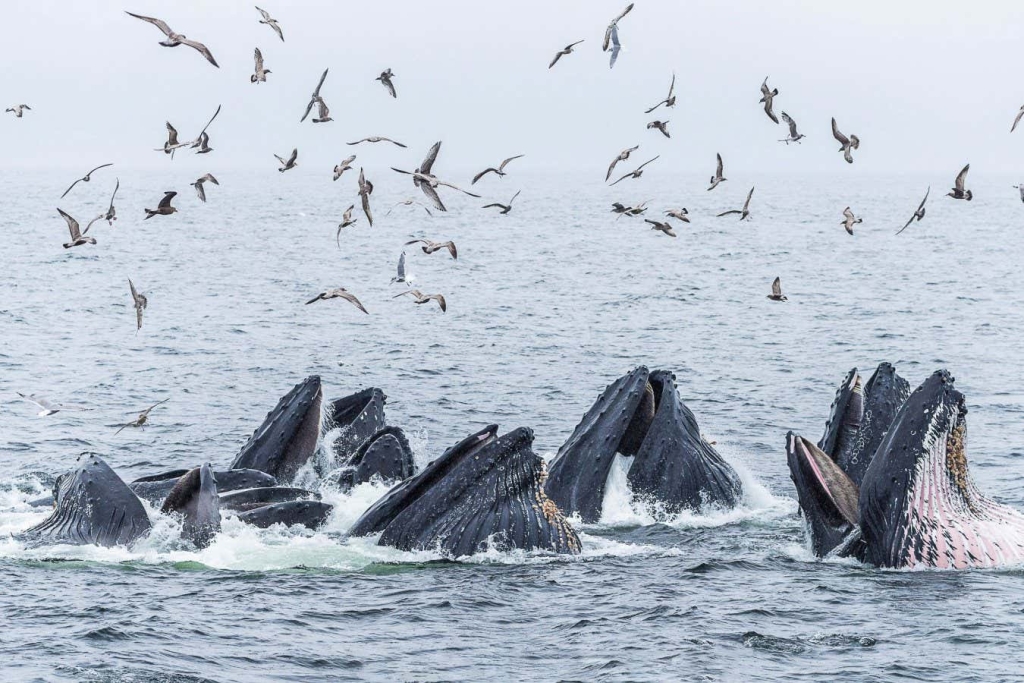
Humpback Whales’ Bubble-Net Feeding: A Viral Cultural Revolution in the Deep Blue
In a groundbreaking discovery that’s making waves in the marine biology world, humpback whales in the fjords of western Canada have adopted a revolutionary feeding technique that’s spreading like wildfire through their social networks. This isn’t just a story about survival—it’s a tale of innovation, cooperation, and the power of cultural knowledge in the animal kingdom.
The Bubble-Net Feeding Phenomenon
Imagine this: a group of humpback whales working together like a well-oiled machine, blowing bubbles to create a “net” that traps schools of fish. Then, in a synchronized burst of energy, they surge upward, mouths agape, to feast on their trapped prey. This is bubble-net feeding, a group hunting technique that’s been observed for decades in Alaskan waters but has only recently taken off among humpback whales in British Columbia’s Kitimat Fjord System.
A Cultural Breakthrough
What makes this discovery so fascinating is that it’s not just about survival—it’s about the transmission of knowledge. Researchers from the University of St Andrews, led by Éadin O’Mahony, analyzed 20 years of field data (2004–2023) and found that this behavior is spreading through social learning, not just individual discovery. The whales are teaching each other, passing down this innovative technique through their social networks.
The Heatwave Connection
The timing of this behavioral shift is no coincidence. Around 2014, a major marine heatwave hit the northeastern Pacific, drastically reducing prey availability. For humpback whales, this was a crisis. But instead of succumbing to the challenges, they adapted. The study found that whales who regularly associated with others already using bubble-net feeding were more likely to adopt the technique themselves. It’s a clear example of how cultural knowledge can help animal populations survive in the face of environmental change.
The Science Behind the Spread
The researchers identified individual whales using unique tail fluke patterns, tracking 526 whales in the Kitimat Fjord System. Of these, 254 individuals performed bubble-net feeding at least once, with about 90% of these events occurring in a cooperative context. The data shows that the behavior took off after 2014, coinciding with the marine heatwave. Whales who were already in the area but hadn’t previously engaged in bubble-net feeding began adopting the technique, likely introduced by whales migrating from other parts of the northeastern Pacific.
Why This Matters
This discovery isn’t just a fascinating insight into whale behavior—it’s a reminder of the importance of cultural knowledge in animal populations. As Ted Cheeseman, co-founder of the citizen science platform Happywhale, puts it, “It’s not just about how many animals are left, but about whether the social behaviors that make the population function are coming back too.” Understanding these cultural dynamics could be key to protecting humpback whales and other species in the face of climate change and other environmental challenges.
The Bigger Picture
The spread of bubble-net feeding among humpback whales is a testament to the power of social learning and cooperation. It’s a reminder that even in the vast, seemingly solitary expanse of the ocean, animals are connected through complex social networks. And in a world where environmental changes are happening at an unprecedented pace, the ability to adapt and share knowledge could be the key to survival.
Tags: #HumpbackWhales #BubbleNetFeeding #MarineBiology #CulturalLearning #AnimalBehavior #OceanConservation #ClimateChange #SocialNetworks #InnovationInNature #WildlifeResearch
Viral Sentences:
- “Humpback whales are teaching each other to blow bubbles and catch fish—talk about a viral trend in the ocean!”
- “When the going gets tough, the whales get innovative. Bubble-net feeding is the ultimate survival hack.”
- “Forget TikTok—humpback whales are the real trendsetters, spreading feeding techniques like wildfire.”
- “This is not just a story about whales; it’s a story about the power of culture and cooperation in the face of adversity.”
- “The ocean’s smartest creatures are proving that teamwork makes the dream work—bubble by bubble.”
,

Leave a Reply
Want to join the discussion?Feel free to contribute!