
By Giving Players A Choice, Assassin's Creed Shadows Undermined Its Best Idea
Assassin’s Creed Shadows: The Missed Opportunity That Still Haunts Us One Year Later
Exactly one year ago today, on March 20, 2025, Ubisoft unleashed Assassin’s Creed Shadows upon the gaming world—a bold reimagining of the franchise that dared to tell its story through two distinct protagonists. What should have been revolutionary instead became a fascinating “what if” scenario that continues to spark debate across gaming communities worldwide.
The Dual Protagonist Concept That Almost Changed Everything
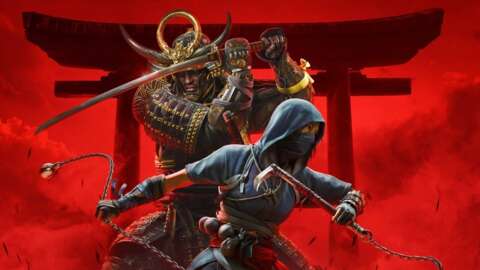
When Assassin’s Creed Shadows launched, it arrived bearing the weight of immense expectations. Set against the backdrop of 16th-century feudal Japan, the game introduced players to Naoe, a fictional shinobi driven by personal vengeance, and Yasuke, the historical African samurai whose very existence challenged the rigid social structures of the time. This wasn’t just another Assassin’s Creed entry—this was supposed to be a masterclass in narrative duality.
The brilliance of the concept was immediately apparent. Here were two characters from entirely different worlds: Naoe, native to Japan’s complex political landscape and steeped in the traditions of ninjutsu; Yasuke, an African outsider navigating a society that viewed him with equal parts fascination and suspicion. Their contrasting motivations—personal revenge versus duty-bound loyalty—promised a rich tapestry of conflict and cooperation.
The Gameplay Split That Should Have Been Deeper
Mechanically, Shadows reinforced this duality through fundamentally different playstyles. Naoe’s toolkit emphasized stealth, deception, and precision strikes—the quintessential shadow warrior who could disappear into the night. Yasuke, conversely, was built for confrontation, excelling in direct combat with devastating power and presence. The freedom to switch between these characters during exploration was initially exhilarating, offering players unprecedented tactical flexibility.
Yet here’s where the tragedy of Shadows becomes apparent: this dual-protagonist system, while innovative, was fundamentally underutilized. The game’s structure allowed for character switching but rarely demanded it, resulting in a missed opportunity to create truly meaningful narrative and mechanical friction between Naoe and Yasuke’s perspectives.
The “What If” Scenario That Keeps Players Up at Night
Imagine, if you will, an alternate version of Assassin’s Creed Shadows where the second act—typically the meat of any narrative experience—was entirely restructured around the irreconcilable differences between these two characters. Picture a scenario where Naoe and Yasuke are working toward the same ultimate goal but are perpetually at odds about methodology, ethics, and even the nature of justice itself.
This isn’t just wishful thinking; it’s a critique that has resonated throughout the game’s player base. The potential for a narrative that forces players to truly inhabit two conflicting worldviews, to make decisions that one protagonist would approve of while the other would condemn, represents the kind of bold storytelling that could have elevated Shadows from a good game to a landmark achievement.
The Community’s Lingering Questions
One year later, forums and social media remain abuzz with discussions about what Shadows could have been. The gaming community has generated countless “what if” scenarios, ranging from entirely separate story campaigns for each character to mechanics that would lock players into one protagonist’s perspective for extended periods, forcing them to experience the consequences of choices made from a single, limited viewpoint.
The question that keeps resurfacing is deceptively simple: why introduce such compelling duality only to let it exist as window dressing rather than the core of the experience? Players report feeling the weight of this missed opportunity most acutely during the game’s second act, where the narrative momentum should have been building toward a crescendo of character conflict and ideological divergence.
The Technical Achievement We Can’t Ignore
Despite these criticisms, Assassin’s Creed Shadows remains a technical marvel. The recreation of 16th-century Japan is breathtaking in its detail, from the meticulously researched architecture to the dynamic weather systems that affect both gameplay and atmosphere. The voice acting for both protagonists is superb, with Naoe and Yasuke feeling like fully realized characters even when the narrative doesn’t always serve them as well as it could.
The game’s commitment to historical authenticity, particularly regarding Yasuke’s portrayal as a real historical figure, deserves recognition. Shadows took genuine risks by centering a story on an African samurai in feudal Japan—a narrative choice that could have easily veered into problematic territory but instead was handled with surprising nuance and respect.
The DLC That Reinforced Rather Than Evolved
The Claws of Awaji DLC, released several months after the main game, unfortunately did little to address these fundamental concerns. While it expanded the game’s content and provided additional hours of exploration and combat, it maintained the same structural approach that left the dual-protagonist concept feeling underutilized. For many players, this DLC served as a final confirmation that Shadows would remain a game of unrealized potential rather than the revolutionary experience it could have been.
Looking Forward: What This Means for the Franchise
As we reflect on Assassin’s Creed Shadows one year later, the conversation has shifted from initial reviews to a more nuanced understanding of what the game represents for the franchise’s future. The willingness to experiment with dual protagonists, to tackle complex historical narratives, and to create fundamentally different gameplay experiences within the same title demonstrates a creative ambition that should be encouraged.
However, the execution serves as a cautionary tale about the importance of fully committing to bold ideas. The gaming community’s continued engagement with Shadows—not just as a product to be consumed but as a creative experiment to be analyzed—suggests that players are hungry for more ambitious narrative structures, even when those structures aren’t perfectly realized.
The Legacy of “What Could Have Been”
Perhaps the most fascinating aspect of Assassin’s Creed Shadows one year later is how it has become a case study in potential versus execution. The game exists in a strange space where its best ideas are simultaneously celebrated and lamented, where players can appreciate what was accomplished while still feeling the absence of what might have been.
This duality—the game itself becoming a reflection of its own narrative themes—is perhaps the most poetic aspect of Shadows‘ legacy. Just as Naoe and Yasuke were two characters who should have been forced into deeper conflict and cooperation, the game itself represents the tension between innovation and convention, between taking risks and playing it safe.
As we move forward in gaming’s evolution, Assassin’s Creed Shadows stands as both an inspiration and a warning: bold ideas demand bold execution, and the path to creating truly memorable interactive experiences often requires the courage to fully embrace the very conflicts that make our stories worth telling.
Tags: Assassin’s Creed Shadows, dual protagonists, Naoe, Yasuke, 16th century Japan, shinobi, samurai, stealth gameplay, open combat, narrative duality, Ubisoft, feudal Japan, historical fiction, video game review, missed opportunity, game design, storytelling innovation, player choice, character conflict, DLC, Claws of Awaji, gaming community, franchise evolution
Viral Phrases: “The game that could have changed everything,” “Two characters, one missed opportunity,” “Where innovation meets execution,” “The duality that wasn’t,” “Gaming’s greatest ‘what if’,” “Shadows of potential,” “The conflict we never got to see,” “Bold ideas, safe execution,” “The protagonist problem,” “What Shadows should have been,” “The anniversary that makes us think,” “Innovation’s double-edged sword,” “The game that haunts us still,” “Duality unfulfilled,” “The path not taken,” “Shadows of regret,” “The experiment that almost worked,” “Where could have been meets what is,” “The legacy of potential,” “Gaming’s most fascinating failure.”
,

Leave a Reply
Want to join the discussion?Feel free to contribute!