
Caltech Breakthrough Brings Fiber-Optic Performance to Silicon Chips
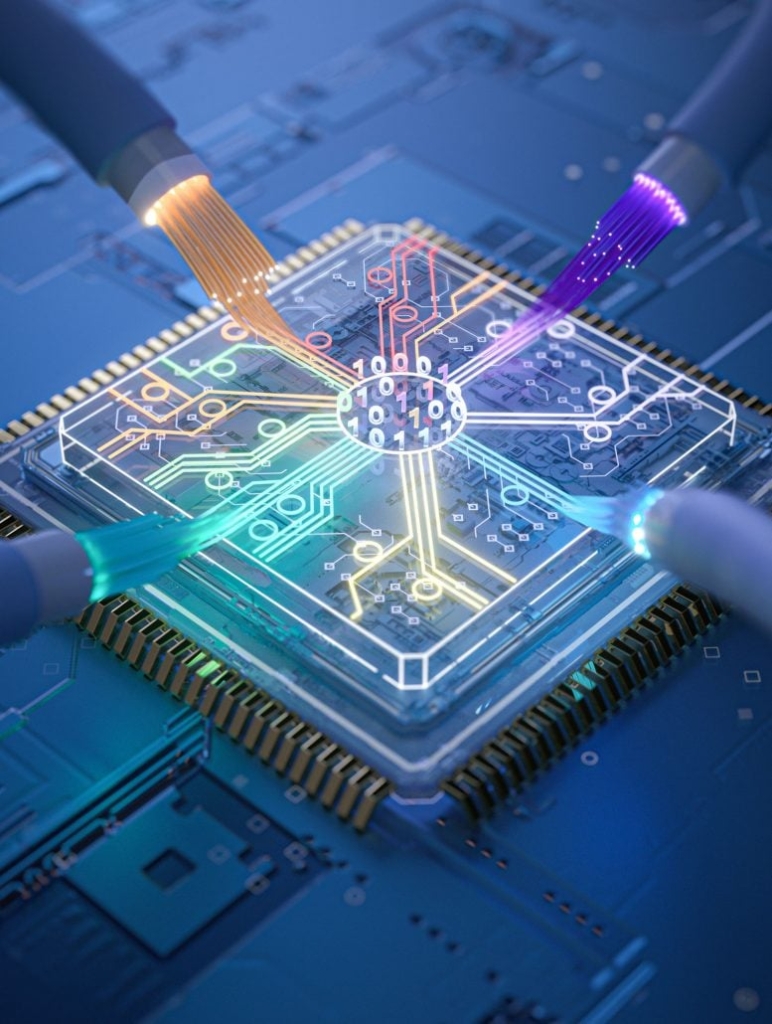
Caltech Achieves Groundbreaking Milestone: Fiber-Optic Performance Now Possible on Silicon Chips
In a technological leap that could redefine the future of computing, communications, and quantum technologies, researchers at the California Institute of Technology (Caltech) have developed a revolutionary technique that brings fiber-optic-level performance to silicon photonic chips. This breakthrough, detailed in a recent publication, promises to unlock new frontiers in laser coherence, quantum computing, and advanced sensing technologies.
The Challenge of Light Loss in Silicon Chips
For decades, optical fibers have been the gold standard for transmitting light with minimal loss, enabling high-speed internet and global communications. However, replicating this performance on silicon chips—compact platforms essential for modern electronics—has proven to be a formidable challenge. Silicon, while excellent for electronic circuits, has inherent limitations when it comes to guiding light, particularly at visible wavelengths. This has restricted the development of compact, high-performance photonic devices.
The Caltech Solution: Fiber-Like Photonic Chips
Caltech’s team, led by a group of pioneering researchers, has overcome this hurdle by designing silicon photonic chips that mimic the ultralow-loss performance of optical fibers. Their innovative approach involves engineering the silicon wafer’s structure to guide light with unprecedented efficiency, even at visible wavelengths. This is a significant achievement, as visible light is notoriously difficult to manage on silicon due to its shorter wavelengths and higher susceptibility to scattering and absorption.
Key Innovations and Implications
The researchers achieved this feat by meticulously optimizing the chip’s design, incorporating advanced materials and fabrication techniques. The result is a photonic chip that can transmit light across its surface with minimal signal degradation, rivaling the performance of traditional optical fibers. This breakthrough opens the door to a host of applications:
-
Enhanced Laser Coherence: The ability to maintain high-quality light signals on silicon chips could lead to the development of more coherent and stable lasers, which are critical for precision measurements, telecommunications, and medical devices.
-
Quantum Computing Advancements: Quantum technologies rely on the precise control of light and matter. Caltech’s innovation could enable the creation of more efficient quantum processors and sensors, accelerating progress in this cutting-edge field.
-
Next-Generation Sensing Technologies: From environmental monitoring to biomedical diagnostics, the improved performance of silicon photonic chips could enhance the sensitivity and accuracy of optical sensors.
-
Compact and Energy-Efficient Devices: By integrating fiber-optic-level performance into silicon chips, devices can become smaller, faster, and more energy-efficient, paving the way for advancements in everything from smartphones to data centers.
A New Era for Photonics
This breakthrough represents a paradigm shift in the field of photonics, the science of light manipulation. By bridging the gap between optical fibers and silicon chips, Caltech’s researchers have laid the groundwork for a new generation of photonic devices that combine the best of both worlds: the compactness and scalability of silicon with the performance of fiber optics.
The Road Ahead
While the technology is still in its early stages, the implications are profound. As researchers continue to refine and scale up this innovation, we can expect to see its impact across a wide range of industries. From enabling faster and more reliable internet connections to powering the next wave of quantum technologies, Caltech’s breakthrough is poised to shape the future of technology in ways we are only beginning to imagine.
Tags and Viral Phrases
- Caltech breakthrough
- Silicon photonic chips
- Fiber-optic performance
- Visible-light loss
- Quantum computing
- Laser coherence
- Next-generation sensing
- Ultralow-loss technology
- Photonic devices
- Optical fibers
- Silicon wafers
- Advanced materials
- Energy-efficient devices
- Compact photonics
- Global communications
- Precision measurements
- Biomedical diagnostics
- Data centers
- High-speed internet
- Revolutionary technology
- Game-changing innovation
- Future of computing
- Light manipulation
- Scalable solutions
- Cutting-edge research
,


Leave a Reply
Want to join the discussion?Feel free to contribute!