
Campaign Urges Users to Quit ChatGPT Over OpenAI’s Support for Trump and ICE
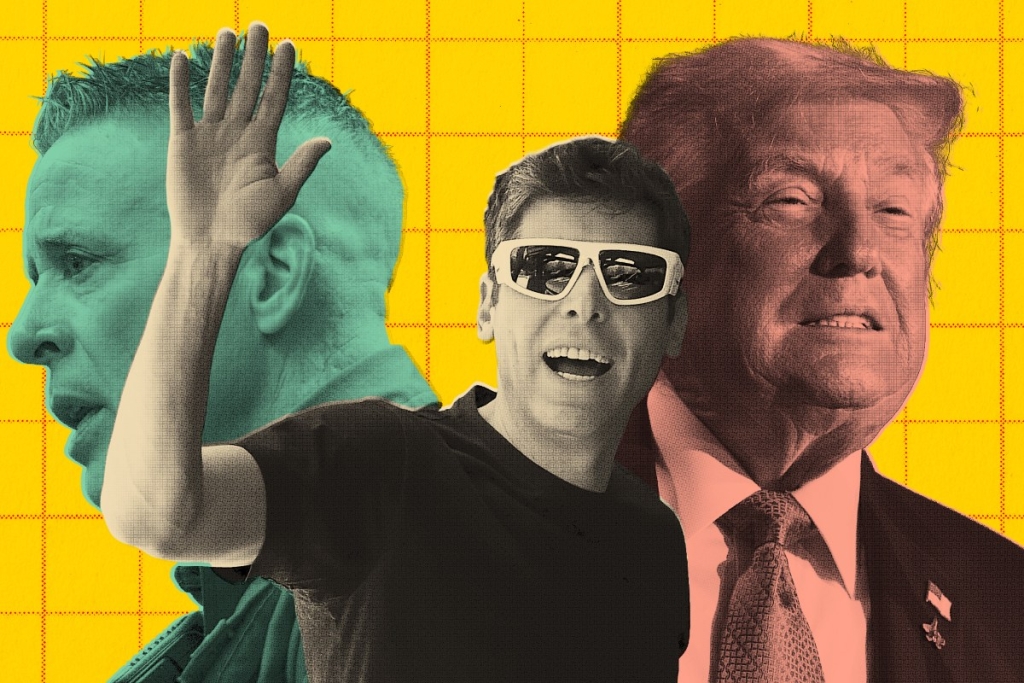
The Great AI Exodus: How 700,000 Users Are Canceling ChatGPT to Fight Tech’s Trump Alliance
In a stunning digital rebellion that’s sending shockwaves through Silicon Valley, over 700,000 users have joined the “QuitGPT” movement—a grassroots boycott targeting OpenAI’s ChatGPT that’s rapidly becoming one of the most significant consumer revolts in tech history. What began as quiet frustration has exploded into a full-blown movement, with everyday users, tech professionals, and privacy advocates all united under one banner: if AI companies want to cozy up to Trump, they’ll do it without our data and dollars.
The Spark That Lit the Fire
The flames of this digital uprising were fanned by a $25 million donation that made tech industry insiders gasp. OpenAI president Greg Brockman’s contribution to a Trump Super PAC wasn’t just another political contribution—it was the breaking point for thousands who had already grown uneasy about Big Tech’s increasingly intimate relationship with the administration.
“I’ve been using ChatGPT since it launched,” says Maria Chen, a data scientist from Seattle who cancelled her subscription last week. “But when I heard about Brockman’s donation, something snapped. I realized I was funding both sides of this equation—paying for a service while the company’s leadership was bankrolling policies I fundamentally oppose.”
The Infrastructure of Complicity
The QuitGPT movement isn’t just about one donation. It’s about what organizers call the “infrastructure of complicity” that’s developed between AI companies and the Trump administration. The $500 billion AI infrastructure project announced in the Oval Office wasn’t just a business deal—it was a public declaration of allegiance that many users now see as a betrayal.
“We’re not naive,” explains Jordan Rivera, one of the movement’s organizers. “We know tech and government have always had relationships. But this goes beyond normal lobbying. This is about AI companies actively enabling policies that harm vulnerable communities while asking us to trust them with our most intimate data.”
ICE, AI, and the Line That Was Crossed
For many boycotters, the final straw wasn’t political—it was personal. When news broke that ICE was using AI tools powered by ChatGPT for recruitment and operations, the abstract concerns about privacy and ethics suddenly became very concrete.
“As a child of immigrants, I couldn’t reconcile using a service that was helping agencies separate families,” says Carlos Mendoza, who cancelled his family’s three ChatGPT subscriptions. “My parents came here for a better life. Now the technology I use might be helping send people back to danger. That’s not a trade-off I’m willing to make anymore.”
The Mental Health Crisis Nobody’s Talking About
Beyond the political concerns, QuitGPT organizers are raising alarms about what they call “AI dependency syndrome”—a phenomenon where users, particularly young people, are forming unhealthy attachments to AI companions.
“ChatGPT isn’t just a tool anymore,” notes Dr. Sarah Thompson, a psychologist studying technology addiction. “For some users, it’s become a replacement for human connection. We’re seeing cases where people are spending 8-10 hours a day with AI companions, neglecting real relationships and responsibilities.”
The movement points to OpenAI’s development of more “engaging” AI personalities as particularly problematic. “They’re designing these systems to be addictive,” Rivera argues. “The more you use them, the more data they collect, the more valuable they become to their corporate partners. It’s a vicious cycle that’s exploiting human psychology.”
The Corporate Response: Deafening Silence
OpenAI has remained conspicuously quiet about the boycott, though insiders report growing concern within the company. Multiple employees, speaking anonymously, describe a workplace divided between those who support the administration’s policies and those who feel increasingly alienated.
“There’s real tension here,” says one OpenAI engineer who asked to remain anonymous. “Some of us joined this company because we believed in democratizing AI for everyone. Now we’re watching it become a tool for surveillance and political power consolidation. Several colleagues have already left, and more are considering it.”
The Technical Exodus
The boycott isn’t just symbolic—it’s causing real technical headaches for OpenAI. With over 700,000 users cancelling subscriptions, the company is losing approximately $14 million in monthly recurring revenue. But the impact goes deeper: many users are also deleting their accounts entirely, removing valuable training data from OpenAI’s models.
“Every deleted account is a loss of context, of conversation history, of behavioral data,” explains Alex Chen, a machine learning researcher. “For a company whose competitive advantage is built on data, this is a significant blow.”
Alternative AI: The Boycott’s Unintended Consequence
One unexpected outcome of QuitGPT has been the surge in interest for alternative AI platforms. Companies like Anthropic, Cohere, and open-source projects are reporting increased traffic and new user sign-ups as people seek ChatGPT alternatives that align better with their values.
“We’ve seen a 300% increase in traffic since the boycott began,” says Dario Amodei, CEO of Anthropic. “People are actively looking for AI companies that haven’t compromised their principles for political access.”
The Social Media Amplification Effect
What makes this boycott particularly powerful is its viral nature on social media. The hashtag #QuitGPT has trended multiple times, with users sharing screenshots of their cancellation confirmations and explaining their reasons. Some have even created “cancellation parties” where groups cancel together and discuss alternatives.
“It’s become a form of digital activism,” notes social media analyst Priya Kapoor. “People aren’t just cancelling—they’re making it a public statement. That visibility is what’s making this movement so impactful.”
The Economic Ripple Effect
The financial implications extend beyond OpenAI. Microsoft, a major investor in OpenAI, has seen its stock price fluctuate as investors worry about the long-term viability of their AI investments. Other tech companies are watching nervously, aware that consumer sentiment could turn against them next.
“We’re at a tipping point,” argues tech industry analyst Marcus Washington. “Consumers are realizing they have power. They’re not just products to be monetized—they’re stakeholders who can vote with their wallets.”
The Human Stories Behind the Numbers
Behind every cancelled subscription is a human story. Take Sarah Jenkins, a high school teacher who used ChatGPT to create lesson plans. “I loved how it saved me time,” she says. “But when I learned about the ICE connection, I couldn’t in good conscience use it anymore. I’ve gone back to creating my own materials, and honestly, I think my lessons are better for it.”
Or consider James Park, a software developer who built his business around ChatGPT integrations. “I had to completely pivot my business model,” he explains. “It was painful financially, but I sleep better at night knowing I’m not contributing to something I believe is harmful.”
The Movement’s Demands
QuitGPT organizers aren’t just asking for cancellations—they’re demanding accountability. Their platform calls for:
- Complete transparency about government contracts and data sharing
- Independent oversight of AI ethics and safety
- Public commitments to not support authoritarian policies
- Better mental health safeguards for AI interaction
- Support for open-source alternatives that prioritize user privacy
The Road Ahead
As the boycott enters its second month, questions remain about its long-term impact. Will OpenAI change its policies? Will other AI companies learn from this and maintain greater distance from political power? Or will this simply be a temporary blip in the relentless march of AI integration?
What’s clear is that consumers have found their voice. The QuitGPT movement has demonstrated that in the age of AI, users aren’t passive consumers—they’re active participants who can shape the technology’s development through their choices.
The Broader Implications
This isn’t just about ChatGPT anymore. The QuitGPT movement is sparking a broader conversation about the role of AI in society, the responsibilities of tech companies, and the power of collective action in the digital age.
“We’re witnessing the birth of digital citizenship 2.0,” suggests futurist Amelia Rodriguez. “People are recognizing that their data, their attention, and their money are forms of political currency. How they choose to spend them matters.”
As the movement grows, it’s forcing everyone—from Silicon Valley executives to everyday users—to confront uncomfortable questions about the true cost of convenience and the price of progress.
The QuitGPT boycott may be just the beginning. If successful, it could establish a new paradigm for how consumers interact with AI technology—one where ethical considerations and political accountability are as important as functionality and features.
In the end, the message from QuitGPT’s 700,000-strong community is clear: if you want our trust, you’ll have to earn it. And if you want our data, you’ll have to deserve it.
Tags & Viral Phrases:
-
QuitGPT
-
DeleteChatGPT
-
TechResistance
- “Don’t support the fascist regime”
- “AI companies are cozying up to Trump while ICE is killing Americans”
- “ChatGPT enables mental-health crises through sycophancy”
- “They’re designing these systems to be addictive”
- “700,000 users revolt against AI tyranny”
- “The great AI exodus”
- “Silicon Valley’s Trump problem”
- “Your data, your power”
- “Digital citizenship 2.0”
- “The infrastructure of complicity”
- “AI dependency syndrome”
- “Cancel culture meets AI”
- “The $14 million monthly revolt”
- “When your AI assistant becomes a political liability”
- “The boycott that’s making Microsoft nervous”
- “OpenAI’s $25 million mistake”
- “ICE using ChatGPT? That’s the line.”
- “Your ChatGPT subscription might be funding Trump”
- “The human stories behind the AI rebellion”
- “Tech’s reckoning with its political bedfellows”
- “The movement that’s forcing AI companies to choose sides”
- “Your attention is political currency”
- “The ripple effect of ethical tech choices”
,


Leave a Reply
Want to join the discussion?Feel free to contribute!