
Can a Leica lens on a phone beat a Leica camera? I compared the Leitzphone and the Q3 Monochrom to find out
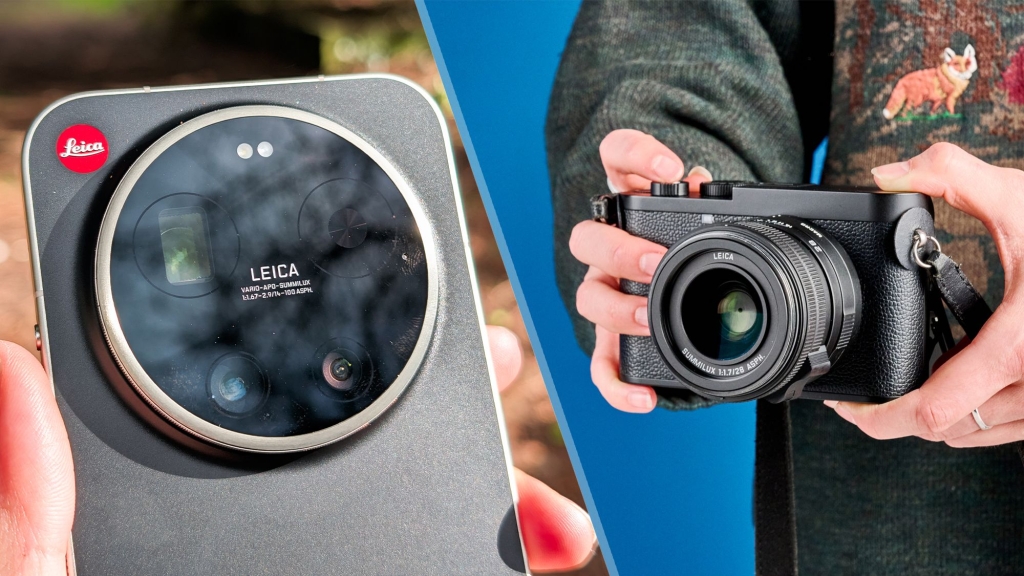
Leica Leitzphone vs Leica Q3 Monochrom: A Smartphone That Challenges a Full-Frame Camera
On February 28, Leica unveiled its first-ever international smartphone, the Leitzphone, in collaboration with Xiaomi. As a Leica-branded device, it carries the iconic German manufacturer’s signature red dot and incorporates imaging technology inspired by its best mirrorless cameras. This groundbreaking smartphone boasts the most advanced camera system I’ve ever seen on a mobile device, capable of capturing 200MP images with exceptional optical image stabilization and autofocus.
For the past week, I’ve been extensively testing the Leitzphone’s photography capabilities. After all, it’s a Leica, so it has to be exceptional, right? You’d be absolutely correct in making that assumption, because the Leitzphone honestly outperforms my trusty Google Pixel 10 Pro XL in ways I didn’t expect. To put things in perspective, I’ve also been testing the Leica Q3 Monochrom full-frame camera for the past two weeks. Naturally, I was curious to see how the Leitzphone would compare against Leica’s latest addition to its lineup of black-and-white cameras.
Usually, when I compare smartphone cameras to mirrorless cameras, it feels like an unfair comparison since smartphones simply don’t have the physical space to accommodate large sensors like mirrorless cameras do. But this time around, it was a different story. After all, both the Leitzphone and the Q3 Monochrom were developed by Leica, so it feels more like a fair competition. And the results? Well, the Leitzphone might actually be the closest a smartphone has ever come to besting a full-frame camera.
A Quick Rundown of Specs
Before we dive into comparing the Leica Q3 Monochrom’s and the Leica Leitzphone’s image quality, let me give you a quick rundown of the specs. We’ll start with the Leitzphone first. The smartphone features four cameras: three on the back and a selfie camera on the front. The triple-camera system around the back comprises a 50MP f/1.67 main camera with a 23mm full-frame equivalent focal length; a 50MP f/2.2 ultra-wide-angle camera with a 14mm full-frame equivalent focal length; and a 200MP 75-100mm f/2.39-2.96 telephoto camera with optical zoom resulting in up to 400mm (17.2x) optical-level zoom.
All three cameras feature optical image stabilization, which enables you to shoot handheld even at maximum focal length/zoom, as well as autofocus that’s quick to lock onto wildlife and humans. You also get access to Leica’s 13 color profiles, including Chrome, Vivid, and Monochrom High Contrast. Unlike on most smartphones where these filters can only be applied during editing and after the fact, you can use these while shooting, so they’re much better than software filters and don’t flatten images.
Next up, we have the Q3 Monochrom. At the time of writing, this is the latest addition to Leica’s lineup of black-and-white cameras, and it features a mono sensor that captures heaps and heaps of detail. It captures 60.3MP images in black-and-white, and having 60.3MP at your disposal means you can make extreme crops and the photos are suited to large-format printing too.
Similar to the Leitzphone, the Q3 Monochrom packs optical image stabilization for shooting at mildly slow shutter speeds. It features a fixed Summilux 28mm f/1.7 ASPH. lens, so it’s good for street, architecture, landscape, and portrait photography. This is also a similar focal length to the Leitzphone’s 23mm full-frame equivalent on the 50MP main camera. One of the Q3 Monochrom’s biggest selling points is its impressive high dynamic range performance (up to 14+ stops) for extensive highlights and shadows adjustments in post-production.
Comparing Image Quality
One of the key differences between the Leica Leitzphone and most other smartphones is its ability to use color profiles in-camera and not only while editing, as I mentioned before. This helps the Leitzphone take better images that don’t look too edited, bringing it one step closer to the performance of mirrorless cameras.
Have a look at the images in the gallery, where the Leitzphone’s images were shot using Leica’s Monochrom Natural color profile and using the 200MP camera. In each series, the first image has been taken on the Leica Q3 Monochrom and the second on the Leitzphone. The differences are subtle and don’t jump out immediately.
Let’s talk about sharpness first. In the images taken on the Q3 Monochrom and the Leitzphone, all the edges are sharp and defined, and there’s good subject separation. This means that the subjects don’t blend in with the background, resulting in images looking 3D-esque and characterful.
So how about grayscale and tonality? The Leitzphone excels at balancing the different shades of black and white. These images appear true-to-life, and I’d say some are even better than the ones taken on the Q3 Monochrom. For instance, I much prefer the second slide over the first, as in my opinion, the brighter building looks nicer and more pleasing to the eye.
But if you’re looking for more detail, the Q3 Monochrom wins, as you can see the subtle shadows of the ivy on the building in the first slide. The Leitzphone, on the other hand, has made them less pronounced, resulting in an image that doesn’t have as much depth to it.
I also like that the second, third, and fourth set of images look fairly identical, and if I presented them to you without telling you which camera captured which image, I wonder if you’d be able to tell. In the final set of images, though, you can see that the first shot taken on the Q3 Monochrom is ever-so-slightly sharper than the second taken on the Leitzphone. Still, the performance is commendable.
Comparing Macro Modes
Both the Leica Q3 Monochrom and the Leica Leitzphone feature dedicated macro modes. On the Q3 Monochrom, you can turn the macro ring on the lens barrel to reveal a different set of lens markings, and doing so reduces the minimum focus distance from 70cm to 17cm. Meanwhile, macro mode on the Leitzphone is automatically enabled when the camera is 30cm away from the 200MP telephoto camera—you can also force-toggle it via the settings on the camera screen.
The Leitzphone does well to go toe-to-toe with the Q3 Monochrom, with not many noticeable or glaring differences in image quality. Similar to the previous section, each series of images in this section consists of the first photo being taken on the Q3 Monochrom and the second on the Leitzphone. Both cameras have done well to capture the tiny details in the keyboard switch (such as the strand of hair) and the lens of the Piranha Plant Cam.
There is one area the Q3 Monochrom wins, though, and that’s background bokeh. As you can see in the first and second shot, the Q3 Monochrom has done an excellent job at blurring the background and ensuring that the keyboard switch and the Piranha Plant Cam are the focus of the images. These images are more pleasing to the eye, and the background bokeh gives the photos a 3D, spatial effect.
For my last series of macro shots, I photographed a fake leaf made of plastic, and this is where both the Q3 Monochrom and the Leitzphone struggled. As you can see in the gallery, both images are slightly out of focus, and I couldn’t get the perfect shot regardless of how many times I tried (and I tried a lot). The lines seem to bleed into one another, and it isn’t very pleasant to look at.
Both the Q3 Monochrom and the Leitzphone are incredible and great in their own right. The Leitzphone performs exceptionally well compared to the Q3 Monochrom, which doesn’t come as a surprise to me since this is a smartphone developed by Leica, ergo, it uses Leica’s phenomenal imaging tech and optics.
If you want a dedicated black-and-white camera and don’t mind the steep asking price, getting the Q3 Monochrom is a no-brainer. This is a beautiful camera that handles well and takes stunning photos. Of course, you’ll be paying a premium of $7,790 at Adorama U.S. / £5,800 at Wex U.K., so it isn’t the most accessible camera out there.
The Leitzphone, on the other hand, is one of the cheapest ways of getting a Leica in the palm of your hands—cheap being a relative term—as it has a suggested retail price of $2,100 / £1,700. If you want a smartphone that takes some of the best photos (for a phone), and you can afford it, then the Leitzphone is very easy to recommend.
Tags and Viral Phrases:
- Revolutionary smartphone camera technology
- Leica’s first international smartphone
- Xiaomi-Leica collaboration
- 200MP smartphone camera
- Smartphone vs full-frame camera
- Best smartphone camera 2024
- Leica imaging technology
- Mobile photography breakthrough
- Smartphone camera comparison
- Mirrorless camera competitor
- Game-changing smartphone
- Photography innovation
- Smartphone camera specs
- Leica color profiles
- Optical image stabilization
- Smartphone macro photography
- Mobile camera technology
- Best camera phone 2024
- Smartphone photography tips
- Camera phone review
- Mobile photography revolution
- Smartphone camera test
- Leica Q3 Monochrom comparison
- Smartphone vs DSLR
- Best smartphone for photography
- Mobile camera technology 2024
- Smartphone camera features
- Photography on smartphone
- Smartphone camera capabilities
- Mobile photography excellence
- Smartphone camera innovation
- Leica smartphone camera
- Xiaomi camera technology
- Smartphone camera comparison 2024
- Best camera smartphone
- Mobile photography technology
- Smartphone camera review
- Photography breakthrough
- Camera phone technology
- Smartphone camera performance
- Mobile camera innovation
- Smartphone photography capabilities
- Best smartphone camera features
- Camera phone comparison
- Smartphone camera technology
- Mobile photography advancement
- Smartphone camera excellence
- Photography on mobile devices
,

Leave a Reply
Want to join the discussion?Feel free to contribute!