
Cancer’s Deadly Paradox: How Tumors Break Their Own DNA To Keep Growing
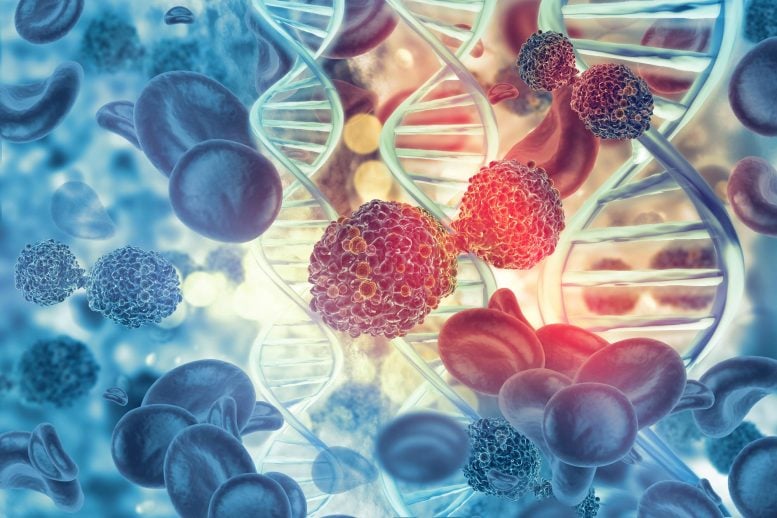
Cancer’s Deadly Paradox: How Tumors Break Their Own DNA to Keep Growing
A groundbreaking new study published in Nature has revealed a shocking truth about cancer’s survival strategy: tumors actively damage their own DNA to fuel their relentless growth. This paradoxical behavior, where cancer essentially “shoots itself in the foot” to keep running, represents one of the most counterintuitive discoveries in oncology in recent years.
Scientists from the Dana-Farber Cancer Institute and Harvard Medical School have uncovered that cancer’s strongest genetic switches—the molecular controls that turn genes on and off—push DNA into a dangerous overdrive. This hyperactivation creates repeated cycles of DNA breaks and repairs, accelerating tumor evolution while potentially exposing new therapeutic vulnerabilities.
The research team, led by Dr. Nikhil Wagle, discovered that certain oncogenes (cancer-promoting genes) become so powerfully activated that they overwhelm the cell’s DNA repair machinery. When these genes switch on at maximum capacity, they generate massive amounts of RNA, which physically interferes with DNA replication and chromosome separation during cell division.
“Think of it like revving an engine so high that it starts shaking itself apart,” explains Dr. Wagle. “Cancer cells are essentially burning out their own genetic hardware to maintain growth, but they’re betting that the benefits outweigh the costs.”
The study examined over 2,700 tumor samples across multiple cancer types, finding that approximately 40% of cancers exhibit this self-destructive behavior. The most affected were lung adenocarcinomas, melanomas, and certain breast cancers—precisely the aggressive subtypes that resist conventional treatments.
What makes this discovery particularly fascinating is how it reveals cancer’s evolutionary strategy. By intentionally creating genetic chaos, tumors generate enormous diversity within their populations. Some daughter cells die from the DNA damage, but others acquire beneficial mutations that help them evade treatments, metastasize, or resist immune detection.
The researchers identified specific “super-switches” that drive this process. These aren’t just mildly overactive genes—they’re operating at levels 100 to 1,000 times higher than normal. The top offenders include MYC, a notorious cancer gene, and several lesser-known regulators that had previously been considered too dangerous to target therapeutically.
Here’s where the story takes an unexpected turn: this self-inflicted DNA damage creates vulnerabilities that researchers believe could be exploited for new treatments. The cancer cells’ desperate attempt to maintain growth despite their genetic instability means they become dependent on specific DNA repair pathways. When these backup systems are blocked, the tumors essentially collapse under their own weight.
“This is like finding out that a criminal’s greatest strength is also their biggest weakness,” says co-author Dr. Alison Taylor. “They’re so focused on growing fast that they leave themselves exposed to targeted attacks.”
The team has already begun testing drugs that exploit these weaknesses, with early results showing promise in laboratory models. One approach involves using existing DNA-damaging chemotherapy drugs in combination with compounds that prevent cancer cells from repairing the damage—essentially turning cancer’s strategy against itself.
The implications extend beyond just new drug targets. This discovery helps explain why certain cancers develop resistance so rapidly and why some tumors show extreme genetic instability. It also suggests why combination therapies often work better than single agents—by attacking multiple aspects of cancer’s survival strategy simultaneously.
From an evolutionary perspective, this behavior makes perfect sense. Cancer is essentially running a high-risk, high-reward strategy: by gambling with its genetic integrity, it maximizes its chances of finding mutations that confer advantages, even if it means sacrificing many cells along the way.
The research also sheds light on why some cancers are so difficult to eradicate completely. Even when treated successfully, these tumors may leave behind genetically diverse cell populations that can regenerate more aggressively. Understanding this process could lead to better strategies for preventing recurrence.
As the scientific community digests these findings, several key questions remain. How can we predict which tumors will exhibit this behavior? Can we identify patients who would benefit most from therapies targeting this vulnerability? And most importantly, how do we strike at cancer’s Achilles’ heel without harming healthy cells?
The study represents a major advance in our understanding of cancer biology, revealing that the disease’s greatest strength—its ability to grow uncontrollably—is inextricably linked to its greatest weakness. As researchers continue to unravel these complex relationships, the hope is that this knowledge will translate into more effective, targeted treatments for patients battling this devastating disease.
For now, this discovery reminds us that cancer, despite its deadly reputation, is not invincible. By understanding its strategies and vulnerabilities, scientists are steadily developing new ways to fight back—turning cancer’s own weapons against it in the ongoing battle for human health.
cancerresearch #DNAbreakage #tumorevolution #oncogenes #geneticinstability #cancervulnerability #medicalbreakthrough #cancerbiology #DNArepair #targetedtherapy #cancerparadox #sciencenews #healthinnovation #cancertreatment #molecularbiology
“Cancer breaks its own DNA to grow faster”
“Tumors destroy themselves to survive”
“The cancer weakness scientists just discovered”
“Why cancer’s strength is also its downfall”
“New way to trick cancer into killing itself”
“Groundbreaking cancer discovery changes everything”
“How tumors gamble with their own genetics”
“Cancer’s secret vulnerability exposed”
“Scientists find cancer’s Achilles’ heel”
“The DNA damage paradox that could save lives”
“Revolutionary approach to cancer treatment”
“Turning cancer’s weapon against itself”
“Why some cancers resist treatment so stubbornly”
“The genetic chaos strategy that fuels cancer”
“New hope for patients with aggressive cancers”
“Medical science’s latest weapon against cancer”
“Understanding why cancer keeps coming back”
“The unexpected way to defeat aggressive tumors”
“Cancer’s self-destruct button finally found”
“Game-changing discovery in oncology”
,


Leave a Reply
Want to join the discussion?Feel free to contribute!