
Canonical Plans To Integrate NVIDIA DOCA-OFED Into The Ubuntu Archive
NVIDIA and Canonical Team Up to Supercharge Ubuntu with DOCA-OFED for AI and HPC
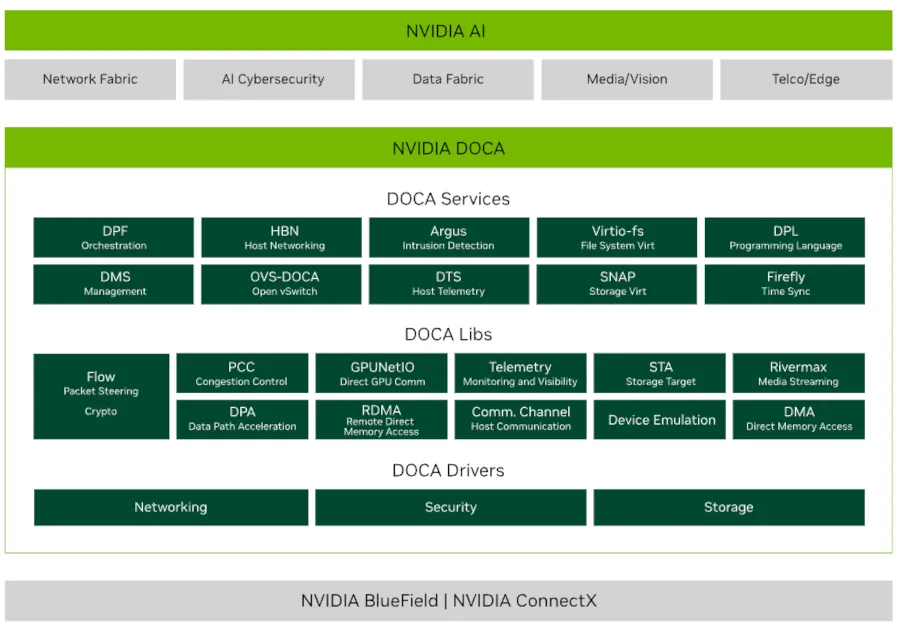
In a move that’s sending shockwaves through the high-performance computing (HPC) and artificial intelligence (AI) communities, NVIDIA and Canonical have announced a groundbreaking collaboration that will bring NVIDIA’s DOCA-OFED networking stack directly into the Ubuntu Linux archive. This integration marks a significant leap forward in simplifying the deployment of cutting-edge AI and HPC workloads on one of the world’s most popular Linux distributions.
What’s the Big Deal?
For years, system administrators and developers have grappled with the complexities of managing high-speed networking drivers for NVIDIA’s BlueField Data Processing Units (DPUs) and SuperNICs. Traditionally, this meant wrestling with external installers, manual builds, and the ever-present risk of kernel mismatches or version conflicts—especially after OS updates. These pain points have been a major hurdle for organizations running large-scale AI factories and HPC clusters.
Now, with Canonical’s announcement at NVIDIA’s GTC 2026 event, all that is set to change. By integrating DOCA-OFED (a subset of NVIDIA’s broader DOCA software framework) into Ubuntu’s core archive, Canonical is promising a smoother, more reliable experience for users leveraging NVIDIA’s high-performance networking stack.
A Brief History: From MLNX_OFED to DOCA-OFED
To understand the significance of this move, it helps to look back at the evolution of NVIDIA’s networking software. DOCA-OFED traces its roots to the Mellanox era, when the stack was known as MLNX_OFED. Mellanox, a leader in high-performance networking, was acquired by NVIDIA in 2020, and its technology has since been integrated into NVIDIA’s broader ecosystem. The transition from MLNX_OFED to DOCA-OFED represents a maturation of the stack, now optimized for NVIDIA’s BlueField and SuperNIC platforms.
What Does DOCA-OFED Bring to the Table?
At its core, DOCA-OFED is all about enabling ultra-low latency and high-throughput data transfers—two critical requirements for modern AI and HPC workloads. By exposing advanced capabilities like RDMA (Remote Direct Memory Access) and NVIDIA GPUDirect, DOCA-OFED allows for CPU offload, drastically reducing latency and ensuring sustained throughput even under heavy load.
For AI practitioners, this means faster training times for large language models (LLMs) and more efficient distributed simulations. For HPC users, it translates to more predictable performance and fewer bottlenecks in data-intensive computations.
Canonical’s Vision: Simplifying the Complex
Canonical’s decision to bundle DOCA-OFED with Ubuntu is part of a broader strategy to make advanced technologies more accessible. This move follows last year’s announcement that Canonical would support NVIDIA’s CUDA toolkit in the Ubuntu archive, further lowering the barrier to entry for developers and researchers.
According to Canonical, the integration of DOCA-OFED will eliminate common operational headaches such as kernel drift, driver incompatibility, and CI (continuous integration) breakage following kernel or OS upgrades. In other words, users can expect a more seamless experience, with fewer surprises and less manual intervention required.
The Road Ahead
While the announcement has generated significant buzz, details about the rollout timeline remain scarce. It’s unclear whether DOCA-OFED support will be available in time for Ubuntu 26.04 LTS (Long-Term Support), set to launch next month, or if users will need to wait a bit longer. Regardless, the promise of a more integrated and user-friendly experience is already generating excitement across the tech community.
Why This Matters
The collaboration between NVIDIA and Canonical is more than just a technical integration—it’s a statement about the future of AI and HPC on Linux. By bringing DOCA-OFED into the Ubuntu archive, Canonical is not only making life easier for system administrators but also empowering a new generation of developers and researchers to push the boundaries of what’s possible with AI and high-performance computing.
As AI workloads continue to grow in size and complexity, the need for robust, high-performance networking solutions will only become more acute. With this partnership, NVIDIA and Canonical are ensuring that Ubuntu remains at the forefront of this technological revolution, ready to meet the demands of tomorrow’s most ambitious projects.
Tags: NVIDIA, Canonical, Ubuntu, DOCA-OFED, AI, HPC, BlueField, SuperNIC, RDMA, GPUDirect, CUDA, MLNX_OFED, Mellanox, kernel, networking, Linux, GTC 2026, system administration, deployment, integration, high-performance computing, artificial intelligence, data transfer, latency, throughput, CPU offload, distributed simulations, LLMs, large language models, kernel drift, driver incompatibility, CI breakage, Ubuntu 26.04 LTS, Long-Term Support.
Viral Sentences:
- “NVIDIA and Canonical just made Ubuntu the ultimate platform for AI and HPC!”
- “Say goodbye to driver headaches—DOCA-OFED is coming to Ubuntu!”
- “Ultra-low latency, high-throughput data transfers are now just an apt-get away.”
- “Ubuntu + DOCA-OFED = the future of AI factories and HPC clusters.”
- “Canonical’s latest move is a game-changer for system administrators everywhere.”
- “Training LLMs and running complex simulations just got a whole lot easier.”
- “Kernel drift, driver incompatibility, CI breakage—meet your match.”
- “The Mellanox legacy lives on in NVIDIA’s DOCA-OFED for Ubuntu.”
- “Ubuntu 26.04 LTS could be the most exciting release yet for AI and HPC users.”
- “NVIDIA’s GTC 2026 just got a whole lot more interesting.”
,
![What’s new in Android’s March 2026 Google System Updates [U]](https://techno-news.org/wp-content/uploads/2026/03/google-play-services-1-150x150.jpg "What’s new in Android’s March 2026 Google System Updates [U]")

Leave a Reply
Want to join the discussion?Feel free to contribute!