
Central Florida gambling crackdown nets cash machines in statewide sweep
Florida’s Gambling Crackdown: The Tech Behind the Takedown of Illegal Cash Machines
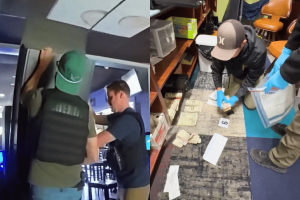
In a coordinated sweep across Central Florida, law enforcement agencies have dismantled a sprawling network of illegal gambling operations, seizing nearly $200,000 in cash and 525 unauthorized gaming machines. This operation, dubbed “Operation Reel of Fortune,” represents one of the most significant technological enforcement actions in the state’s recent history, highlighting the growing sophistication of both illegal gambling operations and the technology used to combat them.
The Scale of the Operation: A Multi-County Tech Sweep
The multi-agency effort involved the Volusia County Sheriff’s Office, the Florida Gaming Control Commission (FGCC), and Attorney General James Uthmeier’s office. Over several days, investigators executed 39 search warrants across multiple counties, targeting businesses operating illegal gambling machines that authorities describe as sophisticated electronic devices designed to circumvent state regulations.
In Volusia County alone, deputies served seven search warrants, recovering approximately $97,000 in cash and 225 machines. The broader operation netted $190,000 and 525 machines statewide, representing a significant blow to the illegal gambling infrastructure operating throughout Central Florida.
The Technology Under the Hood: Unregulated Gaming Machines
What makes these seizures particularly noteworthy from a technological perspective is the sophistication of the devices being confiscated. Law enforcement officials report that many of these machines were unregulated and, in some cases, intentionally programmed to prevent legitimate payouts.
“These machines are unregulated and in some cases, set to be impossible to win,” explained officials from the Volusia County Sheriff’s Office. This suggests a level of software manipulation that goes beyond simple hardware installation—indicating that operators are using custom firmware or modified operating systems to control payout rates and game outcomes.
The machines represent a convergence of several technologies: touchscreen interfaces, random number generators, payment processing systems, and network connectivity for potential remote management. This combination creates a powerful platform for illegal gambling that can be easily deployed in storefronts across the region.
The Software Deception: When Gaming Machines Become Theft Devices
Perhaps most alarming is the revelation that some machines were configured to never pay out, effectively transforming them from gaming devices into sophisticated theft mechanisms. Sheriff Mike Chitwood described this practice bluntly: “It’s theft. It’s cheating.”
This level of software manipulation requires technical expertise to implement and maintain. Investigators suggest that operators are likely using specialized software that can override standard gaming protocols, manipulate random number generators, and create the illusion of legitimate gameplay while ensuring the house always wins—and wins big.
The Financial Technology Trail: Money Laundering Concerns
Beyond the gaming technology itself, authorities are concerned about the financial infrastructure supporting these operations. Sheriff Chitwood’s statement that money is being “money laundered” and “sent overseas” points to a complex technological ecosystem involving international financial transactions, cryptocurrency conversions, and sophisticated money laundering techniques.
The cash seizures represent only the physical evidence of what investigators believe is a much larger digital financial operation. Modern illegal gambling operations often use technology to obscure money trails, convert cash to digital assets, and move funds across international borders through various channels that are difficult for law enforcement to track.
The Counter-Technology Response: Law Enforcement’s Digital Arsenal
The success of Operation Reel of Fortune demonstrates the growing technological sophistication of law enforcement agencies. The ability to coordinate multi-agency operations, execute simultaneous search warrants, and track illegal gambling networks requires advanced communication systems, data analysis tools, and surveillance technology.
The Florida Gaming Control Commission’s use of social media to document and publicize the operation represents another technological dimension. By sharing real-time updates and images of seized machines on platforms like X (formerly Twitter), authorities are using technology not just for enforcement but for deterrence and public awareness.
The Cat-and-Mouse Game: Evasion Technology
Interestingly, law enforcement has encountered increasingly sophisticated attempts to conceal illegal operations. In Orange County, authorities shut down an operation hidden behind a functioning garage door—a physical example of how operators use technology and design to evade detection.
This points to a broader trend where illegal gambling operators are adopting counter-surveillance and concealment technologies, creating an ongoing technological arms race between enforcement agencies and criminal enterprises.
The Policy Technology Gap: Regulation vs. Innovation
Sheriff Chitwood’s challenge to lawmakers—”Either you’re going to legalize it, tax it, and regulate it, or you’re going to shut it down and hold everybody accountable”—highlights a critical issue in technology policy. The rapid innovation in gambling technology is outpacing regulatory frameworks, creating a gray area that criminal enterprises are exploiting.
The current situation reflects a fundamental mismatch between technological capability and legal infrastructure. While operators can quickly deploy sophisticated gaming systems, regulatory frameworks and enforcement mechanisms struggle to keep pace with these innovations.
The Future of Gambling Technology Enforcement
The Florida crackdown provides a glimpse into the future of technology-based law enforcement. As illegal operations become more sophisticated, enforcement agencies must develop corresponding technological capabilities. This includes advanced data analytics to identify patterns, digital forensics to examine seized devices, and cross-jurisdictional coordination tools to track operations that span multiple counties or states.
The public destruction of 147 illegal slot machines by the FGCC in a separate action demonstrates another technological approach: physical destruction as a deterrent. By rendering seized machines permanently inoperable, authorities are using technology against itself to prevent recycling of illegal devices back into circulation.
The Broader Implications: Technology, Crime, and Society
This operation raises important questions about the relationship between technology, crime, and society. The ease with which sophisticated gambling technology can be deployed and concealed reflects broader trends in how technology enables both legitimate and illegitimate activities.
As technology continues to evolve, the line between regulated and unregulated activities becomes increasingly blurred. The challenge for society is developing regulatory frameworks and enforcement mechanisms that can adapt to technological innovation while protecting consumers and maintaining the integrity of legal systems.
The Central Florida gambling crackdown represents more than just a law enforcement success—it’s a case study in how technology shapes modern criminal enterprises and the corresponding evolution of enforcement strategies. As both sides continue to innovate, the technological battle over illegal gambling will likely intensify, with significant implications for law enforcement, technology policy, and the future of gaming regulation.
The $190,000 seized and 525 machines confiscated are tangible results, but the real story lies in the sophisticated technological ecosystem that enabled these operations and the equally sophisticated response mounted by law enforcement. This is the new frontier of technology-driven crime and enforcement—a digital battleground where the stakes include not just money, but the integrity of regulatory systems and the protection of consumers from sophisticated technological deception.
Tags: Florida gambling crackdown, illegal slot machines, Operation Reel of Fortune, Volusia County Sheriff, Florida Gaming Control Commission, Attorney General James Uthmeier, unregulated gambling technology, gaming machine seizures, Central Florida law enforcement, illegal casino bust, gambling technology regulation, money laundering technology, digital gambling enforcement, gaming machine firmware manipulation, illegal gambling software, law enforcement tech operations, gambling machine destruction, Florida gaming regulations, multi-agency tech sweep, gambling technology arms race
Viral Sentences:
- Game over for illegal gambling houses connected to drug trafficking and money laundering
- These machines are unregulated and set to be impossible to win
- If it looks like a duck, if it quacks like a duck, if it swims like a duck, it’s a duck
- We’re holding everybody accountable in this tech-driven gambling crackdown
- The software was manipulated to ensure players never actually win
- This is theft. This is cheating. This is technology being used against consumers
- We’re sending a clear message: unauthorized gaming devices will not be returned to circulation
- The machines were designed to keep the money flowing in one direction only
- This is part of a larger partnership aimed at closing down video gambling businesses
- You got to make a decision: legalize and regulate it, or shut it down completely
- The financial technology trail leads overseas, where money is being used against our country
- We’re doubling down on illegal gambling with stronger charges and tougher penalties
- These aren’t just gaming devices—they’re sophisticated theft mechanisms
- The cat-and-mouse game between operators and law enforcement just got more intense
- This crackdown represents the future of technology-based law enforcement operations
- The ease of deploying gambling technology has created a regulatory nightmare
- We’re not just seizing machines—we’re disrupting entire criminal networks
- The technological arms race between illegal operators and law enforcement continues
- This is more than a gambling bust—it’s a battle over the future of technology regulation
- The sophistication of these operations shows how technology enables modern crime
,


Leave a Reply
Want to join the discussion?Feel free to contribute!