
China unveils humanoid robot standards committee with members from Unitree, ZhiYuan, Xiaomi, Huawei, ZTE and XPeng · TechNode
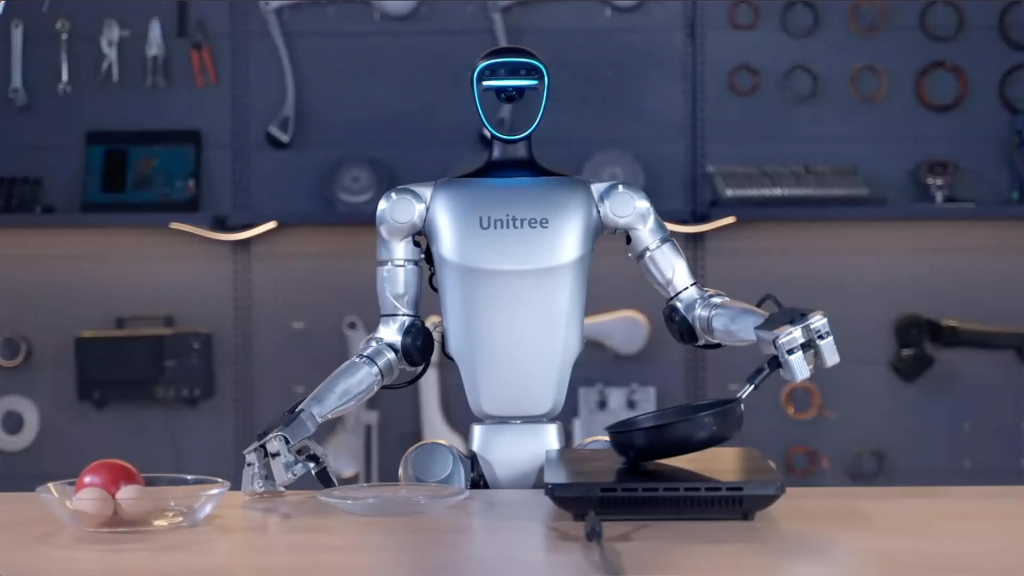
China’s Robotics Revolution Accelerates: MIIT Unveils Elite Committee to Set Global Standards for Humanoid Robots
In a bold move that underscores China’s ambition to dominate the next frontier of robotics, the Ministry of Industry and Information Technology (MIIT) has unveiled a proposed roster for a new Standardization Technical Committee for Humanoid Robots. The committee, comprising 65 elite members, is poised to shape the future of humanoid robotics by establishing national standards that will govern everything from safety protocols to core technologies and application requirements. This initiative is part of Beijing’s broader strategy to regulate and accelerate the rapidly evolving humanoid robotics sector, positioning China as a global leader in this transformative field.
A Powerhouse of Expertise
The newly proposed committee is a veritable who’s who of China’s robotics and tech industries. Among its most notable members are Wang Xingxing, the visionary founder of Unitree Robotics, and Peng Zhihui, co-founder of ZhiYuan Robotics. Both have been appointed as deputy chairs, a testament to their pioneering contributions to the field. Their inclusion signals a commitment to leveraging the expertise of industry trailblazers to drive innovation and standardization.
But the committee’s strength lies not just in its leadership. It also boasts senior executives from tech giants such as Huawei and ZTE, as well as XPeng, the electric vehicle and robotics powerhouse. These industry titans bring a wealth of experience in cutting-edge technologies, from artificial intelligence to advanced manufacturing, ensuring that the standards developed will be both forward-thinking and practical.
Adding to the committee’s intellectual firepower are scholars from some of China’s most prestigious institutions, including Tsinghua University and Shanghai Jiao Tong University. Their academic rigor and research prowess will provide a solid foundation for the technical and ethical considerations that will underpin the new standards.
A Comprehensive Mandate
The committee’s mandate is as ambitious as its membership. It will oversee the development of national standards for humanoid robots across four key areas:
- Basic Frameworks: Establishing the foundational principles and guidelines for humanoid robot design, development, and deployment.
- Safety Standards: Ensuring that humanoid robots are safe for human interaction, with robust protocols to prevent accidents and mitigate risks.
- Core Technologies: Defining standards for critical technologies such as AI algorithms, sensors, actuators, and power systems.
- Application Requirements: Tailoring standards to specific use cases, from industrial automation to healthcare and beyond.
This comprehensive approach reflects China’s determination to leave no stone unturned in its quest to lead the global robotics race. By addressing both the technical and practical aspects of humanoid robotics, the committee aims to create a cohesive ecosystem that fosters innovation while ensuring safety and reliability.
A Strategic Move in the Global Arena
China’s push to standardize humanoid robotics is not just about domestic growth—it’s a strategic move to assert its influence on the global stage. As countries around the world race to develop and deploy humanoid robots, the absence of universally accepted standards has been a significant barrier to progress. By taking the lead in this area, China is positioning itself as a rule-maker in the emerging global robotics economy.
The timing of this initiative is particularly noteworthy. With advancements in AI, machine learning, and materials science accelerating at an unprecedented pace, the humanoid robotics sector is on the cusp of a breakthrough. China’s proactive approach to standardization could give it a decisive edge, enabling its companies to scale faster and more efficiently while ensuring their products meet the highest international standards.
The Road Ahead
While the committee’s formation is a significant milestone, it is just the beginning of a long and complex journey. Developing comprehensive standards for humanoid robots will require extensive collaboration, rigorous testing, and continuous iteration. The committee will need to navigate a myriad of challenges, from balancing innovation with regulation to addressing ethical concerns around AI and automation.
Moreover, the global nature of the robotics industry means that China’s standards will need to be compatible with those developed by other countries and international organizations. Achieving this level of harmonization will be critical to ensuring that Chinese companies can compete effectively in the global market.
Despite these challenges, the establishment of the Standardization Technical Committee is a clear signal of China’s commitment to leading the humanoid robotics revolution. By bringing together the brightest minds from industry and academia, the committee is laying the groundwork for a future where humanoid robots are not just a technological marvel but a transformative force in society.
Conclusion
As China takes bold steps to shape the future of humanoid robotics, the world is watching closely. The formation of the Standardization Technical Committee is more than just a regulatory move—it’s a declaration of intent. With its unparalleled expertise, comprehensive mandate, and strategic vision, the committee is poised to set the standards that will define the next era of robotics. For China, this is not just about keeping pace with global innovation—it’s about setting the pace and leading the way.
Tags & Viral Phrases:
China humanoid robotics, MIIT standards committee, Wang Xingxing Unitree, Peng Zhihui ZhiYuan Robotics, Huawei ZTE XPeng robotics, Tsinghua Shanghai Jiao Tong robotics, national standards humanoid robots, AI safety protocols, global robotics race, Beijing robotics regulation, humanoid robot core technologies, application requirements humanoid robots, robotics industry standardization, China tech innovation, next frontier robotics, humanoid robot safety, AI machine learning robotics, international robotics standards, robotics future society, China global robotics leadership.
,


Leave a Reply
Want to join the discussion?Feel free to contribute!