
China’s New Aircraft Carrier Looks Powerful – But It Has A Major Problem
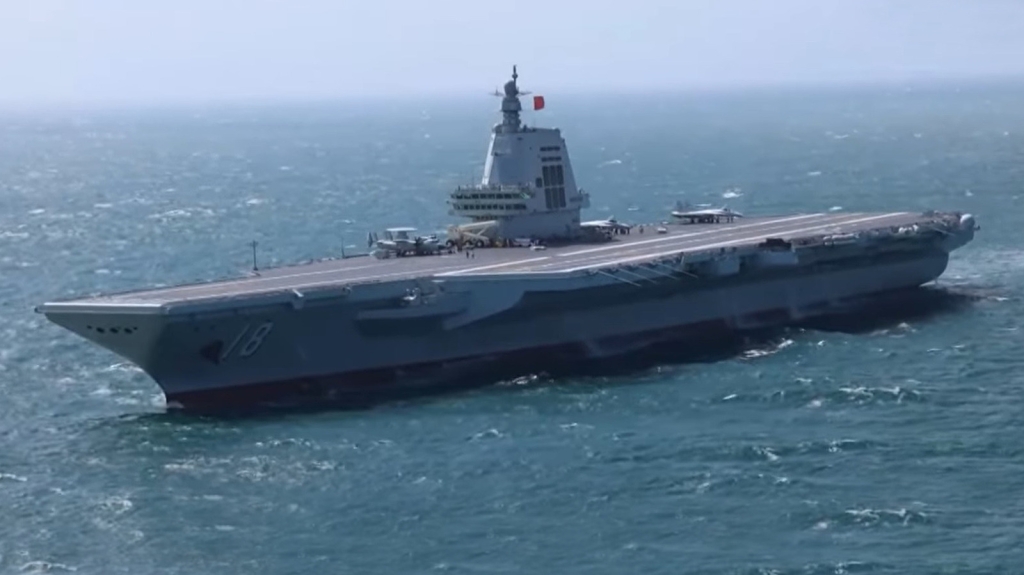
China’s Fujian Aircraft Carrier: A Powerful Giant with a Critical Design Flaw
China’s newest naval marvel, the Fujian aircraft carrier, made waves when it was commissioned on November 5, 2025, as the crown jewel of the People’s Liberation Army Navy (PLAN). Officially named after China’s eastern coastal province, the Fujian represents a quantum leap in Chinese naval engineering—the nation’s first domestically designed and built aircraft carrier that boldly breaks from previous designs.
At first glance, the Fujian appears to be an absolute beast of the seas. Stretching over 1,000 feet in length and displacing approximately 80,000 tons, it stands as the world’s largest non-nuclear-powered warship ever constructed. The carrier’s commissioning ceremony in Shanghai was a grand affair, attended by top military officials and signaling China’s growing maritime ambitions on the global stage.
What truly sets the Fujian apart from its predecessors is its revolutionary electromagnetic catapult system—a technology so advanced that only one other carrier in the world, the USS Gerald R. Ford, currently operates with such capability. These catapults, known as Electromagnetic Aircraft Launch System (EMALS), represent a fundamental shift from traditional steam catapults that have been the backbone of carrier aviation since World War II.
The EMALS technology allows the Fujian to launch heavier aircraft carrying larger payloads of fuel and weapons, theoretically extending the operational range and strike capability of China’s carrier air wing. This system uses electromagnetic fields to smoothly accelerate aircraft to launch speeds, reducing stress on airframes and allowing for more precise control over launch power based on aircraft weight.
However, beneath this impressive exterior lies a potentially critical design flaw that could significantly hamper the carrier’s operational effectiveness in combat scenarios. Military analysts and naval experts have begun scrutinizing the Fujian’s flight deck layout, uncovering what could be a serious bottleneck in its ability to generate combat sorties.
The problem centers on the carrier’s unique flight deck geometry. Unlike American carriers, which feature a generously angled landing area that allows simultaneous launch and recovery operations, the Fujian’s angled deck crosses at a noticeably narrower angle. This design choice creates a problematic intersection where the angled landing strip meets the forward catapults.
Even more concerning, one of the carrier’s catapults appears to physically intrude into the landing area itself. This configuration means that during aircraft recovery operations—when planes are landing on the carrier—this catapult cannot be used for launching aircraft. The result is a fundamental operational limitation: the Fujian cannot efficiently conduct simultaneous launch and recovery operations, a capability that has been standard on U.S. supercarriers for decades.
Former U.S. Navy captain Carl Schuster, speaking to CNN, delivered a sobering assessment: “The Fujian’s operational capability is only about 60% of that of the Nimitz class.” This stark comparison highlights how a seemingly minor design choice in the flight deck layout could translate to a 40% reduction in combat effectiveness.
The limitations become even clearer when examining the carrier’s internal operations. During a Chinese television documentary about the Fujian, a crew member explained that landing aircraft must cross two of the launching catapults before reaching a maintenance area. This choreography adds precious minutes to each aircraft’s turnaround time—minutes that could prove critical during high-intensity combat operations.
Sortie generation rate—the speed at which a carrier can launch and recover aircraft—is the fundamental metric that defines a carrier’s combat value. Modern naval warfare often comes down to which side can project more aerial power over time. The Fujian’s design constraints could mean it generates significantly fewer sorties per day compared to its American counterparts, potentially leaving it at a severe disadvantage in a conflict scenario.
The root of these design limitations appears to trace back to the carrier’s conventional propulsion system. Unlike nuclear-powered carriers that enjoy virtually unlimited range and greater internal volume flexibility, the Fujian relies on traditional fuel-powered engines. This conventional powerplant likely imposed constraints on the ship’s internal architecture, forcing compromises in the arrangement of elevators, the island superstructure, and support systems beneath the flight deck.
These compromises cascaded upward, ultimately affecting the flight deck layout. Nuclear propulsion systems free up considerable internal space and provide designers with more flexibility in deck arrangements and aircraft movement patterns. The absence of this technological advantage in the Fujian’s design appears to have directly contributed to its operational limitations.
Despite these flaws, the Fujian remains a significant achievement for China’s naval capabilities. The carrier expands the PLAN’s power projection abilities dramatically and serves as a crucial learning platform for Chinese naval engineers and deck crews. The experience gained in operating the electromagnetic catapult system alone provides invaluable knowledge that will inform future designs.
Military analysts widely anticipate that China’s next carrier, tentatively designated as the Type 004, will address these shortcomings. Speculation suggests this future vessel will be China’s first nuclear-powered aircraft carrier, incorporating lessons learned from the Fujian’s design challenges. The Type 004 is expected to feature a more optimal flight deck layout that enables true simultaneous launch and recovery operations.
The Fujian, therefore, represents not an endpoint but a transitional design—a stepping stone in China’s evolution from ski-jump carriers to a future where it potentially joins the United States and France as the only nations operating nuclear-powered supercarriers. Its commissioning signals China’s determination to become a true blue-water naval power capable of projecting force globally.
The carrier’s limitations also highlight the technological gap that still exists between China’s naval capabilities and those of the United States. While China has made remarkable progress in naval engineering, the decades of operational experience and refined designs that underpin American carrier operations remain formidable advantages.
As the Fujian begins its sea trials and eventually joins active service, the true extent of its operational limitations will become clearer. The carrier will likely serve as both a powerful symbol of China’s growing naval prowess and a practical classroom for identifying and correcting design flaws before they become institutionalized in future vessels.
The global naval community will be watching closely as China navigates this critical phase in its carrier development, knowing that the lessons learned from the Fujian will shape the next generation of Chinese naval power—and potentially alter the balance of maritime capabilities in the Indo-Pacific region.
Tags & Viral Phrases:
China’s aircraft carrier problem, Fujian carrier flaw, electromagnetic catapult issues, Chinese navy weakness, sortie generation bottleneck, flight deck design failure, China vs US carriers, naval power projection gap, Type 004 nuclear carrier, PLAN operational limitations, carrier combat effectiveness, EMALS technology challenges, maritime military analysis, Indo-Pacific naval competition, China’s military modernization problems, aircraft carrier design flaws, simultaneous launch recovery issues, naval engineering mistakes, Chinese military technology gap, supercarrier operational constraints.
,


Leave a Reply
Want to join the discussion?Feel free to contribute!