
Code Metal Raises $125 Million to Rewrite the Defense Industry’s Code With AI
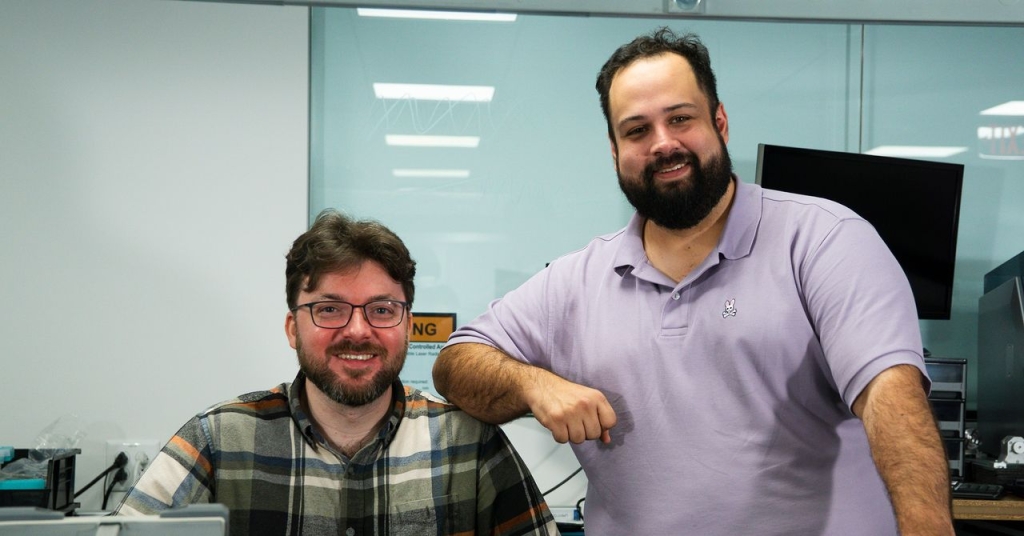
AI Code Translation Startup Code Metal Raises $125 Million to Revolutionize Legacy Software Modernization
In a stunning demonstration of investor confidence in the future of AI-driven software development, Boston-based startup Code Metal has secured a massive $125 million Series B funding round, catapulting the company into the upper echelons of AI coding startups. This latest infusion of capital comes hot on the heels of the company’s $36 million Series A round just months earlier, which was led by Accel, signaling explosive growth and unprecedented market validation for Code Metal’s ambitious mission.
Founded in 2023 by Peter Morales, a veteran technologist with experience at Microsoft and MIT Lincoln Laboratory, Code Metal has positioned itself at the critical intersection of artificial intelligence and software modernization. The company’s core proposition is both elegantly simple and technologically complex: using advanced AI systems to translate code between programming languages while simultaneously verifying the accuracy and functionality of the translated output.
The Code Translation Crisis: Why Legacy Systems Are Breaking the Tech Industry
The timing of Code Metal’s massive funding round couldn’t be more opportune. The technology industry is facing an unprecedented crisis in software maintenance and modernization. As Andrej Karpathy, the renowned AI researcher and former Tesla AI lead, recently observed on social media, there’s a “rising momentum behind porting C to Rust” and similar modernization efforts. Karpathy’s analysis suggests that we’re on the cusp of rewriting “large fractions of all software ever written many times over.”
This observation perfectly encapsulates Code Metal’s entire business model, according to CEO Peter Morales. The company has identified a fundamental bottleneck in the software development lifecycle: the inability to efficiently translate and modernize legacy codebases that were written in outdated programming languages but still power critical infrastructure.
The problem is particularly acute in sectors like defense, aerospace, and telecommunications, where decades-old code written in languages like Fortran, COBOL, or early versions of C continues to operate essential systems. These legacy systems often run on specialized hardware with unique instruction sets, making modernization efforts extraordinarily complex and expensive.
Code Metal’s Defense Industry Breakthrough
Code Metal has strategically positioned itself as the go-to solution for defense contractors and government agencies grappling with these exact challenges. The company proudly counts L3Harris, RTX (formerly Raytheon), and the United States Air Force among its early customers, demonstrating the critical nature of its technology in national security applications.
The defense industry’s embrace of Code Metal’s technology speaks volumes about the urgency of the code modernization problem. Military systems often rely on software that was developed decades ago, written by engineers who have long since retired or moved on to other projects. The institutional knowledge required to maintain and update these systems has become increasingly scarce, creating a dangerous dependency on aging code that may no longer be maintainable by current engineering talent.
Beyond Defense: Code Metal’s Expanding Horizons
While defense contracts provide a stable foundation, Code Metal’s ambitions extend far beyond military applications. The company has announced partnerships with Japanese electronics giant Toshiba and is reportedly in advanced discussions with a major chip manufacturer to tackle the challenge of code portability across different chip architectures.
This chip-level work represents perhaps the most technically challenging aspect of Code Metal’s mission. Modern software often needs to run across diverse hardware platforms, from NVIDIA’s CUDA-enabled GPUs to specialized AI accelerators and traditional CPUs. Each platform has its own unique instruction set, memory architecture, and optimization requirements, making cross-platform code translation an extraordinarily complex computational problem.
Code Metal’s software platform tackles this challenge by translating code from high-level languages like Python, Julia, MATLAB, and C++ down to lower-level languages or hardware-specific code. This includes translations to Rust for systems programming, VHDL for hardware description, and specialized languages like NVIDIA’s CUDA for GPU programming.
The Verification Challenge: Ensuring AI-Generated Code Actually Works
One of the most critical aspects of Code Metal’s technology is its approach to verification. In the world of code translation, particularly when dealing with mission-critical systems, the consequences of introducing bugs during the translation process could be catastrophic. A single error in code controlling communications infrastructure or satellite systems could have devastating consequences.
Yan-David Erlich, a general partner at B Capital and one of Code Metal’s investors, emphasizes this point: “Some of the code that controls essential communications infrastructure, and even satellites, is old, it’s crufty, it’s written in programming languages that people might not use anymore. It needs to be modernized. But in the course of translation, you might be inserting bugs—which is catastrophically problematic.”
Code Metal addresses this verification challenge through what Morales describes as a sophisticated system of test harnesses. At each step of the translation process, the company’s software generates virtual containers of data and tools that evaluate the translated code’s functionality. This continuous verification approach provides customers with real-time feedback on the translation’s accuracy and reliability.
When asked about the company’s error rate, Morales acknowledges that translation difficulty varies significantly depending on the source and target languages, as well as the complexity of the original code. However, he emphasizes that for the translation pipelines Code Metal currently operates, “there’s no way to generate an error. The software will just say, ‘There’s no solution for this’ if we can’t complete the translation.”
This conservative approach to error handling reflects the critical nature of the systems Code Metal’s technology often supports. Rather than risk introducing subtle bugs that could have catastrophic consequences, the system errs on the side of caution, acknowledging when a translation cannot be completed with sufficient confidence.
The Broader AI Coding Revolution
Code Metal is part of a broader wave of startups that are betting heavily on AI-assisted software development. Companies like Antithesis, Code Rabbit, Synthesia, Theorem, and Harness have all secured substantial venture capital funding for their approaches to automating, validating, testing, and securing AI-generated code.
These startups represent what investors see as the “picks and shovels” of the AI gold rush—the essential tools and infrastructure that will enable the broader adoption of AI in software development. While the methodologies behind some of these technologies remain unproven at scale, venture capitalists are making calculated bets that at least a few will emerge as dominant players in this rapidly evolving market.
The $125 Million Question: What’s Next for Code Metal?
With $125 million in fresh capital, Code Metal faces both enormous opportunity and significant responsibility. The company must now scale its technology to handle increasingly complex translation tasks while maintaining the rigorous verification standards that have made it attractive to defense contractors and other mission-critical customers.
The investment also positions Code Metal to compete more aggressively in the broader AI coding market, where it will face competition from both established tech giants and well-funded startups. Companies like GitHub (with its Copilot product), Amazon (with CodeWhisperer), and Google (with various AI coding tools) are all investing heavily in AI-assisted development.
However, Code Metal’s focus on code translation and verification, particularly for legacy systems and specialized hardware, represents a unique value proposition that may be difficult for larger competitors to replicate quickly. The company’s deep relationships with defense contractors and its demonstrated ability to handle mission-critical translations provide a competitive moat that could prove valuable as the market matures.
The Future of Software: Rewriting Everything, Again
Code Metal’s success and the broader trend it represents point to a fundamental truth about software development: we are likely entering an era where large portions of existing codebases will be rewritten multiple times over the coming decades. This “perpetual rewriting” of software, as Karpathy suggests, is driven by the constant evolution of programming languages, hardware architectures, and development methodologies.
For companies like Code Metal, this represents not just a business opportunity but a fundamental reshaping of how software is created, maintained, and modernized. The ability to automatically translate and verify code across language and platform boundaries could dramatically accelerate software development cycles while reducing the risks associated with legacy system maintenance.
As Code Metal deploys its fresh capital to expand its technology and market reach, the tech industry will be watching closely to see whether AI-assisted code translation can deliver on its promise of making software modernization faster, safer, and more accessible to organizations of all sizes.
Tags & Viral Phrases
- AI code translation revolution
- $125 million AI coding startup
- Code Metal defense contracts
- Legacy software modernization AI
- Andrej Karpathy code rewriting prediction
- AI-generated code verification
- Boston AI startup funding
- Code translation catastrophe prevention
- Mission-critical AI software
- Software modernization gold rush
- AI picks and shovels investment
- Code Metal Series B funding
- Legacy code crisis solution
- AI coding automation future
- Defense industry AI adoption
- Code Metal error-free translation
- AI software development revolution
- Legacy system modernization AI
- Code Metal Toshiba partnership
- AI chip architecture translation
,

Leave a Reply
Want to join the discussion?Feel free to contribute!