
Common Bacteria Found in the Eye Linked to Alzheimer’s Disease
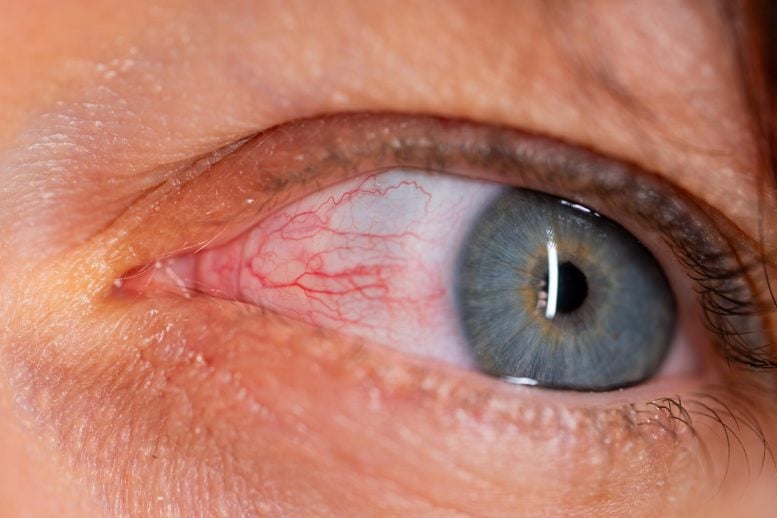
Common Respiratory Bacterium Found in the Eye May Be Linked to Alzheimer’s Disease, Cedars-Sinai Study Reveals
In a surprising twist that could reshape how researchers approach one of the world’s most devastating neurological disorders, scientists at Cedars-Sinai Medical Center have uncovered a potential connection between a common respiratory bacterium and Alzheimer’s disease. The discovery, published in the journal Nature Communications, points to an unexpected source of clues: the human eye.
For decades, Alzheimer’s disease has been primarily associated with the buildup of amyloid-beta plaques and tau tangles in the brain. While these hallmarks remain central to the disease’s pathology, recent research has increasingly focused on the role of inflammation and the immune system in driving cognitive decline. Now, Cedars-Sinai researchers are suggesting that a bacterium most people associate with respiratory infections may be a hidden player in this complex puzzle.
The bacterium in question is Chlamydia pneumoniae, a pathogen best known for causing community-acquired pneumonia, bronchitis, and sinus infections. It’s a common microbe, easily transmitted through respiratory droplets, and most people encounter it at some point in their lives. What makes this discovery remarkable is that the bacterium has now been detected in the eyes of Alzheimer’s patients—and in much higher concentrations than in healthy individuals.
The study, led by Dr. Maya Koronyo-Hamaoui, an associate professor of neurosurgery and biomedical sciences at Cedars-Sinai, examined post-mortem retinal and brain tissue samples from Alzheimer’s patients. Using advanced imaging and molecular techniques, the team found that C. pneumoniae was not only present in the retina but also showed a strong correlation with the presence of amyloid-beta deposits. This finding is particularly intriguing because the retina is considered an extension of the brain, sharing many of the same cellular and molecular characteristics.
“What we’re seeing is a potential link between a common respiratory pathogen and the neurodegenerative processes that define Alzheimer’s disease,” Dr. Koronyo-Hamaoui explained. “The fact that we found this bacterium in the eye, and that its presence correlates with Alzheimer’s pathology, opens up new avenues for both diagnosis and treatment.”
The implications of this discovery are profound. If C. pneumoniae is indeed contributing to the development or progression of Alzheimer’s, it could mean that the disease has an infectious component—a theory that has been debated for years but never conclusively proven. It also raises the possibility that targeting this bacterium could slow or even prevent the onset of Alzheimer’s in some patients.
One of the most exciting aspects of this research is its potential for early detection. The retina is uniquely accessible for imaging, and changes in the eye often precede neurological symptoms by years. If C. pneumoniae can be reliably detected in the retina, it could serve as a biomarker for Alzheimer’s risk, allowing for earlier intervention and more effective treatment strategies.
However, the study also raises important questions. Does C. pneumoniae directly cause Alzheimer’s, or is it simply a bystander that thrives in the altered environment of a diseased brain? Could the bacterium be triggering an inflammatory response that accelerates the formation of amyloid plaques? Or is it possible that Alzheimer’s patients are simply more susceptible to infections due to their compromised immune systems?
“These are the kinds of questions we need to answer next,” said Dr. Koronyo-Hamaoui. “Our findings are a starting point, not a conclusion. But they do suggest that we need to think more broadly about the factors that contribute to Alzheimer’s disease.”
The research team is already planning follow-up studies to explore these questions further. They are also investigating whether existing antibiotics or anti-inflammatory drugs could be repurposed to target C. pneumoniae in Alzheimer’s patients. If successful, this could lead to a paradigm shift in how the disease is treated.
For now, the discovery serves as a reminder of how interconnected the human body is—and how a microbe that starts in the lungs can end up influencing the health of the brain. It also underscores the importance of interdisciplinary research, as this breakthrough came from a team that combined expertise in neurosurgery, microbiology, and immunology.
As the global population ages and the burden of Alzheimer’s disease continues to grow, findings like this offer a glimmer of hope. By looking in unexpected places—like the eye—scientists may uncover new ways to combat a disease that has long eluded effective treatment.
Tags & Viral Phrases:
- Eye-brain connection
- Alzheimer’s breakthrough
- Chlamydia pneumoniae
- Neurodegenerative disease
- Retinal imaging
- Infectious Alzheimer’s theory
- Early detection biomarkers
- Cedars-Sinai research
- Amyloid plaques
- Inflammation and Alzheimer’s
- Respiratory bacteria
- Brain health
- Medical discovery
- Alzheimer’s treatment
- Cognitive decline
- Microscopic clues
- Vision and memory
- Pathogen detection
- Scientific revolution
- Future of Alzheimer’s care
,

Leave a Reply
Want to join the discussion?Feel free to contribute!