
Congress knows prediction markets violate rules but won’t act without cover, says IGA chair
Congress Knows Prediction Markets Break the Rules—But Won’t Act Without Political Cover, Says IGA Chair
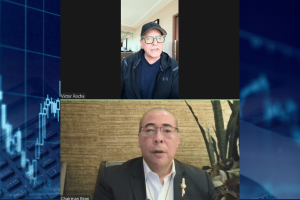
In a tense and revealing episode of The New Normal, the Indian Gaming Association’s policy webcast, Chairman David Z. Bean laid bare the frustrations brewing on Capitol Hill over the explosive rise of prediction markets. As these platforms push deeper into sports wagering and even political betting, tribal leaders say Congress is fully aware of the legal problems—but remains paralyzed without political cover to act.
“It might be a shorter list to talk about what I haven’t been doing,” Bean joked, reflecting on his whirlwind travel schedule and outreach to tribal governments, regulators, and lawmakers nationwide. But the recurring theme is clear: “There’s genuine concern. While this is a new topic, it is a complex topic… and tribes all around the nation are concerned.”
Bean described the surge of sports-related “event contracts” offered through federally regulated prediction platforms as a direct assault on tribal authority. These products, he argues, sidestep the carefully negotiated framework that has governed Indian gaming for decades, slipping through gaps in federal oversight while avoiding the state and tribal compacts that define the industry.
“Folks are just in awe, they’re in shock that this prediction, this illegal online unregulated prediction market sports betting, is able to grow so fast,” Bean said. He pointed out that Indian gaming took more than four decades to grow into a $43.9 billion annual industry. By comparison, prediction platforms have scaled up in just over a year.
Much of the anger is targeted at the Commodity Futures Trading Commission (CFTC). Platforms such as Kalshi are allowed to self-certify contracts, a process Bean argues would never fly in tribal gaming. “It’d be nice if we could certify, ‘Oh yeah, Uncle Sam, I paid my fair share of taxes,'” he said. “They have a system of checks and balances… with respect to these prediction market contracts, you can bet on anything.”
The concern is no longer confined to tribal governments. More than 40 state attorneys general have signed onto amicus briefs challenging prediction market contracts. Bean called that show of support consequential, saying it demonstrates how widely the issue is resonating.
He has met with attorneys general in Idaho and reached out to Republican AGs nationwide. In his telling, partisan lines blur quickly once the legal questions come into focus. “This is not a red problem, it’s not a blue problem—it’s a legal problem,” Bean said.
Rocha pointed to Utah as an example. The state bans sports betting outright, yet it has taken an aggressive stance against prediction markets. “They’re awake now,” Rocha said. “They’re very aware that their state sovereignty is under attack.”
Still, Congress remains the sticking point. Bean said he has sat down with members of the Senate Agriculture Committee, which oversees the CFTC. In private conversations, he said, lawmakers concede the situation is troubling. But public action has not followed.
“You know, they recognize it’s a problem. And one-on-one in their office, in a safe space, they’re going to tell you it’s a problem, but that’s where it ends. They’re not going to take any action beyond that. And until they see other folks joining in, you know, screaming and shouting from the top of the Hill,” Bean said.
According to Bean, some members are wary of tangling with the administration or with financial interests backing the platforms. “They simply are not prepared to take on the administration,” he said.
This caution comes as outside scrutiny grows. News reports have raised questions about insider trading and controversial contracts tied to geopolitical events. Some members of Congress have introduced bills aimed at blocking insider trading on prediction platforms. Senators have also urged the CFTC to rein in contracts linked to death, war, and violence.
Rocha argued the pace of expansion is no accident. “They’re trying to move as fast as they can to cement their profits,” he said. In his view, companies are racing to establish themselves before tribes and states can coordinate a response.
Bean and Rocha both said the answer lies in coalition building. They noted that tribes are increasingly aligned with state governments, commercial gaming operators, and national Native organizations such as the National Congress of American Indians.
Bean labeled prediction markets an “existential threat” to tribal and commercial gaming alike. The success of Indian gaming, he argued, rests on a foundation of strict oversight and negotiated compacts. “We have grown because of strong regulation,” he said.
For tribal governments, the issue goes beyond revenue. Sovereignty sits at the core of the debate. Compacts between tribes and states outline where and how gaming can occur, often forming the backbone of local economies. If prediction markets can offer similar wagers nationwide under a different regulatory banner, tribal leaders fear that balance unravels.
“We see this ending up at the Supreme Court. You know, there’s just too many conflicting positions and conflicting parties. But most importantly, you know, tribal sovereignty is trampled on, state sovereignty is trampled on. I think that’s the big issue,” Bean said.
He also raised alarms about consumer safeguards and the integrity of sports, especially at the college level. Without the regulatory structures that govern traditional sportsbooks, Bean said, athletes could face new risks. “That puts a lot of pressure on athletes,” he said. “When you’re a struggling student, someone offers you a few bucks—that’s very tempting.”
He suggested that looser oversight creates openings not only for harassment but for corruption. In communities where college sports loom large, even the perception of impropriety can do lasting damage.
Looking ahead, Bean said tribes are preparing for a fight on multiple fronts. Legislative fixes remain one avenue, but court battles appear increasingly likely as states challenge federal authority and the scope of the CFTC’s power. “We see this ending up at the Supreme Court,” he said, pointing to conflicting rulings and mounting resistance from state officials.
In the meantime, tribal leaders plan to keep pressing their case. Education campaigns, voter outreach, and repeated meetings with policymakers are all part of the strategy. Bean said the message must be delivered consistently and publicly, not just behind closed doors. “We have to get a little louder,” Bean said. “This is about regulation. This is about tribal sovereignty. This is about state sovereignty.”
Rocha closed with a reminder that the current landscape is not fixed. Laws evolve, and markets can be reshaped. “Whatever can be done can be undone.”
Tags & Viral Phrases:
- Congress knows prediction markets violate rules but won’t act without cover
- Indian Gaming Association chairman David Z. Bean
- Prediction markets are gambling—pure and simple
- Tribal sovereignty under attack
- CFTC self-certification loophole
- Insider trading on prediction platforms
- Existential threat to tribal gaming
- State attorneys general unite against prediction markets
- Supreme Court showdown looming
- College athletes at risk
- Utah bans prediction markets
- Kalshi and Polymarket controversy
- $43.9 billion Indian gaming industry
- Political betting and sports wagering
- Coalition building for tribal rights
- Consumer safeguards at risk
- Prediction markets move faster than regulation
- Federal oversight gaps exposed
- Tribal leaders demand action
- Prediction markets: The new frontier of gambling
- Congress paralyzed by political cover
- Prediction markets vs. tribal compacts
- Prediction markets and state sovereignty
- Prediction markets and insider trading scandals
- Prediction markets and college sports integrity
- Prediction markets and geopolitical bets
- Prediction markets and death contracts
- Prediction markets and war contracts
- Prediction markets and violence contracts
- Prediction markets and election betting
- Prediction markets and sports event contracts
- Prediction markets and unregulated gambling
- Prediction markets and legal gray areas
- Prediction markets and federal vs. state authority
- Prediction markets and tribal economic impact
- Prediction markets and consumer protection
- Prediction markets and regulatory reform
- Prediction markets and legislative battles
- Prediction markets and court challenges
- Prediction markets and public awareness
- Prediction markets and political cover
- Prediction markets and tribal rights
- Prediction markets and state rights
- Prediction markets and gaming industry disruption
- Prediction markets and future of gambling
- Prediction markets and tribal sovereignty fight
- Prediction markets and state sovereignty fight
- Prediction markets and federal oversight fight
- Prediction markets and consumer safety fight
- Prediction markets and college sports fight
- Prediction markets and insider trading fight
- Prediction markets and legal reform fight
- Prediction markets and regulatory reform fight
- Prediction markets and legislative reform fight
- Prediction markets and court reform fight
- Prediction markets and public education fight
- Prediction markets and coalition building fight
- Prediction markets and tribal coalition fight
- Prediction markets and state coalition fight
- Prediction markets and federal coalition fight
- Prediction markets and consumer coalition fight
- Prediction markets and college sports coalition fight
- Prediction markets and insider trading coalition fight
- Prediction markets and legal coalition fight
- Prediction markets and regulatory coalition fight
- Prediction markets and legislative coalition fight
- Prediction markets and court coalition fight
- Prediction markets and public coalition fight
- Prediction markets and tribal sovereignty coalition fight
- Prediction markets and state sovereignty coalition fight
- Prediction markets and federal oversight coalition fight
- Prediction markets and consumer safety coalition fight
- Prediction markets and college sports coalition fight
- Prediction markets and insider trading coalition fight
- Prediction markets and legal reform coalition fight
- Prediction markets and regulatory reform coalition fight
- Prediction markets and legislative reform coalition fight
- Prediction markets and court reform coalition fight
- Prediction markets and public education coalition fight
,


Leave a Reply
Want to join the discussion?Feel free to contribute!