
Could AI Data Centers Be Moved to Outer Space?
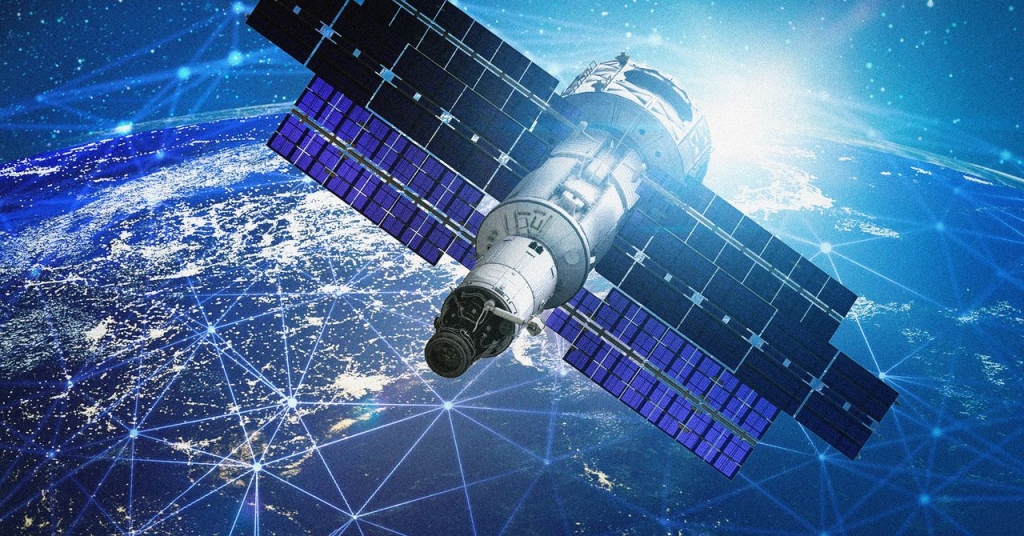
The Space Data Center Dilemma: Why the Sky Isn’t the Limit for AI Computing
The dream of moving our ever-hungry AI computing infrastructure to space has captivated technologists and futurists alike. The vision is compelling: vast arrays of satellites orbiting Earth, processing the immense computational demands of artificial intelligence far from our crowded planet. But as we dig into the physics and engineering realities, a stark truth emerges—space might be the worst possible place for data centers.
The Cooling Conundrum
At the heart of this problem lies a fundamental challenge: heat dissipation in the vacuum of space. On Earth, data centers rely on massive cooling systems, often consuming as much energy as the computers themselves. We use air conditioning, liquid cooling, and even innovative immersion cooling techniques to keep our servers from melting down. In space, however, these options vanish.
When an object is in space, it can only lose heat through thermal radiation—the emission of electromagnetic waves. This process follows the Stefan-Boltzmann law, where the power radiated is proportional to the surface area and the fourth power of temperature. In simpler terms, as things get hotter, they radiate disproportionately more heat, but space offers no other cooling mechanisms.
Consider a typical gaming PC running Red Dead Redemption. On Earth, it might run at around 200°F (366 Kelvin) and be perfectly manageable with conventional cooling. In space, even assuming perfect radiation (which is unrealistic), that same computer would need to radiate about 1,000 watts of power to maintain temperature. While this seems feasible, the math quickly becomes unfavorable as we scale up.
The Scalability Problem
Scale this up to actual data center requirements, and the problems multiply exponentially. Modern AI data centers on Earth consume between 100 to 1,000 megawatts of power. To handle a modest 1-megawatt load in space, you’d need radiating surfaces of nearly 980 square meters—almost the size of two basketball courts dedicated solely to heat dissipation.
But here’s where geometry betrays us. As computing systems grow larger, their volume (and thus their heat generation capacity) increases faster than their surface area (their ability to radiate heat). Double the dimensions of a cubic computer, and you get eight times the volume but only four times the surface area. This means larger systems become progressively harder to cool, not easier.
The International Space Station already demonstrates these challenges. Its external radiators are complex systems that pump ammonia through an intricate network of pipes to conduct heat from the station’s interior to the radiating panels. Each additional component adds weight, complexity, and cost—all of which must be launched into orbit at astronomical expense.
The Orbital Congestion Crisis
Even if we solve the cooling problem with revolutionary technology, we face another existential threat: orbital congestion. Low Earth orbit is already a crowded highway with approximately 10,000 active satellites and a staggering 10,000 metric tons of space debris. The risk of collisions is not theoretical—near-misses occur regularly, and the potential for catastrophic chain reactions (known as Kessler syndrome) looms large.
Elon Musk’s SpaceX has already requested permission to launch a million small AI satellites into orbit. Google’s Project Suncatcher and other proponents suggest that swarms of small satellites might be the answer, offering better surface-area-to-volume ratios than monolithic structures. But multiplying our current satellite population by a hundredfold would transform Earth’s orbital environment from congested to chaotic.
The Economic Reality
The economic barriers are perhaps even more daunting than the technical ones. Launching anything into space currently costs thousands of dollars per kilogram. A single data center’s worth of equipment would require dozens of rocket launches, each carrying immense risk and expense. The construction costs in space would be astronomical, and maintenance would be nearly impossible with current technology.
Space is also an incredibly hostile environment. Solar radiation would bombard electronics continuously, causing degradation and failure over time. Repairs would be extraordinarily difficult, requiring either expensive astronaut missions or sophisticated robotic systems that don’t yet exist at scale.
The Verdict
Theoretically, space-based computing is possible—but only with constellations of small, specialized satellites rather than traditional data center architectures. The cooling challenges make large structures impractical, while the orbital debris problem makes large numbers of small satellites dangerous.
The reality is that Earth-based data centers, despite their environmental impact and cooling challenges, remain far more practical than their space-based counterparts. Advances in renewable energy, more efficient processors, and better cooling technologies on the ground are likely to outpace the development of space-based alternatives for the foreseeable future.
Space may eventually become a viable location for certain specialized computing tasks—perhaps for deep-space missions or unique scientific applications—but the dream of moving our AI infrastructure off-planet to solve Earth’s computing challenges appears to be just that: a dream.
The sky, it turns out, is very much the limit.
Tags: space data centers, AI computing, orbital debris, thermal radiation, Stefan-Boltzmann law, satellite constellations, Kessler syndrome, space cooling challenges, Project Suncatcher, SpaceX satellites, data center efficiency, space technology limitations
Viral phrases: “The sky isn’t the limit—it’s the problem,” “Space is the worst place for data centers,” “Your computer would melt in orbit,” “A million satellites and counting,” “Look out below!,” “Astronomical costs for astronomical dreams,” “Geometry betrays us in space,” “The cooling conundrum nobody talks about,” “From data center to space disaster,” “Why your AI won’t be orbiting Earth anytime soon”
,


Leave a Reply
Want to join the discussion?Feel free to contribute!