
Could Melting Glaciers Actually Slow Climate Change?
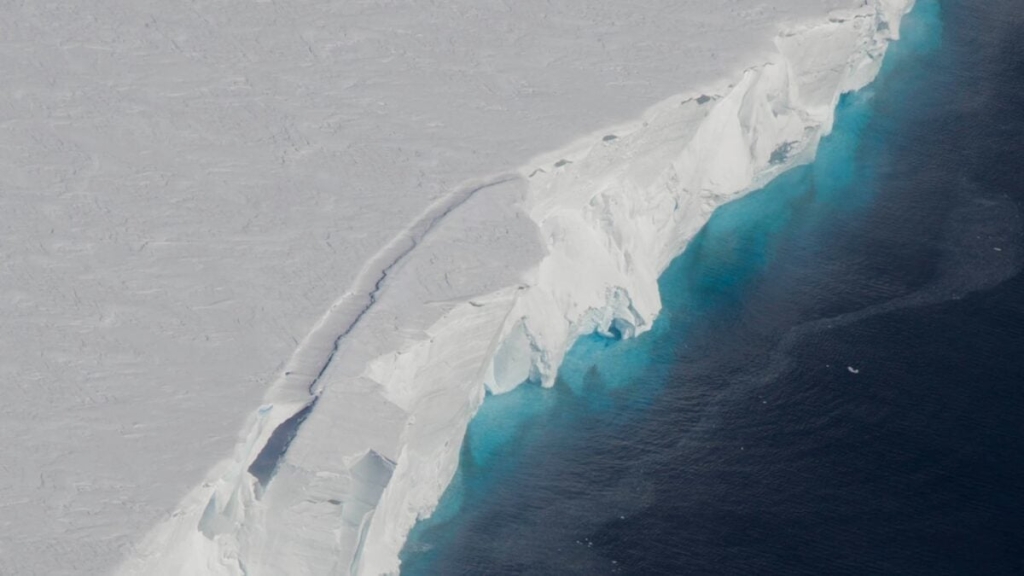
Antarctic Meltwater May Not Be the Climate Savior We Hoped For
In a twist that could reshape our understanding of climate feedback loops, new research is pouring cold water—literally—on a once-promising theory about how glacial melt might help slow global warming.
For years, scientists have speculated that as Antarctica’s ice sheets melt, they could release iron-rich freshwater into the surrounding ocean. This iron would theoretically fuel massive algal blooms that pull carbon dioxide from the atmosphere, creating a natural brake on climate change. It sounded almost too good to be true—and according to a new study published in Nature Communications Earth & Environment, it probably is.
The Iron Fertilization Theory: A Promising Idea, But Flawed
The concept, known as “iron fertilization,” has been a darling of climate science for over a decade. The theory goes like this: glaciers grind against bedrock as they move, releasing iron particles. When the ice melts, this iron-rich water flows into the ocean, where it acts as a fertilizer for phytoplankton—tiny marine algae that absorb CO2 during photosynthesis.
Previous research had suggested this process could be significant enough to meaningfully offset human carbon emissions. Some estimates even claimed that iron fertilization from melting glaciers could account for up to 40% of the ocean’s carbon uptake in certain regions.
But real-world data tells a different story.
Field Research in the Heart of Antarctic Melting
To test the theory, researchers from Rutgers University and Texas A&M University ventured to the Amundsen Sea in West Antarctica—ground zero for some of the fastest ice shelf thinning on the planet. The Dotson Ice Shelf, where they conducted their study, has been losing ice at an alarming rate, making it an ideal laboratory for understanding meltwater dynamics.
The team collected water samples at two critical points: where deep ocean water enters the cavity beneath the ice shelf, and where it exits after mixing with meltwater. This approach allowed them to trace the sources of dissolved iron with unprecedented precision.
Back in the lab, lead author Venkatesh Chinni analyzed the samples while collaborators measured isotopic ratios to determine the iron’s origin. What they found was surprising—and concerning.
The Numbers Tell a Different Story
The analysis revealed that meltwater itself contributed only about 10% of the dissolved iron in the outflowing water. In contrast, 62% came from deep ocean water that had entered the cavity, while 28% originated from sediments on the continental shelf.
“This completely changes our understanding of the iron cycle in these systems,” explains Rob Sherrell, the study’s principal investigator and a biogeochemistry professor at Rutgers. “Our claim in this paper is that the meltwater itself carries very little iron, and that most of the iron that it does carry comes from the grinding up and dissolving of bedrock into the liquid layer between the bedrock and the ice sheet, not from the ice that is driving sea level rise.”
In other words, the iron isn’t coming from the melting ice itself—it’s coming from the geological processes happening beneath the glacier, processes that would occur regardless of whether the ice was melting or not.
Why This Matters for Climate Science
This finding has significant implications for climate modeling and our understanding of feedback loops in the Earth system. If glacial meltwater isn’t a major source of oceanic iron, then the potential for natural carbon sequestration through algal blooms is much more limited than previously thought.
The study also highlights the importance of field research in validating theoretical models. While computer simulations suggested substantial iron fertilization potential, the real-world data tells a different story. This discrepancy underscores a fundamental challenge in climate science: the complexity of Earth’s systems often defies our attempts to model them accurately.
The Bigger Picture: Meltwater’s Complex Role
This isn’t the first time researchers have questioned the iron fertilization theory. Previous studies have found that past spikes in oceanic iron concentration had little to no effect on carbon-capturing algae. Meanwhile, other research suggests that glacial melt could actually accelerate regional warming through different mechanisms.
When glaciers darken due to sediment and impurities in the meltwater, they absorb more solar radiation, creating a feedback loop that speeds up melting. This “ice-albedo feedback” is one of the most concerning aspects of polar climate change, potentially leading to accelerated ice loss beyond what temperature increases alone would cause.
Limitations and Future Research
The researchers acknowledge that their study focused on just one ice shelf, and conditions can vary significantly across Antarctica’s vast coastline. The shape of ice shelves, local ocean conditions, and the properties of meltwater outflow all influence how water moves and mixes in subglacial cavities.
However, they believe the fundamental balance of dissolved iron sources they observed at Dotson could generally apply to other ice shelves. Verifying this will require additional field studies across different Antarctic regions.
“The interplay between the global climate and the marine processes that drive glacial melt is incredibly nuanced,” the researchers note. “This is why it’s so important for field studies to validate findings and theories based on modeling.”
What This Means for Climate Action
While the study may have deflated hopes for a natural climate solution, it provides crucial information for policymakers and climate scientists. Understanding the true dynamics of polar systems is essential for accurate climate projections and effective mitigation strategies.
The findings reinforce what many climate scientists have been saying for years: there are no silver bullets or natural solutions that will save us from the need to reduce greenhouse gas emissions. The complexity of Earth’s climate system means that interventions often have unexpected consequences, and relying on natural feedback loops to counteract human-driven warming is a risky strategy.
Instead, the study underscores the urgency of addressing climate change through direct action—reducing emissions, transitioning to renewable energy, and implementing adaptation strategies to protect vulnerable communities and ecosystems.
The Road Ahead
As Antarctica continues to lose ice at an accelerating rate—contributing roughly 0.4 millimeters per year to global sea level rise—understanding these processes becomes increasingly critical. The continent holds enough ice to raise global sea levels by over 58 meters if completely melted, making it a key factor in future climate scenarios.
Future research will need to investigate how changing ocean conditions, atmospheric patterns, and ice dynamics interact across different Antarctic regions. Only through comprehensive field studies and improved modeling can scientists hope to accurately predict how the continent will respond to continued warming.
The study’s findings may have dashed hopes for an iron-fueled climate solution, but they’ve opened new avenues for understanding one of Earth’s most critical systems. In the complex world of climate science, sometimes eliminating false hopes is just as valuable as discovering new ones.
Tags
Antarctic ice melt, iron fertilization theory, climate change feedback loops, glacial meltwater, carbon sequestration, phytoplankton blooms, Dotson Ice Shelf, Amundsen Sea, subglacial processes, climate modeling, ocean iron content, polar research, environmental science, global warming solutions, marine biogeochemistry
Viral Sentences
Antarctic meltwater isn’t the climate hero we thought it was—new research shows it barely contains any iron at all
Scientists just busted a major climate myth: melting glaciers won’t save us from global warming
The iron fertilization theory has been feeding us false hope about natural climate solutions
Real-world data from Antarctica just destroyed a decade of climate modeling assumptions
No silver lining here: glacial melt might actually accelerate warming instead of slowing it
This Antarctic study proves why we can’t rely on nature to fix our climate mess
The complexity of Earth’s climate system just got even more complicated
Field research in Antarctica reveals the harsh truth about climate feedback loops
Computer models said one thing, but Antarctic water samples told a completely different story
The future of climate science depends on boots-on-the-ground research, not just computer simulations
Antarctica’s ice loss is accelerating, and this study shows why we need to act now
Natural solutions to climate change are looking less promising by the day
The iron fertilization theory was too good to be true—and now we know why
This Antarctic discovery changes everything we thought we knew about carbon capture
Glacial melt is creating more problems than solutions for our warming planet
The search for climate solutions just hit a major roadblock in Antarctica
Scientists are learning that Earth’s climate systems are far more complex than we imagined
This study proves that direct climate action is more important than ever
The dream of nature saving us from climate change just melted away
Antarctic research continues to reveal the harsh realities of our warming world
,

Leave a Reply
Want to join the discussion?Feel free to contribute!