
Digital blackface flourishes under Trump and AI: ‘The state is bending reality’ | AI (artificial intelligence)
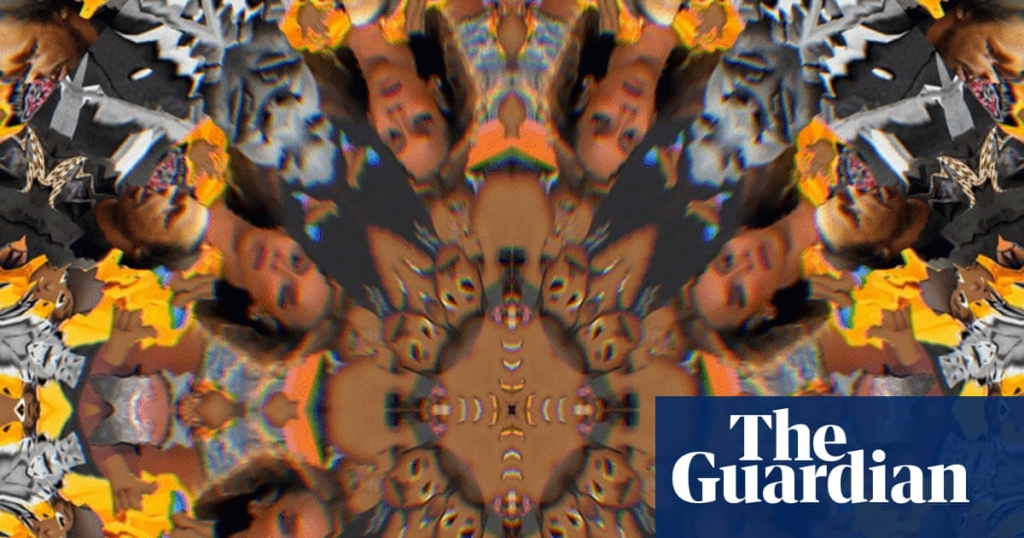
AI-Generated Digital Blackface: A New Frontier of Online Racism
In the waning months of 2024, as a US government shutdown disrupted crucial SNAP benefits for millions of low-income families, social media platforms were flooded with videos purporting to show the chaos. One particularly viral TikTok featured a Black woman claiming she received over $2,500 monthly in food stamps, selling $2,000 worth for $1,200-$1,500 in cash. Another showed a Black woman ranting about taxpayers’ obligations to her seven children with seven different fathers. A third depicted a meltdown at a corn dog counter when food stamps were rejected.
The problem? These videos were entirely AI-generated deepfakes—yet they spread like wildfire across conservative media and social platforms, with commentators and news outlets treating them as authentic documentation of welfare fraud.
Fox News initially reported on the fabricated SNAP deepfakes as if they were real before issuing a correction. Newsmax anchor Rob Schmitt claimed people were using SNAP benefits “to get their nails done, to get their weaves and hair.” What many outraged viewers missed: white Americans actually comprise 37% of SNAP’s 42 million beneficiaries, according to Pew Research Center data.
These AI-generated videos represent just one fragment of a rapidly expanding digital landscape where Black faces and voices are being appropriated, distorted, and weaponized through artificial intelligence technology. This phenomenon—what scholars call “digital blackface”—has accelerated dramatically since 2023 as generative AI video tools became widely accessible.
Safiya Umoja Noble, UCLA gender studies professor and author of Algorithms of Oppression, explains: “There’s been a massive acceleration. The digital blackface videos are really pulling from the same racist and sexist stereotypes and tropes that have been used for centuries.” The result is a digital minstrelsy where Blackness is commodified without cultural responsibility or stewardship.
The term “digital blackface” was coined in a 2006 academic paper to describe how non-Black individuals appropriate Black cultural expression online—whether through African American Vernacular English, darker-skinned emojis, or reaction memes featuring Black celebrities like Beyoncé and Katt Williams. As internet culture evolved into short-form video, this appropriation has become increasingly divorced from context, authorship, and consequence.
Mia Moody, Baylor University journalism professor, notes that some non-Black online creators now use AI-generated avatars modeled on familiar Black faces—the beauty influencer, the culture podcaster, the man-on-the-street interviewer—blending seamlessly into feeds alongside real Black content creators. Meanwhile, large language models scrape digital spaces that gained cultural capital from Black speech and humor, absorbing their tone and slang without compensation or consent.
The SNAP reaction clips marked a concerning escalation in mainstream digital blackface—moving beyond subtle appropriation to overt stereotyping. Many were created using OpenAI’s text-to-video app Sora, which saw surging popularity in 2025. Users exploited Sora’s hyperrealism to create deepfakes of Martin Luther King Jr. in compromising situations—shoplifting, wrestling Malcolm X, swearing through his “I Have a Dream” speech. Conservative influencers flooded social feeds with AI-generated images of King embracing Charlie Kirk, conflating their fundamentally opposed legacies.
Even more troubling, the Trump White House has embraced digital blackface as a tool of political messaging. In January 2025, the official White House X account posted a doctored photo of Minnesota activist Nekima Levy Armstrong, darkened and weeping after her arrest at a nonviolent anti-ICE demonstration. Earlier this month, an image portraying the Obamas as apes circulated via Trump’s Truth Social account.
These modern manifestations echo the minstrel shows of the early 19th century, when white performers smeared burnt cork on their faces to caricature Black features and perform exaggerated routines of Black laziness, buffoonery, and hypersexuality. Thomas D. Rice shot to fame in the 1830s playing Jim Crow—a name that became shorthand for the forced racial segregation policies in the American South.
By the early 20th century, minstrelsy had faded from mainstream entertainment, but its toxic residue lingered in American culture—from Disney’s “Dumbo” crows to Ted Danson’s infamous 1993 blackface roast of Whoopi Goldberg. A decade ago, researchers like Noble and MIT’s Joy Buolamwini were already sounding alarms about inherent racial biases in algorithms affecting medical treatment, loan applications, hiring decisions, and facial recognition.
Tech companies have made some efforts to address the problem. OpenAI, Google, and Midjourney banned deepfakes of MLK and other American icons after public backlash. Meta deleted two AI blackface characters—Grandpa Brian and “Liv,” described as a “proud Black queer momma”—after criticism of their non-diverse development team. Instagram and TikTok have attempted to remove viral digital blackface videos with limited success.
Affinity groups like Black in AI and the Distributed AI Research Institute (DAIR) have pushed for diversity and community input in AI model-building to address programming bias. The AI Now Institute and Partnership on AI have highlighted risks of AI systems learning from marginalized communities’ data and suggested mechanisms like data opt-outs to limit harmful uses.
Yet adoption remains slow. As Noble points out: “YouTube alone has something like 400 hours of content per minute being uploaded. With AI generation, these tech firms cannot manage what’s coming through their systems.” The Trump administration’s embrace of digital blackface demonstrates its potential as a powerful tool of official disinformation, reviving slurs that have festered in darker online corners while conflating fundamentally opposed political legacies.
Beyond laundering bigotry as news, digital blackface exposes Black users to personalized abuse and harassment reminiscent of minstrelsy’s heyday, when racists were fully empowered to express their bigotry unbidden. “We are living in a United States with an open, no-holds-barred, anti-civil-rights, anti-immigrant, anti-Black, anti-LGBTQ, anti-poor-policy agenda,” Noble says. “Finding the material to support this position is just a matter of the state bending reality to fit its imperatives.”
Despite these challenges, Moody remains hopeful that the current fascination with digital blackface will eventually fade, just as its analog predecessor did. “Right now people are just experimenting with AI technology and having a ball seeing what they can get away with,” she says. “Once we get beyond that, then we’re going to see less of it. They’ll move on to something else. Or they’ll be up for a job, and it’ll be embarrassing. Just look at the history.”
Viral Tags & Phrases:
- AI-generated digital blackface
- Synthetic minstrelsy
- Algorithmic racism
- Deepfake welfare fraud
- Digital blackface 2.0
- AI minstrel shows
- Tech-enabled racism
- Virtual blackface
- Algorithmic appropriation
- AI cultural theft
- Synthetic stereotypes
- Digital blackface epidemic
- AI minstrelsy revival
- Algorithmic blackface
- Virtual minstrel shows
- AI-enabled racism
- Synthetic cultural appropriation
- Digital blackface explosion
- AI racial stereotypes
- Virtual blackface crisis
- Algorithmic minstrelsy
- AI blackface controversy
- Synthetic blackface
- Digital blackface backlash
- AI minstrel revival
- Virtual cultural appropriation
- Algorithmic stereotyping
- AI blackface scandal
- Synthetic minstrel shows
- Digital blackface debate
- AI racial appropriation
- Virtual minstrelsy
- Algorithmic blackface controversy
- AI cultural minstrelsy
- Synthetic blackface crisis
- Digital blackface phenomenon
- AI minstrel controversy
- Virtual blackface explosion
- Algorithmic cultural theft
- AI blackface epidemic
- Synthetic minstrel controversy
- Digital blackface scandal
- AI racial minstrelsy
- Virtual cultural minstrelsy
- Algorithmic blackface crisis
- AI cultural appropriation
- Synthetic blackface debate
- Digital blackface controversy
- AI minstrel phenomenon
,
Leave a Reply
Want to join the discussion?Feel free to contribute!