
Disagreement Means a DAO Is Healthy: Curve Finance Founder
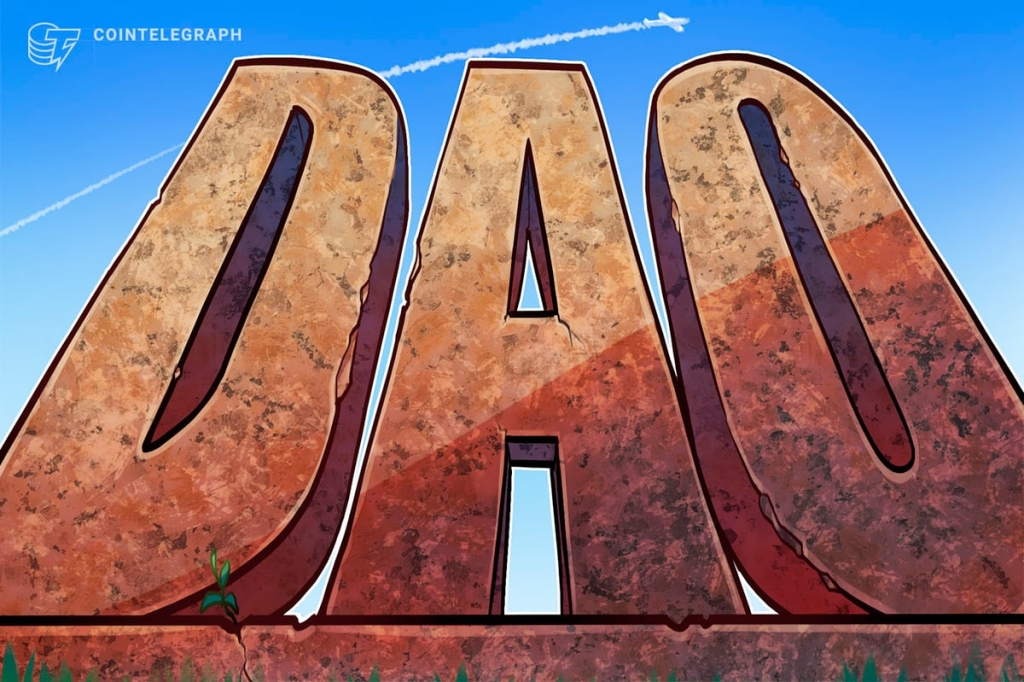
Why Disagreements Are a Good Sign for DAOs: Curve Founder Breaks Down the Latest Governance Battles
In the fast-evolving world of decentralized finance, governance disputes are often seen as red flags. But according to Dr. Michael Egorov, founder of Curve Finance, they’re actually a sign of a healthy decentralized autonomous organization (DAO).
DAOs—organizations governed by smart contracts and community voting—are becoming the backbone of Web3. Yet, as they mature, so do the complexities of running them. From high-stakes funding proposals to intellectual property battles, DAOs are facing governance challenges that mirror those of traditional companies, but with a decentralized twist.
The Power of Disagreement: A Sign of Engagement, Not Dysfunction
Egorov argues that if everyone in a DAO agrees too easily, it’s a sign of apathy, not alignment. “If everyone automatically agrees on something, it feels like people just don’t really care,” he told Cointelegraph. “They vote for whatever comes in, or they don’t participate at all. The first sign of that would be governance apathy, like when people are not voting at all.”
This perspective was shaped by a recent governance proposal within the Curve DAO. In 2024, a proposal sought to grant Swiss Stake AG, the main developer behind Curve Finance, around $6.3 million. The proposal sparked significant pushback from DAO members, leading to revisions and a resubmission in December 2025. This time, the updated proposal saw over 80% voter turnout—a rare feat in the DAO world.
According to an analysis by blockchain development company LamprosTech, “Voter turnout in most DAOs rarely passes 15%, concentrating decision-making power in the hands of a small, active group.” Curve’s high engagement is partly due to its token lock-up mechanism, which incentivizes long-term governance participation.
Aave’s Governance Firestorm: The IP Battle
While Curve’s dispute centered on funding, the Aave DAO found itself in a firestorm over intellectual property and fees. In December 2025, a governance dispute erupted between Aave Labs, the main development company, and the Aave DAO over fees generated from an integration with DeFi exchange aggregator CoW Swap.
Members of the DAO were critical of the fees going directly to a wallet controlled by Aave Labs. This sparked a broader debate: Who truly controls the intellectual property of a decentralized protocol? A proposal was then submitted to bring Aave’s brand assets and IP under DAO control, but it ultimately failed to pass.
This dispute highlights a growing challenge in the DAO space: the blurred lines between centralized development teams and decentralized governance. As Egorov notes, DAOs represent a new model of human organization—one that blends elements of sovereign countries and companies, complete with “political parties” voicing disagreement over how to govern a protocol.
The Legal Gap: Why DAOs Need Real-World Recognition
One of the biggest hurdles for DAOs is their inability to interact with the traditional financial world. Without legal recognition, DAOs can’t own business entities, bank accounts, or easily manage intellectual property rights. This creates friction in governance and limits their real-world utility.
Egorov believes that if DAOs could be legally recognized and interact with traditional finance, it could mitigate many of these disputes. “DAOs are a great fit for governing anything onchain,” he said, “but they should also experiment with offchain elements.” However, he acknowledges that centralized companies might still be better suited for managing certain offchain structures.
The legal system, Egorov argues, has yet to catch up with the technology. Until then, DAOs will continue to navigate a gray area, balancing decentralization with the need for real-world functionality.
The Future of DAOs: Experimentation and Evolution
As DAOs evolve, they’re likely to face more governance challenges. But according to Egorov, these challenges are part of the process. “It’s a new model for human organization,” he said. “It’s not a company, it’s not a country, but it has elements of both.”
The key to success, he believes, is experimentation. DAOs should continue to push boundaries, both onchain and offchain, while the legal and technological frameworks catch up.
For now, the message is clear: Disagreements in DAOs aren’t a bug—they’re a feature. They signal engagement, passion, and a community that cares about the future of its protocol. And in the world of decentralized governance, that’s a very good thing.
Tags & Viral Phrases:
- Curve Finance founder says DAO disagreements are healthy
- Aave governance dispute over CoW Swap fees
- Why low voter turnout is a red flag for DAOs
- The future of decentralized governance
- How legal recognition could solve DAO disputes
- DAO intellectual property battles explained
- Egorov on why apathy is worse than disagreement
- The rise of decentralized autonomous organizations
- Governance apathy vs. active participation in DAOs
- Why DAOs need legal frameworks to thrive
- The blurred lines between DAOs and traditional companies
- How Curve achieved 80% voter turnout
- The role of token lock-ups in DAO engagement
- Aave vs. Aave Labs: Who controls the IP?
- The evolution of decentralized governance models
- Why disagreements are a sign of a healthy DAO
- The challenges of managing offchain elements in DAOs
- How DAOs are reshaping human organization
- The legal gap holding back DAO innovation
- Why centralized companies might still be needed for DAOs
,

Leave a Reply
Want to join the discussion?Feel free to contribute!