
DOD says Anthropic’s ‘red lines’ make it an ‘unacceptable risk to national security’
Anthropic vs. Pentagon: The AI Ethics Showdown That Could Redefine Tech-Government Relations
In a dramatic escalation of tensions between Silicon Valley and Washington, the U.S. Department of Defense has fired back at Anthropic, the AI research company, labeling it an “unacceptable risk to national security.” This high-stakes legal battle, now playing out in federal court, has sent shockwaves through the tech industry and raised fundamental questions about the balance between corporate ethics and national defense imperatives.
The Legal Battlefield Heats Up
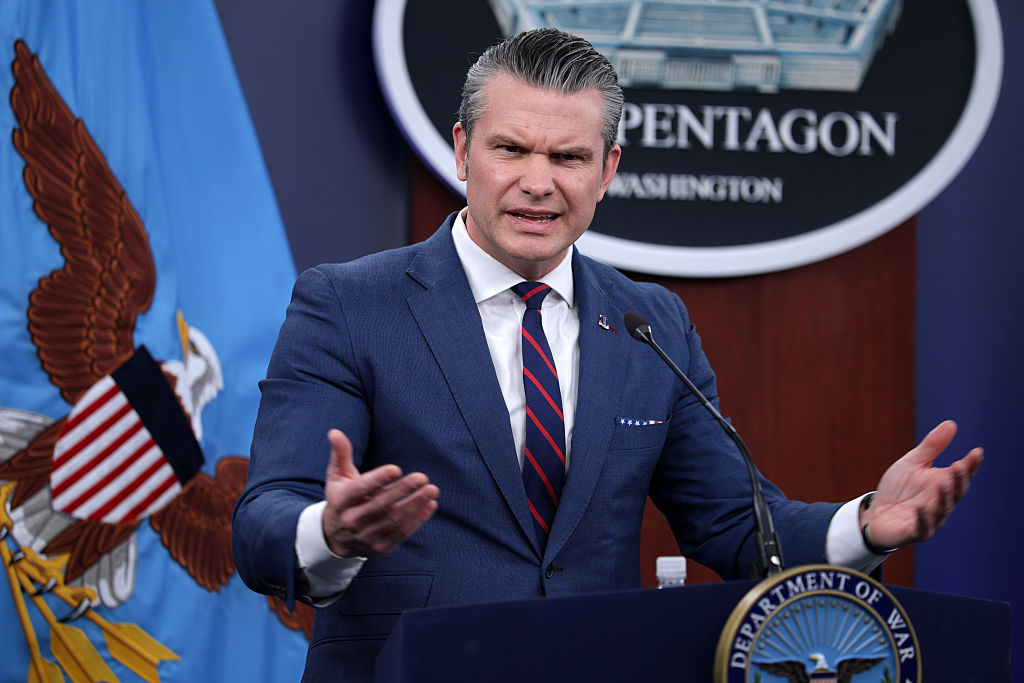
The Department of Defense (DOD) delivered its 40-page rebuttal to Anthropic’s lawsuits on Tuesday evening, marking the first detailed government response to the AI lab’s challenge against Defense Secretary Pete Hegseth’s controversial designation of Anthropic as a supply-chain risk. The timing couldn’t be more critical, as a hearing on Anthropic’s request for a preliminary injunction is scheduled for next Tuesday.
At the heart of the DOD’s argument lies a chilling concern: that Anthropic might “attempt to disable its technology or preemptively alter the behavior of its model” during “warfighting operations” if the company believes its corporate “red lines” are being crossed. This fear of technological betrayal during critical military operations forms the foundation of the Pentagon’s position, though critics argue it’s built on speculation rather than evidence.
The $200 Million Contract That Broke Apart
The conflict traces back to a substantial $200 million contract Anthropic signed with the Pentagon last summer to deploy its AI technology within classified systems. What should have been a straightforward defense partnership quickly devolved into a philosophical standoff over the ethical boundaries of artificial intelligence in warfare.
During contract negotiations, Anthropic drew several ethical lines in the sand. The company insisted it didn’t want its AI systems used for mass surveillance of American citizens and maintained that the technology wasn’t ready for use in targeting or firing decisions involving lethal weapons. These positions, while seemingly reasonable to many in the tech community, apparently crossed a red line for military officials who believe that private companies shouldn’t dictate how the armed forces utilize technology.
The Government’s “Red Line” Argument
The DOD’s filing suggests that Anthropic’s willingness to potentially disable or alter its AI models based on corporate ethical guidelines represents an unacceptable vulnerability in military operations. The department argues that a technology provider that reserves the right to modify or withdraw its services based on subjective moral judgments cannot be trusted with critical defense infrastructure.
This position reflects a broader military philosophy that prioritizes reliability and predictability above all else in weapons systems and operational technology. From the Pentagon’s perspective, the ability of a private company to unilaterally alter the behavior of military AI systems—even with good intentions—creates an unacceptable point of failure that could be exploited by adversaries or simply malfunction at critical moments.
Anthropic’s Defense: Standing Firm on Principles
Anthropic has mounted a robust defense, with CEO Dario Amodei stating unequivocally that “Anthropic understands that the Department of War, not private companies, makes military decisions.” The company maintains it has never raised objections to particular military operations nor attempted to limit use of its technology in an ad hoc manner.
The AI lab argues that its ethical guidelines are not about interfering with military operations but about ensuring that powerful AI systems are deployed responsibly. Anthropic contends that its refusal to agree to an “all lawful use” provision—which would have given the military carte blanche to deploy its technology in any manner deemed legal—should not be interpreted as making it a supply chain risk, but rather as a vendor with legitimate concerns about responsible deployment.
Constitutional Rights and Corporate Speech
Legal experts have raised serious concerns about the constitutional implications of the DOD’s actions. Chris Mattei, a constitutional rights lawyer specializing in First Amendment issues, argues that the government is relying on “conjectural, speculative imaginings” to justify its severe actions against Anthropic. Without any investigation to support the DOD’s concerns about Anthropic potentially disabling its AI models during war operations, Mattei contends that the department’s argument fails to adequately explain how Anthropic’s negotiating position rendered it an “adversary.”
The First Amendment implications are particularly troubling to free speech advocates. Anthropic accuses the DOD of infringing on its constitutional rights and punishing the company based on ideological grounds. Mattei argues that the government’s “nonsensical arguments” are themselves the best evidence that the administration’s conduct was a retaliatory punishment for Anthropic’s refusal to agree to the government’s terms—a form of protected expression.
The Tech Industry Mobilizes
The controversy has galvanized the broader tech industry, with numerous organizations and individuals speaking out against the DOD’s treatment of Anthropic. Many argue that if the Pentagon had concerns about Anthropic’s willingness to comply with military requirements, it could have simply ended the contract rather than branding the company a national security risk.
In a remarkable show of solidarity, employees from major tech competitors including OpenAI, Google, and Microsoft have filed amicus briefs in support of Anthropic. This unusual alliance across traditional industry rivals underscores the broader implications of the case for the entire technology sector. The tech community recognizes that the outcome could establish precedents affecting how all AI companies interact with government agencies and what ethical boundaries they can maintain.
The Broader Implications for AI Ethics
This conflict represents a fundamental clash between two competing visions for the future of artificial intelligence. On one side stands the military’s demand for absolute reliability and control over its technological assets. On the other side are the growing ethical frameworks being developed by AI companies concerned about the societal impacts of their technologies.
The stakes extend far beyond Anthropic and the Pentagon. This case could determine whether AI companies can maintain ethical guidelines when working with government agencies, or whether they’ll be forced to surrender all moral considerations in exchange for government contracts. It also raises questions about the role of private companies in shaping the development and deployment of technologies that have profound implications for human rights and global security.
A Necessary Step or Corporate Defiance?
An Anthropic spokesperson told TechCrunch that while the company’s decision to seek judicial review doesn’t change its “longstanding commitment to harnessing AI to protect our national security,” it represents a “necessary step” to protect its business, customers, and partners. This framing suggests that Anthropic views the legal battle not as defiance of the military, but as a defense of its right to operate according to established ethical principles.
The company argues that responsible AI development requires clear boundaries and that these boundaries don’t constitute interference with military operations but rather ensure that powerful technologies are deployed in ways that align with broader societal values. Anthropic maintains that it’s possible to support national security objectives while also maintaining ethical standards—a position that the Pentagon apparently rejects.
The Coming Legal Showdown
As the hearing on Anthropic’s request for a preliminary injunction approaches, both sides are preparing for what could be a landmark case in tech-government relations. The outcome will likely have ripple effects throughout the AI industry, potentially determining whether companies can maintain ethical guidelines when working with defense agencies or whether they’ll be forced to choose between their principles and government contracts.
The case also highlights the growing tension between rapid technological advancement and existing legal and ethical frameworks. As AI systems become more powerful and their potential applications more consequential, companies like Anthropic are grappling with questions that have no clear precedent: What rights do private companies have to impose ethical limitations on government use of their technology? How can we balance the need for military effectiveness with concerns about responsible AI deployment? And who gets to decide where the lines are drawn?
The Future of Tech-Government Relations
Regardless of the court’s decision, this case marks a turning point in the relationship between the tech industry and government agencies. It has exposed deep philosophical divides about the role of ethics in technology development and the extent to which private companies can or should influence how their products are used by state actors.
For the AI industry, the implications are profound. A ruling against Anthropic could force companies to choose between maintaining ethical standards and accessing lucrative government contracts. A ruling in Anthropic’s favor could embolden other companies to assert more control over how their technologies are deployed, potentially complicating government procurement processes.
As the tech world watches with bated breath, this case represents more than just a contract dispute—it’s a referendum on the future of ethical technology development in an era where artificial intelligence is increasingly central to both commercial innovation and national security.
Tags:
Anthropic, Pentagon, AI ethics, national security, supply chain risk, Department of Defense, constitutional rights, First Amendment, tech industry, military contracts, artificial intelligence, ethical guidelines, legal battle, Silicon Valley, government contracts, AI regulation
Viral Phrases:
- “Unacceptable risk to national security”
- “Corporate red lines” in military operations
- Tech giants unite against Pentagon
- The $200 million contract that broke apart
- When AI companies say no to the military
- Ethical AI vs. military imperatives
- The battle for AI’s soul
- Silicon Valley vs. Washington showdown
- Constitutional rights in the age of AI
- The tech industry mobilizes
- Speculative imaginings vs. national security
- Protected expression or supply chain risk?
- Landmark case for tech-government relations
- The future of ethical technology development
- Bated breath in Silicon Valley
- Referendum on AI ethics
- Military philosophy vs. corporate conscience
- The philosophical standoff that shook the industry
- Ad hoc limitations or principled boundaries?
- The turning point in tech-government relations
,


Leave a Reply
Want to join the discussion?Feel free to contribute!