
Don’t take success for granted: Seattle Chamber CEO Joe Nguyen on tech’s evolving storyline
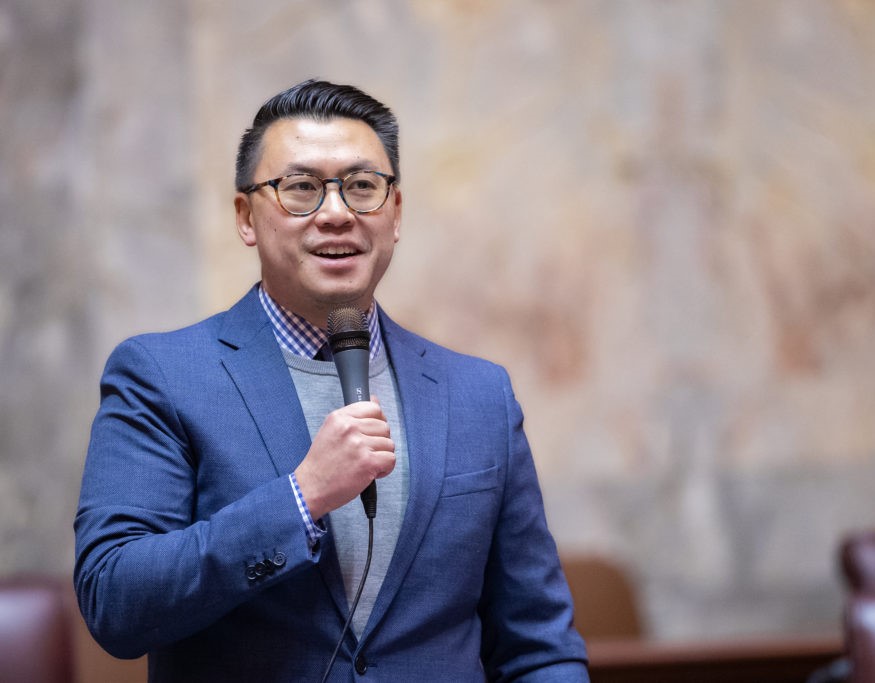
Seattle’s Tech Titan Joe Nguyen Takes Helm at Chamber of Commerce, Vows to Protect Economic Engine
Seattle’s technology ecosystem just got a new champion. Joe Nguyen, the former Washington State Director of Commerce and tech industry veteran, has taken the reins as President and CEO of the Seattle Metropolitan Chamber of Commerce, bringing with him a mission to safeguard the region’s economic powerhouse status.
From State Capitol to Seattle’s Economic Core
Nguyen’s journey to this pivotal role reads like a Seattle success story. A Seattle University graduate who cut his teeth at Microsoft and Expedia, he later served as state senator for Seattle’s 34th Legislative District before being tapped to lead the Department of Commerce. But after just one year in the state role, Nguyen felt the gravitational pull back to where it all happens—Seattle’s vibrant business community.
“When you look at this state, and you look at the ecosystem that is Puget Sound, we are the economic engine for Washington state, that is just unquestionable,” Nguyen told GeekWire. “Right now we’re at a very unique moment with federal actions impacting us, state actions impacting us, local actions impacting us. Being able to focus on this region was important.”
The Fragility Beneath Seattle’s Economic Success
Despite King County’s robust GDP growth, Nguyen sees storm clouds gathering. The region’s economic prosperity, he warns, rests on a precarious foundation—one that’s far too concentrated in both industry and geography.
“I am cautiously optimistic, because I do really think that we have a great thing going for us, but the fragility of our economy is very real,” Nguyen said, pointing to data showing that nearly 100% of Seattle’s budget growth since 2019 comes from the JumpStart payroll tax, which targets large businesses.
The numbers are sobering: approximately 10 companies—including one tech giant that needs no introduction—fuel this critical revenue stream. “When you have that high of a concentration on tax revenue from a key sector in a key industry and really a key company, that makes it risky for us as a whole,” Nguyen explained. “Because if they even move away a little bit, that would have a big impact on the budget.”
Bellevue’s Rise: A Wake-Up Call for Seattle?
As Amazon expands its footprint across Lake Washington and AI powerhouses like OpenAI and xAI establish engineering hubs in Bellevue, Nguyen sees both opportunity and warning signs. The Eastside’s ability to attract major tech employers while offering lower costs and different policy environments presents a competitive challenge that Seattle can’t ignore.
“When you still have access to talent, and all you have to do is go across the bridge and it’s significantly cheaper and more friendly, that certainly says something,” Nguyen observed. “Tax policy is one, but even the rhetoric is another.”
Yet he remains convinced that Seattle remains the region’s economic heart. “We have a legacy and history of success. I just don’t think that that should be taken for granted.”
Bridging the Gap Between Tech and Policy
Perhaps Nguyen’s most valuable asset in this new role is his unique perspective—he’s worn the shoes of both tech executive and legislator. This dual experience positions him perfectly to address what he sees as a dangerous divide between Seattle’s business and political communities.
“We have fantastic values in Washington state, but you have to pay for them somehow,” he explained. “If you don’t have a thriving ecosystem, if you don’t have economic development, if there’s a tension between the business community and the political community, nothing works.”
His message to policymakers is blunt: “Even if you’re uber-progressive and you want to tax the rich, you need to have rich people to tax.”
Seattle vs. Silicon Valley: Different Philosophies, Shared Competition
While San Francisco basks in AI glory and tech founders flock to the Bay Area, Nguyen sees Seattle’s more understated approach as both a strength and a challenge. “We just have a different personality,” he said, contrasting Seattle’s low-key vibe with San Francisco’s tech billboard arms race.
Silicon Valley’s model—build, sell, become a VC, repeat—differs markedly from Seattle’s ethos of community investment and philanthropy. “Our culture is very different. We do philanthropy, we try to serve our communities. We try to help,” Nguyen said. “We’re very fortunate to have great opportunities and strengths here. I just think that we need to double down and make sure that people know that.”
The Future: Betting on Emerging Technologies
Looking ahead, Nguyen sees enormous potential in emerging tech sectors. The chamber plans to make “strategic bets” on industries ranging from clean tech and quantum computing to the burgeoning space economy.
He points to AI House—the 108,000-square-foot waterfront hub for artificial intelligence innovation—as a model for how the chamber can facilitate public-private partnerships that drive economic growth. “The fact that you go from a concept a couple of years ago now to that beautiful space that they have on the waterfront… you have to actually hustle and go for that. You need to have the community actually rally around that.”
A Personal Mission
For Nguyen, this isn’t just about economic indicators and policy papers. It’s deeply personal. “I really want to make sure that [economic opportunity] is available for the next generation as well,” he said, reflecting on how Seattle’s opportunities transformed his own family’s trajectory.
As he settles into his new role, Nguyen brings not just expertise but urgency—a sense that Seattle’s economic magic, while real, requires active protection and cultivation. In a world where tech companies can relocate with a keystroke and economic power is shifting globally, Seattle’s continued prosperity is anything but guaranteed.
“We are competing on a global stage,” Nguyen emphasized. “And there’s a lot of reasons for [companies] to be here and why we’re better than other places. But again, that’s not a guarantee.”
Seattle’s tech economy stands at a crossroads, and Joe Nguyen has positioned himself as the guardian of its future—one where innovation, policy, and community work in harmony to ensure the Emerald City remains a beacon for technological progress and economic opportunity.
Tags: Seattle tech economy, Joe Nguyen, Seattle Metropolitan Chamber of Commerce, Washington state economic development, AI House Seattle, Bellevue vs Seattle tech rivalry, JumpStart tax Seattle, Amazon economic impact, tech policy Washington, emerging technologies investment, quantum computing Seattle, clean tech Washington, space economy Pacific Northwest, Microsoft Expedia veteran, Seattle startup ecosystem, cross-lake tech competition, economic fragility warning, tech philanthropy culture, Silicon Valley vs Seattle, public private partnerships Washington
Viral Sentences:
- “We are the economic engine for Washington state, that is just unquestionable”
- “Even if you’re uber-progressive and you want to tax the rich, you need to have rich people to tax”
- “Our culture is very different. We do philanthropy, we try to serve our communities. We try to help”
- “When you fly into SFO and you get an Uber and you go downtown, every single billboard is a new tech company pitching you. We don’t really do that here”
- “Tax policy is one, but even the rhetoric is another”
- “Being wanted is a positive thing, and we’re very lucky”
- “We have a legacy and history of success. I just don’t think that that should be taken for granted”
- “We are competing on a global stage, our companies are competing on a global stage”
- “That’s not a guarantee”
- “The fragility of our economy is very real”
,


Leave a Reply
Want to join the discussion?Feel free to contribute!