
Donut Lab’s solid-state battery can handle the (extreme) heat, test says
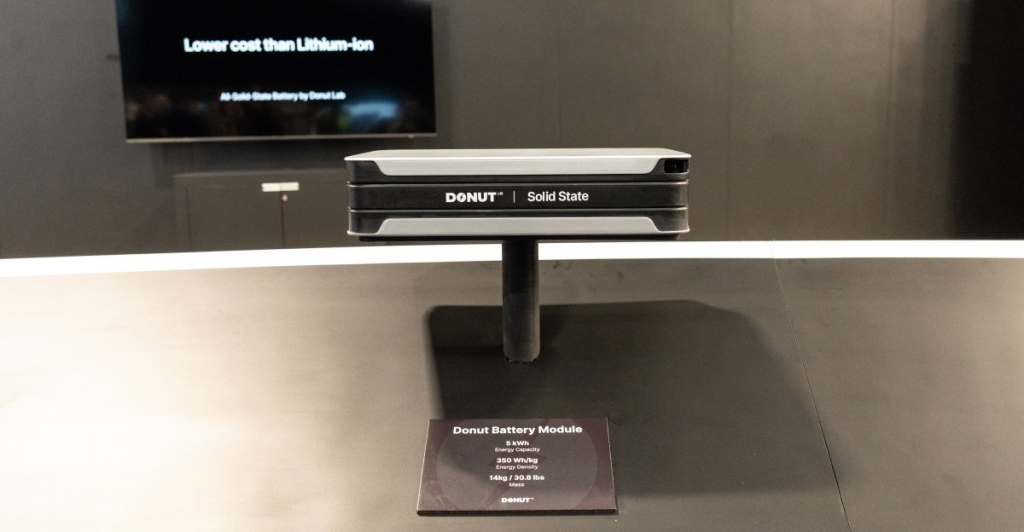
Finnish Startup’s Solid-State Battery Survives 100°C Heat Test—And Actually Performs Better!
In a breakthrough that could redefine the future of electric vehicle batteries, Finnish startup Donut Lab has once again proven that its solid-state battery technology can withstand extreme conditions that would destroy conventional lithium-ion packs. The latest independent test, conducted by VTT Technical Research Centre of Finland, shows the battery not only surviving temperatures up to 100°C (212°F) but actually delivering improved performance under the heat.
The test results are nothing short of remarkable. When subjected to temperatures of 80°C and 100°C, Donut Lab’s 3.6V/26Ah solid-state battery delivered 27.5Ah and 27.6Ah respectively—representing 110.5% and 107.1% of its baseline performance at room temperature. To put this in perspective, traditional lithium-ion batteries would likely fail catastrophically or at minimum suffer severe degradation under such extreme conditions.
The testing methodology was rigorous. VTT placed the battery on a heatsink inside a temperature-controlled chamber, applying physical pressure using a steel plate to ensure proper contact and functionality. Three temperature scenarios were tested: 20°C for baseline room temperature, 80°C for “high heat,” and 100°C for “extreme heat.” At each stage, the battery was discharged and then recharged to assess its recovery capabilities.
What makes these results particularly significant is the fundamental physics at play. In solid-state batteries, heat actually reduces internal resistance within the solid electrolyte, allowing ions to move more freely through the material. This is the opposite of what happens in liquid electrolyte batteries, where heat can cause thermal runaway—a dangerous chain reaction where overheating leads to vaporization, fire, and potential explosion.
The implications for electric vehicle applications are enormous. Current liquid electrolyte lithium-ion batteries struggle in extreme temperatures, both hot and cold. In freezing conditions, they can become sluggish and lose significant range. In extreme heat, they risk degradation, swelling, or catastrophic failure. Donut Lab’s technology suggests a battery that could maintain consistent performance across a much wider temperature range, potentially eliminating the need for complex and energy-intensive thermal management systems in EVs.
However, the test also revealed one limitation: at 100°C, the physical pouch lost its vacuum seal, likely due to the extreme heat causing material expansion. While this didn’t prevent the battery from functioning or being recharged, it does highlight that even solid-state technology has physical limits to overcome.
It’s worth noting that VTT’s report doesn’t specify the exact chemistry of Donut Lab’s battery, taking the company’s claims at face value. Additionally, the test didn’t address what EV expert Tim Stevens calls the “dendrite issue”—a phenomenon where microscopic structures can grow across the solid electrolyte, potentially causing electrical shorts. These are critical questions that future independent testing will need to address.
Donut Lab is positioning this as part of its ongoing “I Donut Believe” series of independent validations, suggesting more comprehensive testing is on the horizon. The company appears committed to transparency and third-party verification, which is crucial for building credibility in the competitive EV battery market.
The solid-state battery race has intensified in recent years, with major automakers and tech companies investing billions in the technology. The promise is clear: batteries that charge faster, last longer, are safer, and can store more energy in the same space. If Donut Lab’s technology proves scalable and cost-effective, it could accelerate the transition to electric vehicles by solving some of the most persistent challenges facing the industry.
As the electric vehicle revolution accelerates, breakthroughs like this remind us that the holy grail of battery technology may finally be within reach. The question now is whether Donut Lab can translate these impressive lab results into commercially viable products that can be manufactured at scale. If they can, the future of transportation just got a whole lot more exciting.
viral tags:
solid-state battery breakthrough, EV revolution, battery technology, extreme heat test, Finnish innovation, electric vehicle future, battery safety, thermal management, VTT Technical Research, Donut Lab, lithium-ion alternative, energy density, fast charging, temperature tolerance, green technology, sustainable transport, battery chemistry, dendrite problem, independent testing, I Donut Believe series
viral phrases:
“holy grail of batteries,” “performs better when it’s hot,” “survives where others fail,” “game-changing battery tech,” “the future is solid,” “heat resistant innovation,” “battery that thrives in extreme conditions,” “EV’s next big leap,” “solid-state supremacy,” “temperature proof power,” “Finnish battery breakthrough,” “the heat is on for EV batteries,” “batteries that laugh at 100°C,” “solid-state success story,” “revolutionizing energy storage,” “the battery that gets stronger when hot,” “extreme conditions? No problem,” “solid-state solution emerges,” “battery technology reimagined,” “the heat test everyone’s talking about”
,

Leave a Reply
Want to join the discussion?Feel free to contribute!