
ElevenLabs CEO: Voice is the next interface for AI
Voice is the New Frontier: How AI is Shifting from Screens to Speech
At the heart of the AI revolution, a quiet but seismic shift is underway. While chatbots and generative AI have captured headlines for their text and image capabilities, the next major interface for artificial intelligence is emerging—and it’s one we’ve been using since we first learned to speak. Voice is rapidly becoming the primary way humans will interact with machines, and companies like ElevenLabs are betting billions that this transformation will redefine our relationship with technology.
The Dawn of Conversational AI
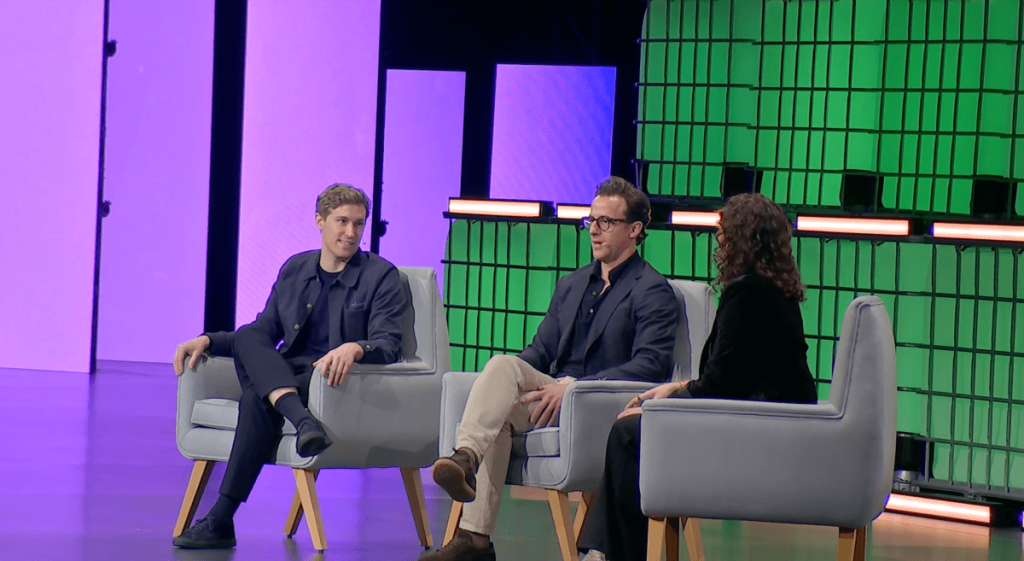
During a recent appearance at Web Summit in Doha, Mati Staniszewski, co-founder and CEO of ElevenLabs, delivered a compelling vision for the future of human-computer interaction. “Voice is becoming the next major interface for AI,” Staniszewski declared, suggesting that as AI models evolve beyond text and screens, our voices will become the primary mechanism for controlling technology.
This isn’t just incremental improvement—it’s a fundamental reimagining of how we engage with machines. Staniszewski explained that voice models have progressed dramatically, moving beyond simple speech mimicry to incorporate genuine emotional nuance and intonation. More importantly, these systems are now integrating with the reasoning capabilities of large language models, creating a synthesis that transforms voice from a novelty into a powerful, intuitive interface.
The implications are profound. Imagine a world where your phone stays in your pocket, and instead of tapping through menus or typing queries, you simply speak to the technology around you. “Hopefully all our phones will go back in our pockets,” Staniszewski mused, “and we can immerse ourselves in the real world around us, with voice as the mechanism that controls technology.”
The $11 Billion Bet on Voice
The market has responded with extraordinary enthusiasm to this vision. This week, ElevenLabs announced a staggering $500 million funding round that values the company at $11 billion. This massive investment reflects growing confidence that voice represents the next major computing paradigm—potentially as transformative as the shift from command-line interfaces to graphical user interfaces, or from desktop to mobile computing.
But ElevenLabs isn’t alone in this conviction. The entire AI industry appears to be converging on voice as the next battleground. OpenAI has made audio a central focus of its latest models, while Google has equipped its AI Mode with sophisticated back-and-forth voice conversation capabilities. Even Apple, typically secretive about its strategic moves, has been quietly building voice-adjacent technologies through strategic acquisitions like Q.ai, suggesting the tech giant sees voice as critical to its future.
Beyond Screens: The Interface Evolution
The shift toward voice represents more than just a new way to give commands—it signals a fundamental rethinking of how humans interact with technology. Seth Pierrepont, general partner at Iconiq Capital, articulated this perspective during his own Web Summit appearance, arguing that while screens will remain important for gaming and entertainment, traditional input methods like keyboards are beginning to feel “outdated.”
This sentiment captures a broader cultural moment. We’ve spent decades hunched over keyboards, our attention locked to glowing rectangles. Voice promises liberation from this posture, enabling us to engage with technology while maintaining eye contact, moving freely, and staying present in our physical surroundings.
But the transformation goes deeper than convenience. As AI systems become more agentic—capable of autonomous action and decision-making—the nature of interaction itself is evolving. These systems are gaining guardrails, integrations, and contextual understanding that allow them to respond intelligently with less explicit prompting from users. The future isn’t just about speaking to computers; it’s about having genuine, ongoing conversations with AI assistants that understand our needs, preferences, and contexts.
The Memory Revolution
One of the most significant changes underway, according to Staniszewski, is the shift toward persistent memory and context in voice systems. Rather than requiring users to spell out every instruction in detail, future voice interfaces will build up understanding over time, making interactions feel more natural and requiring less cognitive effort from users.
This represents a crucial evolution from today’s often frustrating voice assistants, which require precise commands and struggle with context. The next generation will remember your preferences, understand your routines, and anticipate your needs based on accumulated knowledge about your behavior and circumstances. It’s the difference between repeatedly explaining yourself to a stranger and conversing with someone who truly knows you.
The Hybrid Future: Cloud and Device
As voice technology advances, its deployment architecture is also evolving. While high-quality audio models have traditionally relied on cloud processing, ElevenLabs is pioneering a hybrid approach that blends cloud and on-device processing. This strategy serves multiple purposes: it enables faster response times, works in areas with poor connectivity, and—perhaps most importantly—opens up new hardware possibilities.
The implications for hardware are enormous. Voice is becoming a constant companion rather than a feature you consciously choose to engage with. This shift is particularly relevant for wearables like headphones and smart glasses, where voice offers the most natural interaction method. Imagine smart glasses that understand your surroundings, answer your questions, and help you navigate the world—all through seamless voice interaction.
Strategic Partnerships and Expanding Ecosystems
ElevenLabs is already moving aggressively to establish itself in this emerging ecosystem. The company has partnered with Meta to bring its voice technology to products including Instagram and Horizon Worlds, Meta’s virtual reality platform. This integration suggests that voice will become a fundamental part of social media and immersive experiences, allowing users to interact with content and other people in more natural ways.
Staniszewski has also expressed openness to working with Meta on its Ray-Ban smart glasses, indicating that ElevenLabs sees wearables as a crucial growth area. As voice-driven interfaces expand into new form factors, the company appears committed to ensuring its technology powers these next-generation devices.
The Privacy Paradox
However, as voice becomes more persistent and embedded in everyday hardware, it raises serious concerns about privacy, surveillance, and data collection. Voice-based systems, by their nature, require constant listening and significant personal data storage to function effectively. This creates a tension between convenience and privacy that the industry has yet to resolve.
The risks are not theoretical. Companies like Google have already faced accusations of abusing voice data, including a $68 million settlement over claims that its voice assistant spied on users. As voice technology becomes more sophisticated and pervasive, these concerns will only intensify. The question becomes: how much personal data are we willing to share for the convenience of conversational AI?
The Road Ahead
The transformation toward voice interfaces represents more than just a new way to interact with technology—it signals a broader shift in how we think about computing itself. We’re moving from an era where technology demanded our full attention and physical engagement to one where it fades into the background, responding to our natural communication patterns.
This shift has profound implications for accessibility, productivity, and human connection. Voice interfaces could democratize technology for people who struggle with traditional input methods, enable new forms of multitasking, and allow us to maintain richer connections with our physical environment and the people around us.
Yet the path forward is not without challenges. Technical hurdles remain in achieving truly natural, context-aware voice interactions. Privacy concerns must be addressed through thoughtful design and robust safeguards. And the industry must navigate the complex transition from screen-based to voice-based interfaces without alienating users accustomed to visual interactions.
As we stand at this inflection point, one thing is clear: the future of human-computer interaction is speaking, and it’s speaking loudly. The $11 billion bet on ElevenLabs, the strategic moves by tech giants, and the rapid advancement of voice technology all point to a future where our voices become the primary key to unlocking the power of artificial intelligence. The question isn’t whether voice will transform our relationship with technology—it’s how quickly and completely this transformation will occur, and what kind of world it will create.
Tags:
Voice AI, ElevenLabs, AI Interface, Conversational AI, Voice Technology, Human-Computer Interaction, AI Voice Models, Voice Assistants, Wearable Technology, Smart Glasses, Voice Privacy, AI Agentic Systems, Cloud Computing, On-Device Processing, Meta Partnership, Horizon Worlds, Ray-Ban Smart Glasses, Tech Innovation, Future of Computing, Voice Recognition, Natural Language Processing, AI Development, Interface Design, Digital Transformation, Voice-First Future, AI Investment, Sequoia Capital, Iconiq Capital, Web Summit, Tech Industry Trends, Voice Data Privacy, AI Ethics, Accessibility Technology, Ambient Computing, Voice Computing, AI Hardware, Speech Synthesis, Voice Authentication, AI Integration, Technology Disruption, Voice Interface Design, AI Ecosystem, Voice-Enabled Devices, Conversational Interfaces, AI Memory Systems, Context-Aware Computing, Voice Security, AI Applications, Voice Technology Trends, Future Interfaces, Voice-Controlled Devices
Viral Phrases:
Voice is the new touch, Goodbye keyboards, Hello conversations, The $11 billion whisper, Speak and it shall be done, Voice: The interface that never sleeps, Your voice is your password, The sound of the future, Talking to machines like never before, Voice AI is listening, The end of screen addiction, Speak your world into existence, Voice technology is having a moment, The quiet revolution in your pocket, Voice: The most human interface, AI that finally understands you, The sound barrier has been broken, Voice is the new frontier, Speaking the language of machines, The voice takeover is here, Your voice is the new click, The future sounds amazing, Voice technology is breaking through, Speaking to the future, The sound of innovation, Voice: The interface of tomorrow, Talking our way into the future, The voice revolution has begun, Speak now or forever hold your peace, Voice technology is taking over, The sound of progress, Voice is the new normal, Speaking the future into existence, The voice interface evolution, Voice technology is the next big thing, Speaking to a smarter future, The voice of innovation, Voice technology is changing everything, Speaking to the machines of tomorrow, The voice interface is here to stay, Voice technology is the future of interaction, Speaking to a voice-enabled world, The voice interface is transforming technology, Voice technology is the next computing paradigm, Speaking to a voice-first future, The voice interface is the future of computing, Voice technology is the next big wave, Speaking to a voice-driven world, The voice interface is the next major shift, Voice technology is the future of human-computer interaction, Speaking to a voice-enabled future, The voice interface is the next major evolution, Voice technology is the future of technology, Speaking to a voice-controlled world, The voice interface is the next big thing, Voice technology is the future of innovation, Speaking to a voice-powered future, The voice interface is the future of interaction, Voice technology is the next computing revolution, Speaking to a voice-first world, The voice interface is the next major transformation, Voice technology is the future of AI, Speaking to a voice-driven future, The voice interface is the next major breakthrough, Voice technology is the future of interfaces, Speaking to a voice-enabled world, The voice interface is the next big shift, Voice technology is the future of communication, Speaking to a voice-controlled future, The voice interface is the next major development, Voice technology is the future of computing, Speaking to a voice-powered world, The voice interface is the next major innovation, Voice technology is the future of human interaction, Speaking to a voice-first future, The voice interface is the next major advancement, Voice technology is the future of technology, Speaking to a voice-enabled future, The voice interface is the next major leap, Voice technology is the future of AI, Speaking to a voice-driven world, The voice interface is the next major evolution, Voice technology is the future of interfaces, Speaking to a voice-controlled future, The voice interface is the next major transformation, Voice technology is the future of innovation, Speaking to a voice-powered world, The voice interface is the next major breakthrough, Voice technology is the future of communication, Speaking to a voice-enabled future, The voice interface is the next big thing, Voice technology is the future of human-computer interaction, Speaking to a voice-first world, The voice interface is the next major shift, Voice technology is the future of technology, Speaking to a voice-driven future, The voice interface is the next major development, Voice technology is the future of computing, Speaking to a voice-controlled world, The voice interface is the next major innovation, Voice technology is the future of human interaction, Speaking to a voice-enabled future, The voice interface is the next major advancement, Voice technology is the future of AI, Speaking to a voice-powered world, The voice interface is the next major leap
,

Leave a Reply
Want to join the discussion?Feel free to contribute!