
Europe’s Meteor Missiles Pack The Tech (And Power) To Back Up The Name
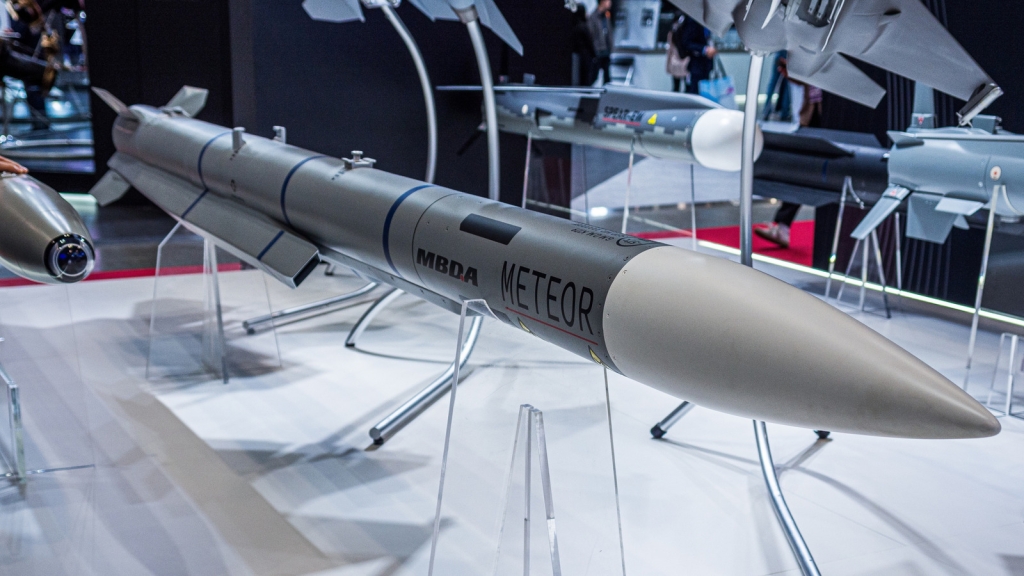
Europe’s Meteor Missiles: The Game-Changing Tech That’s Redefining Air Combat
In the high-stakes world of modern aerial warfare, one missile is quietly rewriting the rules of engagement—and it’s not the one you might expect. While the U.S. military’s AIM-120 AMRAAM has long been the gold standard for beyond-visual-range air-to-air combat, Europe’s MBDA Meteor is emerging as a formidable challenger, boasting cutting-edge propulsion technology that could make it the most lethal missile in the sky.
The AMRAAM’s Achilles’ Heel
For decades, the AIM-120 AMRAAM has been the backbone of NATO’s air-to-air arsenal. Developed during the Cold War and entering service in the 1990s, it’s a proven performer. But even the best weapons have limitations. The AMRAAM’s solid rocket booster provides a powerful initial burst of speed, but once that fuel is expended, the missile loses its ability to sustain thrust. This means it can track and maneuver, but only for a limited time and distance.
This limitation is measured by something called the No-Escape Zone (NEZ)—the area around the missile where, once locked on, an enemy aircraft has little to no chance of evading destruction. The AMRAAM’s NEZ, while impressive, is constrained by its propulsion system. Enter the Meteor.
The Meteor’s Secret Weapon: Ramjet Propulsion
The Meteor missile, developed by Europe’s MBDA Inc., was designed to address the AMRAAM’s single biggest weakness: its propulsion system. Instead of a traditional solid rocket booster, the Meteor uses a solid fuel ramjet engine. This innovative technology allows the missile to sustain thrust throughout its flight, giving it a significant edge in both range and maneuverability.
Here’s why that matters: a missile that can maintain its speed and agility over longer distances is far more effective at tracking and engaging targets, even at closer ranges. The Meteor’s NEZ is estimated to be roughly three times larger than the AMRAAM’s, meaning it can engage and destroy targets from much farther away—and with far less chance of escape.
A New Era of Air Combat
The implications of this technology are profound. In a dogfight scenario, the Meteor’s ability to sustain thrust means it can adapt to an enemy’s evasive maneuvers, maintaining pursuit even as the target tries to break away. This makes it exponentially harder for an adversary to survive an encounter with a Meteor-armed aircraft.
The Meteor is already in service with several European air forces, integrated into platforms like the Rafale, Eurofighter Typhoon, Gripen, and the F-35. While it hasn’t yet scored a combat kill, its performance in testing and simulations has been nothing short of spectacular.
Why This Matters Now
As geopolitical tensions rise and air combat scenarios become increasingly complex, the need for advanced weaponry has never been greater. The Meteor represents a leap forward in missile technology, offering a level of lethality and versatility that could shift the balance of power in aerial warfare.
For the U.S. and its allies, the Meteor’s success is a wake-up call. While the AMRAAM remains a formidable weapon, the Meteor’s superior propulsion system and larger NEZ make it a force to be reckoned with. As militaries around the world continue to modernize their arsenals, the Meteor is poised to become the new benchmark for air-to-air missiles.
The Future of Air Combat
The Meteor missile is more than just a technological marvel—it’s a glimpse into the future of air combat. As propulsion systems evolve and new materials and sensors are integrated, the next generation of missiles will be faster, smarter, and more lethal than ever before.
For now, the Meteor stands as a testament to European innovation and a reminder that in the world of military technology, the race for supremacy never ends. Whether it’s the AIM-120 AMRAAM or the MBDA Meteor, one thing is certain: the skies of tomorrow will be shaped by the weapons we develop today.
Tags & Viral Phrases:
Europe’s Meteor missile, game-changing air combat tech, MBDA Meteor propulsion, beyond-visual-range missile, NEZ No-Escape Zone, ramjet propulsion missile, AIM-120 AMRAAM vs Meteor, future of air-to-air missiles, lethal missile technology, aerial warfare innovation, Meteor missile F-35 integration, Eurofighter Typhoon Meteor, Gripen Meteor missile, Rafale Meteor missile, missile propulsion breakthrough, next-gen air combat weapons, Meteor missile combat kill, European missile technology, air superiority missile, Meteor missile range and speed.
,
Leave a Reply
Want to join the discussion?Feel free to contribute!