
Europe’s most impactful AI startups
European AI Innovators Tackle Global Crises as Regulatory Pressure Mounts
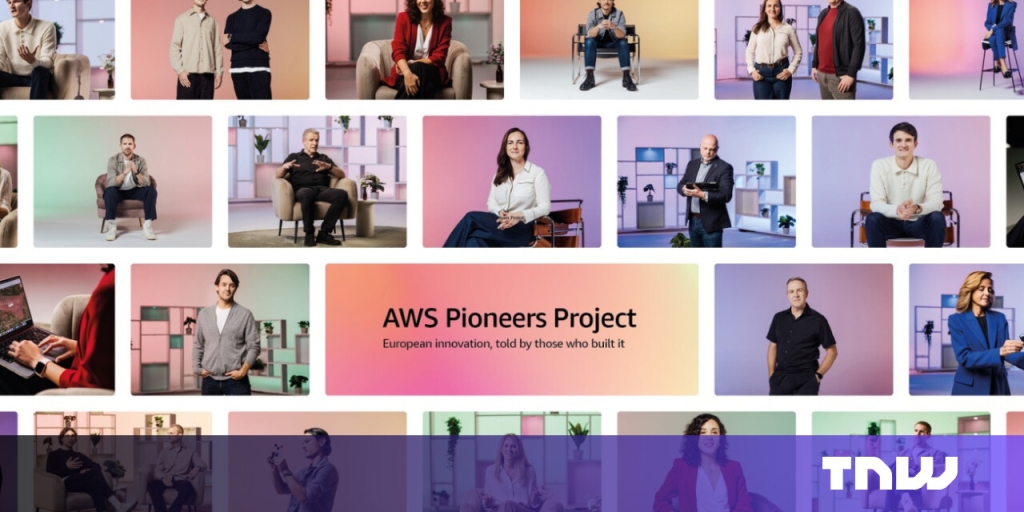
In a bold move that underscores both the promise and peril of Europe’s AI ecosystem, Amazon Web Services (AWS) today unveiled its second annual Pioneers Project cohort—12 groundbreaking European startups leveraging artificial intelligence and cloud infrastructure to address some of humanity’s most pressing challenges. From the depths of uncharted oceans to the frontlines of war zones, these innovators are redefining what’s possible when technology meets purpose.
The announcement coincides with a stark warning: Europe risks losing its brightest AI minds to more hospitable regulatory climates unless policymakers act swiftly.
From War Zones to Ocean Floors: The New Frontiers of European Innovation
The 2026 Pioneers cohort spans an extraordinary range of applications, each selected for their measurable global impact rather than commercial scale alone.
At the molecular level, Munich Leukaemia Laboratory (MLL) is revolutionizing cancer diagnostics. Using cloud-scale genomics combined with deep haematological expertise, MLL can identify rare leukemia subtypes in hours instead of weeks—a difference that can mean life or death for patients. The German company reports analyzing over 1.4 million cases to date, though this figure comes directly from AWS’s materials.
Meanwhile, Irish startup XOCEAN is mapping the unmapped. Their fleet of autonomous surface vessels—roughly the size of cars and powered by battery and solar rather than crews—is conducting offshore wind surveys for major energy companies including SSE Renewables, Ørsted, BP, and Shell. AWS claims these vessels operate across 23 jurisdictions, though the company’s own materials confirm a global footprint spanning Ireland, the UK, Norway, the US, Canada, and Australia.
Perhaps most striking is Hala Systems, headquartered in Lisbon but born in Syria. Their Sentry platform combines acoustic sensors, volunteer observer networks, AI prediction, and remotely activated sirens to provide advance warning of airstrikes to civilians in northwest Syria. The system has evolved to support war crimes documentation in Ukraine and has been acquired by the Smithsonian’s National Air and Space Museum for its collection. Hala Systems claims their evidence contributed to the world’s first ICC Article 15 war crimes dossier featuring cryptographically secured documentation.
The Productivity Boom—and the Exodus Threat
The announcement is backed by AWS’s new “Unlocking Europe’s AI Potential” report, conducted by research firm Strand Partners across 17 European markets and 34,000 respondents. The findings paint a picture of AI-driven transformation: 91% of AI-first startups report accelerated innovation, while 89% cite productivity gains.
But beneath the optimism lies a troubling trend. Thirty-eight percent of European startups would consider relocating outside Europe to scale, rising to 51% among the fastest-growing cohort. When asked what would keep them in Europe, 65% cited a clearer and more proportionate regulatory environment.
“Europe has the talent, the ideas, and the ambition,” said Sasha Rubel, AWS’s Head of AI and Generative AI Policy for EMEA. “But without the right conditions, that talent will take its innovations elsewhere.”
Healthcare Revolution and Climate Solutions
The healthcare sector is particularly well-represented in this year’s cohort. Dutch healthtech company myTomorrows operates an AI-powered platform connecting patients and physicians to clinical trials and expanded access programs for pre-approval treatments. AWS states the company has helped over 17,700 patients in 135 countries, though independently verifiable figures from a November 2025 funding announcement put the number at approximately 16,900 patients across 133 countries.
French quantum computing company Quandela is building photonic quantum machines that operate at room temperature and use existing fiber networks—a design choice that distinguishes it from most quantum computing approaches requiring cooling to near absolute zero.
Climate innovation is equally prominent. Swedish-Dutch company Paebbl is accelerating natural mineralization to reduce the carbon footprint of concrete, while French startup Iktos combines AI with laboratory robotics to accelerate drug molecule design.
The Numbers Behind the Innovation
The AWS-commissioned research attempts to quantify what Europe stands to lose. It cites an estimate that cloud-enabled AI could generate €1.5 trillion in global GDP by 2030. The report also notes that 78% of startups say they are prepared for agentic AI, compared to just 19% of businesses overall—a gap that could determine future competitiveness.
AWS used the announcement to highlight existing commitments: $1 billion in cloud credits for startups developing generative AI solutions, and $100 million over five years to support underserved learners through its Education Equity Initiative.
The Human Impact
Among the most compelling stories is that of CareMates, a German company that has cut hospital patient admission time from five hours to one using AI-powered software. Mindflow, another French startup, offers an enterprise automation platform bundling AI agents, no-code workflows, and over 4,000 integrations.
Proximie, based in the UK, is tackling a different challenge: the estimated five billion people who currently lack access to safe surgery. Their surgical coordination platform aims to democratize access to surgical expertise.
The Regulatory Crossroads
As Europe stands at this technological crossroads, the Pioneers cohort represents both the continent’s greatest strength and its most urgent challenge. These companies demonstrate that European innovation can compete globally while addressing critical societal needs—from mental health (Callyope’s AI for detecting early signs of mental health relapse) to surgical access (Proximie) to climate change (Paebbl).
But the regulatory environment that enabled their creation may not be sufficient to support their scaling. The question facing European policymakers is whether they can create conditions that allow these innovators to thrive without forcing them to relocate to more favorable jurisdictions.
The answer could determine whether Europe remains a leader in AI innovation or becomes primarily a source of talent for other regions’ tech ecosystems. As the Pioneers cohort shows, the technology is ready. The question is whether the regulatory framework will be ready too.
EuropeanAI #AWSInnovators #TechForGood #AIStartups #HealthcareTech #ClimateTech #QuantumComputing #DigitalTransformation #EuropeanTech #InnovationEcosystem #AIForImpact #TechPolicy #StartupGrowth #CloudComputing #FutureOfAI
“The next Silicon Valley won’t be built on talent alone—it needs the right regulatory environment”
“Europe’s AI pioneers are solving problems that matter, but will they have to leave to scale?”
“From war zones to ocean floors: How European AI is tackling humanity’s greatest challenges”
“38% of European AI startups are considering leaving—here’s why”
“€1.5 trillion in potential GDP is at stake as Europe faces its AI moment”
“The companies that could save lives are the same ones considering relocation”
“Quantum computing at room temperature? This French startup is making it happen”
“Five billion people lack safe surgery—this UK startup wants to change that”
“When AI can diagnose cancer in hours instead of weeks, regulation becomes a life-or-death issue”
“Europe’s regulatory maze: Innovation’s greatest strength or its biggest weakness?”
,


Leave a Reply
Want to join the discussion?Feel free to contribute!