
Europe’s next-generation fighter jet project may collapse if row continues, says warplane maker | Engineering
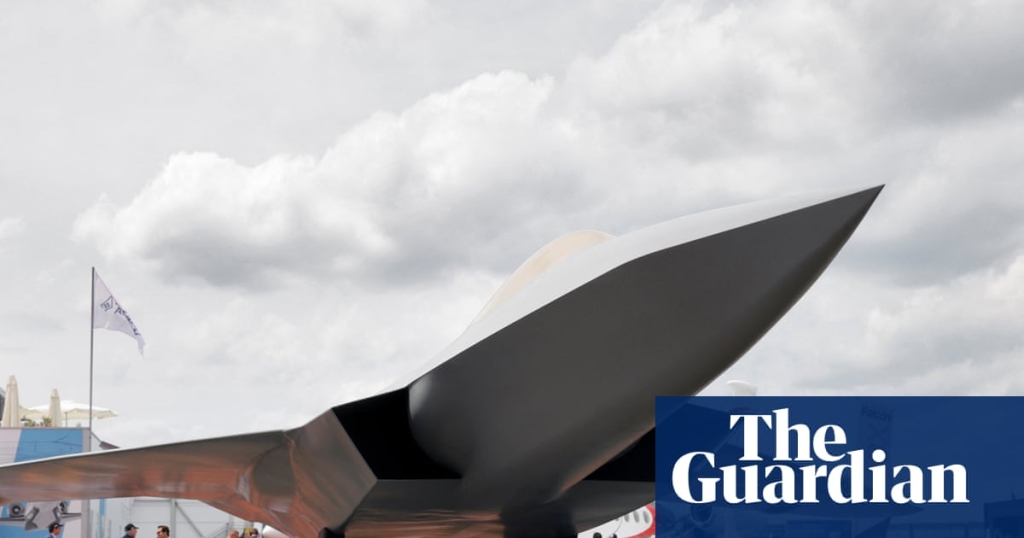
France and Germany’s Next-Gen Fighter Jet on the Brink of Collapse as Corporate Rift Deepens
In a dramatic escalation of tensions, one of Europe’s most ambitious defense projects—the Franco-German-Spanish Future Combat Air System (FCAS)—now teeters on the edge of collapse, with the chief executive of Dassault Aviation warning that the €100 billion program could be “dead” if Airbus refuses to cooperate.
Speaking during Dassault’s financial results presentation, CEO Éric Trappier delivered a stark message about the deteriorating relationship between the two aerospace giants. “Airbus doesn’t want to work with Dassault, full stop. I take note,” Trappier stated through an interpreter. “If Airbus maintains its position of not wanting to work with Dassault, the matter is dead.”
The dispute centers on control and leadership of the project’s centerpiece—a next-generation fighter jet designed to replace the Rafale and Eurofighter Typhoon fleets. Dassault, which has led European fighter development for decades, insists it should maintain leadership as originally designated. Airbus, representing German and Spanish interests, appears to be pushing for a more balanced partnership structure.
This corporate standoff has transformed what was meant to be a symbol of European defense cooperation into a case study of continental dysfunction. The FCAS program, announced nearly nine years ago, encompasses not just the fighter jet but also autonomous drones and a cutting-edge “combat communications cloud” designed to revolutionize aerial warfare through network-centric operations.
Trappier emphasized that Dassault was “the selected leader” under the original contract and vowed to “comply with the contract” despite Airbus’s apparent resistance. The French company’s position reflects deep-seated concerns about maintaining its technological sovereignty and industrial expertise in military aviation—a sector where it has few European competitors.
Adding another layer of complexity, German Chancellor Friedrich Merz recently questioned whether the planned warplane truly meets Germany’s operational requirements. Merz noted that while France needs a nuclear-capable fighter, Germany does not, suggesting this technical divergence might necessitate two separate aircraft designs rather than one unified platform.
Trappier pushed back forcefully against this characterization. “I’ve heard what the chancellor said. I know that he’s now talking about having two planes instead of one,” he remarked. “My highest authorities here in France say we have similar operational needs and that there is agreement at an operational level.”
The timing couldn’t be more critical. France, Germany, and Spain are expected to make a pivotal decision soon about whether to advance to the next development phase or abandon the fighter component while preserving the drone and communications elements of FCAS.
Meanwhile, the corporate infighting has opened the door for Britain’s rival Global Combat Air Program (GCAP), also known as Tempest. Developed in partnership with Italy and Japan, GCAP promises to deliver operational aircraft by 2035—five years ahead of FCAS’s projected timeline.
Tufan Erginbilgiç, CEO of Rolls-Royce (which is developing engines for the British jet), signaled openness to German participation. “I would definitely be open” to Germany joining the GCAP program, Erginbilgiç told the Guardian, potentially offering Berlin an alternative path that bypasses the current Franco-German stalemate.
The implications extend far beyond corporate rivalries. As Europe accelerates defense spending in response to geopolitical tensions, the FCAS debacle highlights systemic challenges in coordinating multinational military procurement. The program’s potential collapse would represent not just a financial setback but a significant blow to European strategic autonomy ambitions.
Industry analysts note that the dispute reflects deeper questions about the future of European defense industrial policy. Should national champions like Dassault maintain their traditional leadership roles, or is there room for more integrated, pan-European approaches that might better leverage combined resources and capabilities?
As the March decision deadline approaches, all eyes are on whether political leaders can broker a compromise that saves the fighter program, or whether Europe’s most ambitious defense collaboration will become another casualty of transatlantic tensions and corporate competition.
Tags & Viral Elements
- €100 billion Eurofighter-killer on the brink
- Dassault vs Airbus: The corporate war that could ground Europe’s future fighter
- Germany’s Merkel-era defense plans crumbling as Merz questions nuclear jet needs
- Brexit Britain’s Tempest jet could poach German partners from Franco-Spanish FCAS
- Europe’s military-industrial complex exposed: Why can’t France and Germany just get along?
- Rolls-Royce CEO throws lifeline to German defense planners: “We’re open for business”
- The €100bn question: Will FCAS become Europe’s biggest defense white elephant?
- Nine years of talks, zero planes: Inside the FCAS disaster unfolding in real-time
- Dassault CEO drops truth bomb: “Airbus doesn’t want to work with us, full stop”
- European defense cooperation: More aspirational than operational?
- The drone and cloud survive, but the fighter dies: FCAS’s potential Plan B
- 2035 vs 2040: Britain’s Tempest eating Europe’s lunch on delivery timelines
- Nuclear capability: The wedge issue driving France and Germany apart
- Industrial sovereignty vs. European integration: The FCAS paradox
- When corporate egos meet national security: The FCAS cautionary tale
,


Leave a Reply
Want to join the discussion?Feel free to contribute!