
Fedora Rejects Proposal To Use systemd For Managing Per-User Environment Variables
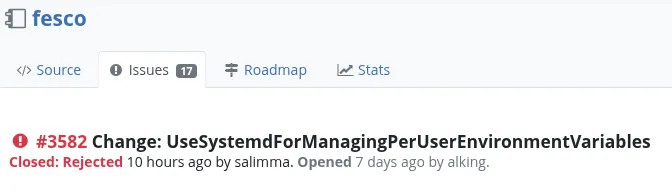
Fedora Rejects Systemd-Based Environment Variable Management for Fedora 45
In a surprising turn of events that has sent ripples through the Linux community, the Fedora Engineering and Steering Committee (FESCo) has decisively rejected a controversial proposal that would have fundamentally altered how Fedora handles per-user environment variables. The decision, announced earlier this week, represents a significant moment in the ongoing debate about systemd’s expanding role in Linux distributions and highlights the delicate balance between innovation and stability that open-source projects must maintain.
The Controversial Proposal
The rejected change, formally titled “Use Systemd For Managing Per-User Environment Variables,” was initially proposed as part of Fedora 45’s development cycle. The core idea was elegantly simple yet potentially revolutionary: replace the traditional shell-specific configuration files like ~/.bashrc, ~/.zshrc, and similar scripts with systemd’s environment-generator functionality.
Proponents of the change argued that this approach would offer several compelling advantages. First, it would eliminate the fragmentation caused by different shells handling environment variables in slightly different ways. Whether a user preferred Bash, Zsh, Fish, or the minimalist Dash shell, their environment variables would be managed consistently through systemd’s unified interface. This consistency would be particularly beneficial for users who frequently switch between shells or those who install alternative shells that might not fully replicate the environment setup behavior of more mainstream options.
Additionally, supporters contended that this change would make environment variable modifications more immediate and reliable. Currently, when users update their shell configuration files, the changes often require starting a new shell session or logging out and back in to take full effect. With systemd’s environment generator, changes could propagate more seamlessly across all user sessions and processes.
The FESCo Decision
Despite these potential benefits, FESCo ultimately voted against implementing the change in its current form. The decision came after extensive deliberation and highlighted several critical concerns that ultimately proved insurmountable for the proposal’s supporters.
The primary objection centered on systemd-less environments, particularly containerized deployments. Many modern container systems, including popular options like Docker and Podman, operate without systemd to minimize resource usage and attack surface. The proposed change would have introduced systemd dependencies into user environments even in these contexts, potentially breaking existing workflows and requiring significant modifications to container configurations.
Another major concern was the potential for “unattended breakage.” The systemd environment generator approach would have operated somewhat opaquely, making it difficult for users to understand exactly how their environment variables were being set and in what order. This lack of transparency could lead to subtle bugs and configuration issues that would be challenging to diagnose and resolve, particularly for less experienced users or in automated deployment scenarios.
The committee also expressed reservations about the maturity and testing of the proposed implementation. While systemd’s environment generator functionality is well-established for system-wide configurations, its application to per-user environment management represented relatively uncharted territory. The potential for edge cases and unexpected interactions with existing user configurations was deemed too high to justify the change at this time.
Community Reaction
The decision has sparked intense debate within the Fedora community and the broader Linux ecosystem. Supporters of the proposal view the rejection as a missed opportunity to modernize Fedora’s approach to environment management and reduce the complexity associated with maintaining multiple shell-specific configuration files.
Critics, however, argue that FESCo made the right call by prioritizing stability and compatibility over theoretical improvements. They point out that the existing system, while admittedly imperfect, has served users well for decades and that the risks of introducing systemd dependencies into user environments outweigh the potential benefits.
Some community members have suggested that the proposal might have stood a better chance if it had been framed differently or if additional safeguards had been proposed. For instance, making the systemd-based approach opt-in rather than mandatory, or providing more robust fallback mechanisms for systemd-less environments, might have addressed some of the committee’s primary concerns.
Future Possibilities
While the current proposal has been rejected, this doesn’t necessarily mean the end of the road for systemd-based environment management in Fedora. The FESCo decision explicitly left the door open for future attempts, provided they address the committee’s specific concerns.
The proposal’s authors have indicated their intention to revise and resubmit the change, potentially for Fedora 46 or later releases. Key areas for improvement include developing more comprehensive configuration examples, creating better documentation for systemd-less environments, and potentially exploring hybrid approaches that maintain backward compatibility while offering the benefits of systemd integration.
Some community members have suggested that a phased implementation might be more palatable, starting with optional support that users could enable manually before potentially becoming the default in future releases. This approach would allow for more extensive real-world testing and give users time to adapt their workflows and configurations.
Technical Implications
The rejection of this proposal has broader implications for Fedora’s technical direction and its relationship with systemd. Fedora has historically been at the forefront of systemd adoption, often serving as a testing ground for new features and approaches. This decision suggests a more cautious approach to systemd integration, at least when it comes to user-facing changes that could impact existing workflows.
For developers and system administrators, the decision means continued reliance on traditional shell configuration files for the foreseeable future. While this may seem like a step backward to some, it provides stability and predictability that many users value, particularly in production environments where unexpected changes can have significant consequences.
The debate also highlights the ongoing tension in the Linux community between those who view systemd as a necessary evolution of system management and those who worry about its growing influence and the potential for vendor lock-in. Fedora’s decision reflects a nuanced understanding of these concerns and a commitment to balancing innovation with the needs of its diverse user base.
Looking Ahead
As Fedora 45’s development continues, the focus will return to other features and improvements planned for the release. While the environment variable management proposal won’t be part of this version, the discussion it generated will likely influence future decisions about systemd integration and user environment management.
The outcome also serves as a reminder of the importance of community feedback and rigorous evaluation in open-source development. FESCo’s decision demonstrates that even well-intentioned proposals must withstand careful scrutiny and address legitimate concerns before being implemented in a major distribution.
For now, Fedora users can expect business as usual when it comes to managing their environment variables, with ~/.bashrc, ~/.zshrc, and similar files remaining the standard approach. However, the conversation sparked by this proposal ensures that the topic will remain active in the community, potentially leading to more refined solutions in the future.
Tags and Viral Elements
Fedora rejects systemd environment variables
Linux distribution news
FESCo decision impacts Fedora 45
Systemd controversy in open source
Container deployment concerns
Per-user environment management
Bashrc vs systemd debate
Linux community reacts to Fedora decision
Open source development challenges
Systemd-less environments protected
Fedora engineering committee news
Environment variable configuration changes
Linux shell configuration future
Fedora 45 development updates
Systemd integration debate continues
Container technology implications
User environment management solutions
Linux distribution innovation challenges
FESCo rejects controversial proposal
Fedora community divided on systemd
,


Leave a Reply
Want to join the discussion?Feel free to contribute!