
FIFA World Cup 2026 will be the most AI-driven tournament ever. Here’s the proof
When FIFA’s Chief Business Officer Romy Gai spoke about the operational complexities of staging the 2026 World Cup across Canada, Mexico, and the United States, he wasn’t discussing technology—he was addressing a logistical Everest. With 48 teams, 104 matches, six billion viewers, and no single national infrastructure to rely on, the scale is unprecedented. For the first time, FIFA is running operations directly, bypassing local organizing committees and assuming full responsibility for a tournament that spans three countries and 16 cities.
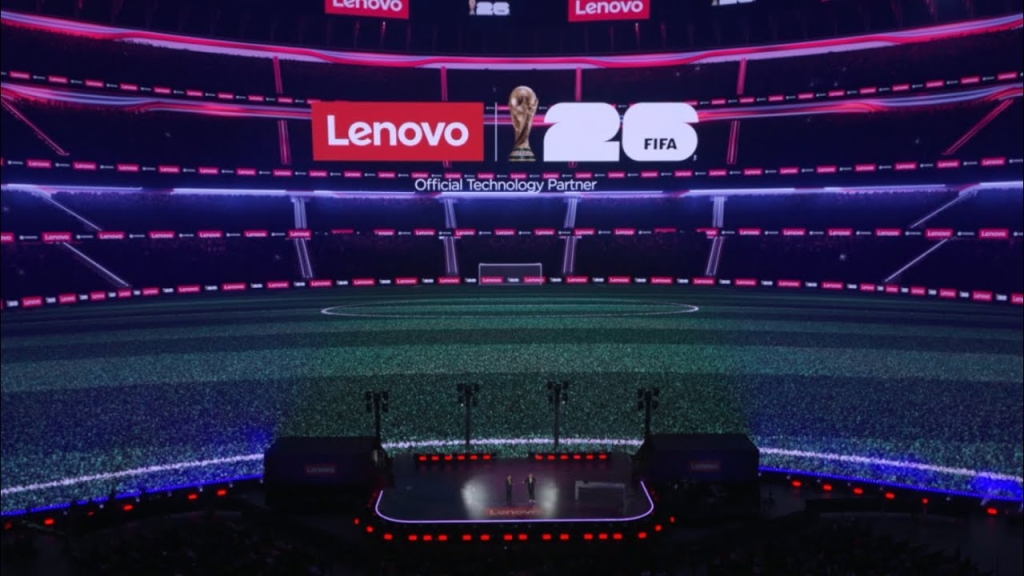
Against this backdrop, FIFA’s AI strategy, unveiled at Lenovo Tech World in Hong Kong, is not just an enhancement—it’s the backbone of the entire operation. Football AI Pro, AI-enabled 3D player avatars, and an advanced Referee View are the headline features, but the real story is how these tools enable FIFA to manage a tournament of this magnitude without collapsing under its own weight.
Football AI Pro is a generative AI knowledge assistant built on FIFA’s proprietary Football Language Model, trained on hundreds of millions of FIFA-owned data points. It provides pre- and post-match analysis in text, video, graphs, and 3D visualizations, supporting multiple languages. Crucially, it’s available to all 48 teams, democratizing access to sophisticated analytics that were previously the domain of wealthy national associations. This is not just about fairness—it’s about operational feasibility. Delivering consistent, tournament-wide intelligence across 48 teams in three countries is a massive infrastructure challenge, one that only a hybrid AI architecture can handle.
The updated Referee View is another critical piece. While it will look impressive on broadcast screens, its real purpose is transparency. VAR has been one of the most contentious technologies in football, largely because the decision-making process is opaque and the imagery used to communicate decisions is often confusing. By providing real-time, stabilized footage from the referee’s body camera, FIFA is addressing both issues. If successful, this technology could transform audience perception of officiating, turning a governance tool into a public trust-building measure.
The AI-enabled 3D player avatar system tackles a specific pain point: the offside rule. Semi-automated offside technology has been accurate, but the imagery it produces has often been hard to read and counterintuitive. The new system scans players to create precise 3D models, which are then used to track movements more accurately and produce clearer, more convincing visuals when offside decisions are referred to VAR. Again, the goal is not just accuracy but legitimacy—making the technology’s decisions easier for fans to accept.
Perhaps the most operationally significant, yet least discussed, element is FIFA’s intelligent command center. This system connects real-time data across departments, matches,

Leave a Reply
Want to join the discussion?Feel free to contribute!