
‘Find a way to work together’ — Sam Altman’s message to the Department of Defense and Anthropic
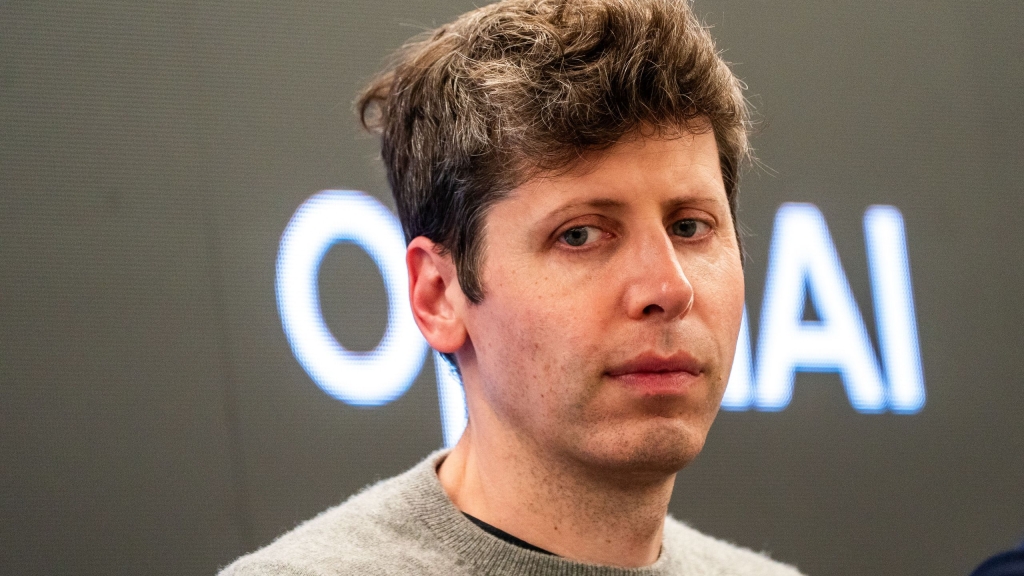
OpenAI CEO Sam Altman Calls for Unity as AI Industry Tensions Escalate
In a surprising turn of events that has sent shockwaves through the tech industry, OpenAI CEO Sam Altman has publicly urged both the U.S. government and rival AI company Anthropic to de-escalate their ongoing conflict and find common ground in the rapidly evolving landscape of artificial intelligence governance.
The call for unity comes at a critical juncture, as relations between Anthropic and the U.S. government have become increasingly strained over the past few months. The controversy began when negotiations between Anthropic and the Pentagon regarding the use of the company’s Claude AI model broke down spectacularly. The crux of the disagreement centered around Anthropic’s steadfast refusal to remove safeguards against fully autonomous weapons and mass domestic surveillance applications.
In response to what the government perceived as a lack of cooperation, Washington swiftly implemented a series of punitive measures. These included an executive directive banning federal agencies from utilizing Anthropic’s technology and officially designating the company as a “supply chain risk.” The situation quickly escalated, with Anthropic filing lawsuits alleging constitutional violations. In a significant development, a federal judge has since temporarily blocked the Pentagon’s actions, adding another layer of complexity to this high-stakes confrontation.
Amidst this backdrop of increasing tension and legal wrangling, Sam Altman’s call for de-escalation and collaboration stands out as a bold and potentially game-changing intervention. In an extensive interview with journalist Laurie Segall, Altman made a passionate plea for both sides to “find a way to work together,” emphasizing the need to “stop the escalation on both sides.”
Altman’s intervention is particularly noteworthy given the broader context of the AI industry’s relationship with government oversight and regulation. As AI technologies continue to advance at an unprecedented pace, questions about their potential impact on national security, privacy, and the very fabric of society have become increasingly pressing.
The OpenAI CEO’s stance represents a significant shift in the industry’s approach to government collaboration. While AI companies have long touted the transformative potential of their technologies in realms like national security, they have simultaneously lobbied for a relatively light regulatory touch. Altman’s recent statements suggest a recognition that this dual approach may no longer be tenable.
“I don’t think it works for our industry to say, ‘Hey, this is the most powerful technology humanity has ever built,'” Altman stated emphatically. “It is going to be the high order bit in geopolitics. It is going to be the greatest cyber weapon the world has ever built. It is going to, you know, be the determinant of future wars and protection. And we are not giving it to you.”
This frank acknowledgment of AI’s potential as a geopolitical game-changer and cyber weapon underscores the gravity of the situation. Altman’s words reflect a growing realization within the industry that if AI is indeed as consequential as many claim, then governments will inevitably seek to exert some level of control and oversight.
However, the question of whether the public feels comfortable with government control over such powerful technologies remains a contentious issue. Altman’s position on this matter is nuanced and thought-provoking. He maintains that he still largely trusts the system of checks and balances inherent in democratic governance. However, he also acknowledges the widespread skepticism and mistrust that many people harbor towards government institutions.
“I still mostly trust the government,” Altman said, “though I did acknowledge that many people currently ‘really don’t trust the government to follow the law.'”
This admission of the current mood of mistrust is significant, as it demonstrates Altman’s awareness of the complex dynamics at play. It also highlights the delicate balance that AI companies must strike between collaborating with governments and maintaining public trust.
Altman’s stance on government collaboration in AI development and deployment stands in contrast to some other AI industry leaders who harbor more pronounced suspicions of government involvement. Nevertheless, he firmly believes that refusing to work with governments on national security matters, particularly in the realm of cyber infrastructure, would be a grave mistake.
“I think we have to work with government,” Altman asserted, “but the intensity of the current mood of mistrust, I was miscalibrated on and I understand something there now.”
This acknowledgment of his own miscalculation regarding public sentiment underscores the rapidly evolving nature of the AI governance debate. It also highlights the challenges faced by industry leaders in navigating the complex interplay between technological innovation, national security concerns, and public trust.
Perhaps the most striking aspect of Altman’s intervention is his assertion about the relative power dynamics between AI companies and governments. In a statement that is sure to reverberate throughout the tech industry, Altman declared:
“One of the most important questions the world will have to answer in the next year is, are AI companies or are governments more powerful? And I think it’s very important that the governments are more powerful. The future of the world, and the decisions about the most important elements of national security should be made through a democratically elected process. And the people that have been appointed as part of that process, not me, and not the CEO of some other lab.”
This bold statement represents a significant departure from the narrative often promoted by tech industry leaders, who frequently position their companies as the primary drivers of innovation and progress. Altman’s assertion that government should hold more power than AI companies in determining the future of these technologies is a remarkable concession of the importance of democratic oversight and accountability.
Throughout his remarks, Altman consistently returns to the theme of the rapid pace of AI advancement and its implications for governance and control. He emphasizes that the power of AI is arriving faster than institutions, governments, or most humans can adequately calibrate for. This observation underscores the urgency of finding effective governance frameworks for AI technologies.
The stakes in this debate are undeniably high and continue to rise. The ongoing conflicts between those tasked with devising safe regulations and the companies at the forefront of AI development represent a significant challenge to the responsible advancement of these technologies. While Altman’s call for unity and collaboration may not immediately resolve these complex issues, it does signal a recognition of the need for a new approach to AI governance.
As the AI industry continues to evolve at breakneck speed, the tensions between innovation, national security, and public trust are likely to intensify. Altman’s intervention serves as a reminder that finding a balance between these competing interests will require ongoing dialogue, collaboration, and a willingness to reassess long-held assumptions about the role of technology companies in shaping our collective future.
In conclusion, Sam Altman’s call for unity in the face of escalating tensions between the AI industry and government represents a significant moment in the ongoing debate over AI governance. As the world grapples with the profound implications of these transformative technologies, the need for thoughtful, collaborative approaches to regulation and oversight has never been more critical. The coming months and years will undoubtedly bring further challenges and debates, but Altman’s intervention suggests that at least some of the industry’s most influential leaders are ready to engage in constructive dialogue with governments and other stakeholders to chart a responsible path forward for AI development and deployment.
Viral Tags and Phrases:
- AI governance crisis
- OpenAI vs. Anthropic showdown
- National security AI showdown
- Sam Altman’s bold move
- Government vs. Big Tech AI battle
- The future of AI regulation
- AI’s geopolitical power play
- Cyber weapon concerns
- Democratic oversight of AI
- Trust in AI governance
- The great AI power shift
- Altman’s call for unity
- AI industry tensions escalate
- The AI governance dilemma
- Balancing innovation and control
- AI’s rapid advancement challenges
- Public trust in AI development
- The AI national security debate
- Collaboration or confrontation in AI
- Altman’s miscalculation on public sentiment
- The AI power dynamics question
- Responsible AI development path
- AI governance framework urgency
- The AI industry-government relationship
- Altman’s game-changing intervention
- The AI regulation tightrope
- Navigating AI’s societal impact
- The AI accountability challenge
- Altman’s vision for AI’s future
,

Leave a Reply
Want to join the discussion?Feel free to contribute!