
Firewire Surfboard Review (2026): Neutrino, Revo Max, Machadocado
Firewire Surfboards: Revolutionizing the Wave with Aerospace Tech
For decades, the process of making a surfboard has more or less been the same: cut a piece of foam; put a wooden stringer down the middle to provide structure and strength; shape it, then wrap it in fiberglass, sand it, and leave holes for the leash and fins. That was until Firewire Surfboards came along. Now the company uses a 21-step construction process and a dizzying assortment of aerospace-grade foams, carbon fiber, and bio-resins to produce a board that looks straight out of science fiction.
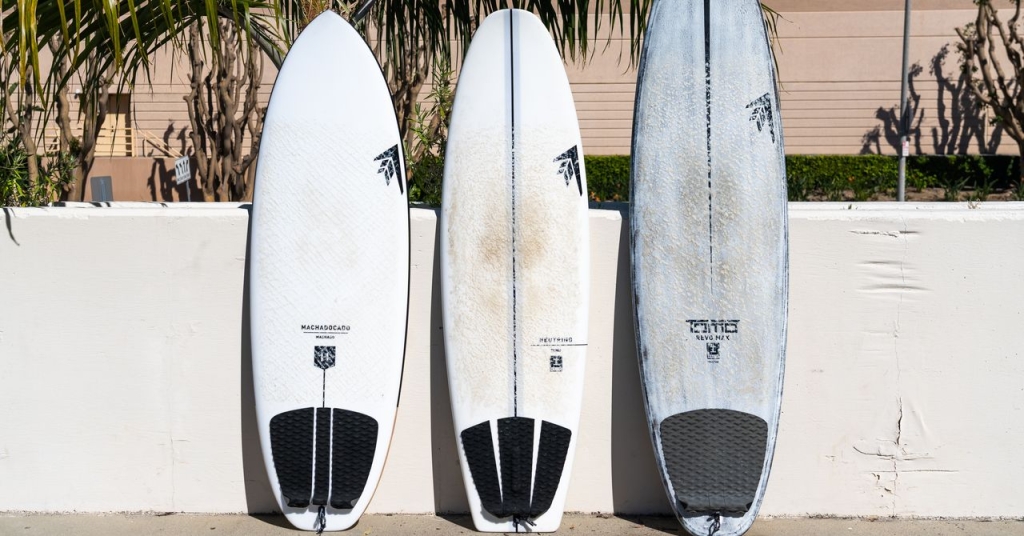
The surf world tends to favor the tried-and-true, but in Firewire’s case, every new material and design serves a purpose. Much to every Luddite wave-rider’s chagrin, the boards work really damn well. I spent most of the fall and winter testing out three new boards from Firewire—the Neutrino, the Machadocado, and the Revo Max. Each uses different materials and different designs made for different wave types (and surfers). Here’s what I found.
A Bit of Backstory
In December 2005, Clark Foam abruptly closed its doors in an event that became known as “Blank Monday.” Clark made roughly 90 percent of the traditional polyurethane (PU) surfboard blanks that were being sold, and suddenly board makers were forced to scramble for alternative core materials. Many in the industry turned to expanded polystyrene (EPS) foam, which also required the use of epoxy resins because traditional PU resins melt EPS.
However, EPS presented some significant performance issues. First, it possessed roughly 8 percent more buoyancy than PU, resulting in a “corky” ride that left surfers feeling like they were floating awkwardly on top of the water rather than digging into it. It also didn’t flex the same way, which changed the way a board turns.
Around the same time, Australian shapers Nev Hyman and Bert Burger were collaborating on a radically different design. A deck skin was affixed to the top and the bottom of the EPS foam core, in what became colloquially referred to as “sandwich construction.” These skins were made of 3-mm thick aerospace composite material that added structural integrity and vibration dampening, as well as dent resistance. The whole sandwich is vacuum-bagged together.
The most noticeable change, though, was the removal of the central wooden stringer that ran down the board from nose to tail. Instead, it was replaced with two parabolic rails that run down each side of the board. Not only did these two wooden rails provide more control, but they pop you out of your turns with a little more speed. This construction would become known as Future Shapes Technology (FST).
The Science Behind the Ride
What makes Firewire’s approach so revolutionary is how they’ve borrowed from aerospace engineering to solve age-old surf problems. Traditional surfboards flex in ways that can feel unpredictable, especially when you’re pushing hard through turns. Firewire’s parabolic rails create what engineers call a “torsional flex pattern” that’s more consistent and responsive.
The aerospace-grade composite skins aren’t just for show—they’re engineered to specific thicknesses that optimize the board’s natural frequency. Think of it like a guitar string: too loose and it’s floppy, too tight and it’s brittle. Firewire has found that sweet spot where the board vibrates at just the right frequency to maintain speed and control through choppy water.
Their use of bio-resins is another game-changer. Traditional polyester resins off-gas volatile organic compounds (VOCs) that are harmful to both the environment and the people working in surfboard factories. Firewire’s bio-resins reduce VOC emissions by up to 90 percent while actually providing better adhesion and durability.
Testing the Future: Three Boards, Three Experiences
The Neutrino is Firewire’s answer to the high-performance shortboard crowd. At 5’10” with a pulled-in nose and tail, it’s designed for quick, snappy maneuvers. What’s remarkable is how it maintains speed through flat sections where traditional boards would stall. The EPS core with FST construction creates a board that feels alive under your feet—it’s like the difference between driving a sports car and a station wagon.
The Machadocado, shaped in collaboration with pro surfer Rob Machado, takes a different approach. It’s wider and thicker, with a more rounded outline that excels in smaller, mushier waves. The extra volume makes it incredibly easy to paddle, and the parabolic rails give it surprising maneuverability for a board of its size. I found myself catching waves I would have missed on my regular shortboard.
The Revo Max is where things get really interesting. This board uses Firewire’s latest technology—a combination of their proprietary LFT (Linear Flex Technology) and their new Helium construction. The result is a board that’s roughly 15 percent lighter than traditional construction but with increased strength. It paddles like a dream and accelerates out of turns with a slingshot effect that’s addictive.
Why It Matters
The surf industry has been notoriously slow to innovate. There’s a reason why Duke Kahanamoku could pick up a modern board and still feel relatively at home—the basic construction hasn’t changed much in a century. Firewire is challenging that status quo, and the results speak for themselves.
Professional surfers are taking notice. World Tour competitors are riding Firewire boards in competition, and the company’s technology has trickled down to boards that everyday surfers can actually afford. At $700-1000 for a high-performance board, they’re not cheap, but considering the technology and the fact that they tend to last longer than traditional boards, the value proposition makes sense.
The Environmental Angle
Beyond performance, Firewire has made significant strides in sustainability. Their use of bio-resins and their efforts to reduce waste in the manufacturing process address some of the surf industry’s biggest environmental concerns. Surfers, after all, are people who have a direct relationship with the ocean—it’s in their interest to protect it.
The company has also partnered with Sustainable Surf’s ECOBOARD Project, which verifies that boards meet specific environmental standards for materials and manufacturing processes. It’s a step in the right direction for an industry that’s often been criticized for its environmental impact.
The Verdict
After months of testing, I can confidently say that Firewire has cracked the code on modern surfboard construction. These boards aren’t just different for the sake of being different—they solve real problems that surfers have been dealing with for decades. The combination of aerospace materials, innovative construction techniques, and thoughtful design creates boards that perform at a level that traditional construction simply can’t match.
Whether you’re a competitive surfer looking for every possible advantage or a weekend warrior who just wants to catch more waves and have more fun, Firewire’s technology represents a significant leap forward. The future of surfing is here, and it’s lighter, stronger, and more responsive than anything that’s come before it.
Tags and Viral Phrases:
- Aerospace-grade surfboard construction
- Future Shapes Technology (FST)
- EPS foam revolution
- Bio-resin surfboards
- Parabolic rail design
- Helium construction surfboards
- Linear Flex Technology (LFT)
- Clark Foam Blank Monday
- Sustainable surf technology
- High-performance surfboard innovation
- Sandwich construction surfboards
- Torsional flex pattern
- Vacuum-bagged surfboard construction
- Carbon fiber surfboard rails
- Eco-friendly surfboard manufacturing
- Surfboard natural frequency optimization
- Aerospace composite surfboard skins
- VOC-free surfboard resins
- Surfboard weight reduction technology
- Professional surfer approved boards
- Weekend warrior surf technology
- Ocean-friendly surfboard construction
- Next-gen surfboard materials
- Revolutionary surfboard design
- Sustainable Surf ECOBOARD Project
- Surfboard durability enhancement
- Wave-catching technology breakthrough
- Surfboard acceleration science
- Environmental impact reduction
- Surf industry innovation leader
- Board feel and responsiveness
- Surfboard manufacturing 2.0
- Performance board evolution
- Traditional vs modern surfboard
- Surfboard construction demystified
- Future of wave riding
- Board technology explained
- Surfboard materials science
- Wave performance optimization
- Sustainable surfboard future
- High-tech surf equipment
- Board construction breakthrough
- Surfboard design revolution
- Eco-conscious surf gear
- Performance surf technology
- Advanced surfboard engineering
- Sustainable wave riding
- Next-level surfboard construction
- Environmental surf innovation
- Surfboard technology explained
- Revolutionary wave craft
- Sustainable surf equipment
- High-performance eco boards
- Surfboard construction evolution
- Wave riding technology
- Sustainable surf future
- Surfboard design innovation
- Environmental surf gear
- Performance board technology
- Surfboard materials breakthrough
- Wave craft revolution
- Sustainable wave technology
- Surfboard construction future
- Environmental board design
- Performance surf evolution
- Surfboard tech explained
- Wave riding innovation
- Sustainable surf gear
- High-tech surfboard materials
- Surfboard design future
- Environmental surf technology
- Performance board construction
- Surfboard materials innovation
- Wave craft technology
- Sustainable surfboard design
- Environmental board construction
- Performance surf gear
- Surfboard tech breakthrough
- Wave riding materials
- Sustainable surf boards
- High-tech surf design
- Surfboard construction innovation
- Environmental surf boards
- Performance board materials
- Surfboard technology revolution
- Wave craft construction
- Sustainable surf equipment
- High-performance eco boards
- Surfboard design evolution
- Environmental surf gear
- Performance surf technology
- Surfboard materials explained
- Wave riding science
- Sustainable surf future
- Surfboard construction explained
- Environmental board technology
- Performance board innovation
- Surfboard tech future
- Wave craft evolution
- Sustainable surf design
- High-tech surfboard construction
- Surfboard materials science
- Wave riding breakthrough
- Sustainable surf equipment
- Performance board design
- Surfboard technology explained
- Wave craft innovation
- Environmental surf boards
- High-performance surf gear
- Surfboard construction future
- Surfboard materials breakthrough
- Wave riding technology explained
- Sustainable surf boards
- Surfboard design revolution
- Environmental board construction
- Performance surf evolution
- Surfboard tech explained
- Wave riding innovation
- Sustainable surf gear
- High-tech surfboard materials
- Surfboard design future
- Environmental surf technology
- Performance board construction
- Surfboard materials innovation
- Wave craft technology
- Sustainable surfboard design
- Environmental board construction
- Performance surf gear
- Surfboard tech breakthrough
- Wave riding materials
- Sustainable surf boards
- High-tech surf design
- Surfboard construction innovation
- Environmental surf boards
- Performance board materials
- Surfboard technology revolution
- Wave craft construction
- Sustainable surf equipment
- High-performance eco boards
- Surfboard design evolution
- Environmental surf gear
- Performance surf technology
- Surfboard materials explained
- Wave riding science
- Sustainable surf future
- Surfboard construction explained
- Environmental board technology
- Performance board innovation
- Surfboard tech future
- Wave craft evolution
- Sustainable surf design
- High-tech surfboard construction
- Surfboard materials science
- Wave riding breakthrough
- Sustainable surf equipment
- Performance board design
- Surfboard technology explained
- Wave craft innovation
- Environmental surf boards
- High-performance surf gear
- Surfboard construction future
,


Leave a Reply
Want to join the discussion?Feel free to contribute!