
Fitbit’s Gemini-Powered Coach Is Coming to iPhone and Other Countries
Google’s AI-Powered Fitbit App Expansion: A Deep Dive into the Future of Wearable Wellness
Google’s ambitious AI transformation of the Fitbit app is accelerating at full throttle, with a major expansion that will bring its redesigned interface and intelligent health coaching capabilities to millions more users across multiple continents. After initially launching as an Android-exclusive preview for US Premium subscribers last October, Google has announced a significant expansion that will make this AI-enhanced experience available to iPhone users starting February 10th, with international rollout to the UK, Canada, Australia, New Zealand, and Singapore following shortly after.
This strategic move represents Google’s most aggressive push yet to transform Fitbit from a passive fitness tracking platform into an active, AI-driven wellness companion that leverages the full power of its Gemini AI ecosystem. The company is clearly positioning itself at the forefront of the rapidly evolving health technology landscape, where personalized, intelligent coaching is becoming the new battleground for consumer attention and loyalty.
The Evolution of Fitbit: From Tracker to Coach
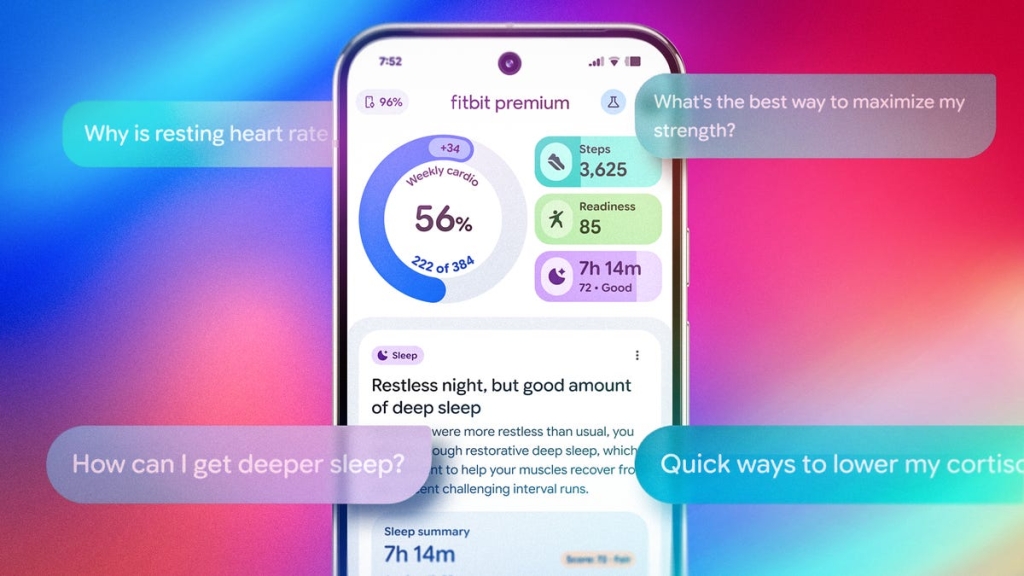
The redesigned Fitbit app represents a fundamental shift in how users interact with their health data. Gone are the days of simply logging steps and viewing basic metrics. Instead, Google has created a more intuitive, four-tab interface centered around Today, Fitness, Sleep, and Health categories, each designed to provide deeper insights and more actionable information.
The Today tab, which users will likely consult most frequently, emphasizes weekly trends over daily fluctuations, providing what Google claims is a more accurate reflection of true progress. This approach acknowledges that meaningful health improvements occur over longer timeframes rather than through day-to-day variations. The remaining tabs allow users to dive deep into specific metrics, from detailed sleep stage analysis to comprehensive vital sign tracking.
However, the most revolutionary aspect of this redesign is the integration of the Gemini AI-powered “Coach” feature. This isn’t just another chatbot or automated response system; it’s designed to be an “always-on” personal health companion that can interpret data, provide context, and generate personalized action plans based on real-time and historical information.
How the AI Coach Works
The Coach feature is accessible through an “Ask Coach” prompt woven throughout the app, creating a seamless integration between traditional tracking features and AI-powered insights. What makes this particularly compelling is the Coach’s ability to draw connections between different aspects of a user’s health data and translate them into practical recommendations.
For instance, users might ask, “I have 30 minutes for a workout… What do you recommend?” or “How can I improve my VO2 max?” The AI can also help users understand relationships in their data, such as answering questions like, “Do I sleep better on days when I get more steps in?” This level of contextual analysis represents a significant leap forward from traditional fitness tracking, where users are often left to interpret their own data without expert guidance.
The onboarding process for the Coach is designed to be comprehensive yet efficient. Users can set specific goals, log available fitness equipment, and note any injuries or limitations during an optional setup process. The initial conversation, which can be conducted via text or voice, typically takes 5-10 minutes and helps the AI understand the user’s motivations, preferences, and objectives. From there, the system continuously adapts based on changing metrics like training load, readiness scores, and overnight recovery data.
Global Rollout and Accessibility
The expansion strategy is particularly noteworthy for its inclusivity. While the initial preview was limited to US-based Android users, the broader rollout will include iPhone users and span multiple English-speaking countries. This cross-platform compatibility is crucial for Google’s ambitions, as it removes a significant barrier that could have limited adoption among Apple device users.
The service is available to Fitbit Premium subscribers, which costs $10 per month or $80 annually. This pricing positions it competitively within the broader fitness app market while providing Google with a recurring revenue stream to support the ongoing development and refinement of the AI features.
Importantly, the Coach experience is opt-in, meaning users who prefer traditional tracking without AI assistance can continue using Fitbit’s core features without engaging with the new technology. This approach respects user preferences while still offering the enhanced capabilities to those who want them.
Privacy and Data Security Considerations
As with any AI system that handles sensitive health data, privacy and security are paramount concerns. Google has stated that user data will not be used for Google Ads, which is a crucial distinction that helps separate this health-focused application from the company’s advertising-driven business model. The company also emphasizes that the Coach experience was developed with input from health experts and a consumer advisory panel, suggesting a thoughtful approach to both functionality and ethical considerations.
However, the effectiveness of these privacy measures will ultimately be judged by users and privacy advocates as the service gains wider adoption. The balance between providing personalized, AI-driven insights and maintaining strict data privacy will be critical to the platform’s long-term success.
The Competitive Landscape
Google’s move comes at a time when the race to build smarter, more personalized health platforms is intensifying across the tech industry. Companies like Apple, Samsung, and various fitness-focused startups are all investing heavily in AI and machine learning capabilities for their health tracking platforms.
What sets Google’s approach apart is the integration of its full ecosystem of hardware, software, and AI assistant capabilities. By positioning the wrist as the central data collection point through Pixel Watch and Fitbit trackers, Google is creating a comprehensive platform that can leverage the company’s extensive AI expertise to provide insights that go beyond simple activity tracking.
The Potential Impact on Health Technology
If successful, this AI transformation of Fitbit could mark a turning point for wellness technology. The ability to provide professional-grade coaching to mainstream users at scale could democratize access to personalized health guidance that was previously available only through expensive personal trainers or specialized health professionals.
The dynamic nature of the Coach, which can adjust plans based on real-time data and life events, represents a significant advancement over static workout plans or generic fitness advice. This adaptability could lead to better adherence to health goals and more meaningful improvements in user wellbeing.
Challenges and Considerations
Despite the promising technology, several challenges remain. The accuracy and usefulness of AI-generated health advice will be critical to user adoption and satisfaction. If the recommendations prove to be generic or unhelpful, users may quickly abandon the feature regardless of its technical sophistication.
Additionally, the complexity of human health means that AI systems must be sophisticated enough to handle edge cases, individual variations, and the nuanced nature of personal wellness goals. The system’s ability to learn from user feedback and continuously improve will be essential for long-term success.
The Real-World Test
While the technology shows tremendous promise, the true measure of success will come from real-world usage. As the preview expands to more users across different countries and device types, Google will gather valuable feedback that will shape the final product. The company’s commitment to incorporating user input through integrated feedback tools suggests an iterative approach to development that could lead to a more refined and effective final product.
The expansion of Google’s AI-powered Fitbit app represents more than just a feature update; it’s a vision for the future of personal health technology. By combining comprehensive data collection, sophisticated AI analysis, and user-friendly interfaces, Google is attempting to create a platform that can truly act as a personal health companion rather than just a tracking device.
The success of this initiative could have far-reaching implications for how people approach their health and wellness, potentially making personalized health guidance accessible to millions who might not otherwise have access to such resources. However, the ultimate verdict will depend on execution, user adoption, and the system’s ability to deliver genuine value while maintaining the trust and privacy that users expect from their health technology platforms.
As this technology continues to evolve and expand, it will be fascinating to watch how it shapes the broader landscape of health and wellness technology, and whether AI-powered personal coaching becomes the new standard for consumer health platforms.
Tags: Google Fitbit AI Coach, Gemini AI health assistant, AI-powered fitness tracking, personalized health coaching, wearable technology 2025, smart health devices, Fitbit Premium features, AI wellness companion, health data privacy, fitness app redesign, intelligent health monitoring, personalized workout recommendations, sleep analysis AI, VO2 max improvement, health trend tracking, cross-platform fitness app, Pixel Watch integration, Fitbit tracker AI features, health technology innovation, AI-driven wellness platform
Viral Phrases: “Your watch just got smarter,” “AI health coach in your pocket,” “Goodbye generic workouts, hello personalized training,” “The future of fitness is here,” “Your health data finally makes sense,” “AI that actually understands your body,” “Professional coaching for everyone,” “Smart health tracking reimagined,” “The watch that learns with you,” “Health insights that actually help,” “AI that adapts to your life,” “Your personal wellness revolution,” “Fitness tracking gets an AI upgrade,” “The smartest health companion yet,” “AI meets your fitness goals,” “Health tech that actually works,” “Your data, your coach, your results,” “The AI difference in health tracking,” “Personalized health at scale,” “The end of one-size-fits-all fitness”,


Leave a Reply
Want to join the discussion?Feel free to contribute!