
Flaw in Grandstream VoIP phones allows stealthy eavesdropping
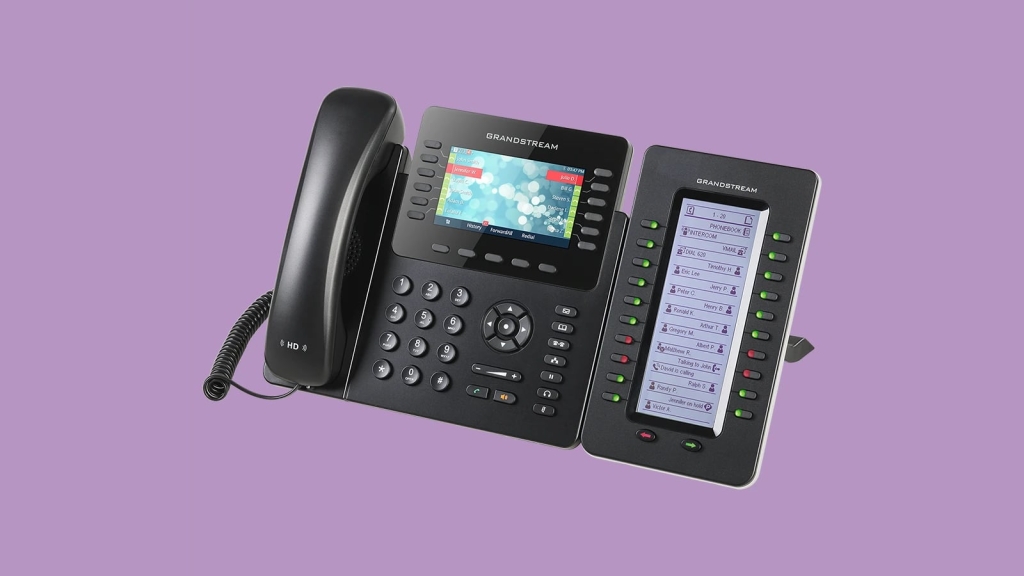
Critical Grandstream VoIP Phone Vulnerability Allows Unauthenticated Remote Code Execution and Silent Eavesdropping
In a shocking revelation that’s sending ripples through the cybersecurity community, researchers have uncovered a critical vulnerability in Grandstream GXP1600 series VoIP phones that could allow attackers to silently eavesdrop on business communications worldwide.
The Discovery That Changes Everything
A critical vulnerability (CVE-2026-2329) with a near-maximum CVSS score of 9.3 has been discovered in six models of Grandstream’s GXP1600 series VoIP phones. These devices are widely deployed across small and medium businesses, schools, hotels, and Internet Telephony Service Providers globally.
The affected models include:
- GXP1610
- GXP1615
- GXP1620
- GXP1625
- GXP1628
- GXP1630
All devices running firmware versions prior to 1.0.7.81 are vulnerable to this critical flaw.
The Silent Threat: How Attackers Can Listen In
What makes this vulnerability particularly alarming is its stealth capability. Even if a vulnerable device isn’t directly accessible from the internet, an attacker can pivot through other network hosts to reach it. The exploitation is completely silent—users would have no indication their communications are being intercepted.
“The scary part? Everything continues to work normally. Your phone looks and functions exactly as it should, but someone could be listening to every word,” explains a cybersecurity expert familiar with the vulnerability.
Technical Deep Dive: The Stack Overflow Nightmare
The vulnerability resides in the device’s web-based API service located at /cgi-bin/api.values.get, which shockingly requires no authentication in the default configuration. The API accepts a ‘request’ parameter containing colon-delimited identifiers that are parsed into a 64-byte stack buffer.
Here’s where it gets dangerous: the system performs no length check when copying characters into this buffer. An attacker can supply overly long input, causing a stack overflow that overwrites adjacent memory and gains control over critical CPU registers, including the Program Counter.
Breaking Through the Null Byte Barrier
Rapid7 researchers, who discovered this vulnerability, faced an interesting challenge during exploitation. CVE-2026-2329 initially allowed writing only a single null terminator byte during the overflow. However, the researchers ingeniously used multiple colon-separated identifiers to trigger the overflow repeatedly.
“Every time a colon is encountered, the overflow can be triggered a subsequent time via the next identifier,” the researchers explained. “We can leverage this, and the ability to write a single null byte as the last character in the current identifier being processed, to write multiple null bytes during exploitation.”
The Devastating Consequences
Successful exploitation enables attackers to achieve:
- Arbitrary OS command execution with root privileges
- Extraction of stored credentials for local users and SIP accounts
- Complete reconfiguration of the device to use malicious SIP proxies
- Silent eavesdropping on all voice communications
In demonstrations, the researchers developed a working Metasploit module that proves unauthenticated remote code execution as root is not just theoretical—it’s practical and achievable.
The Response Timeline: A Concerning Delay
The vulnerability disclosure timeline raises questions about vendor responsiveness. Researchers first contacted Grandstream on January 6, followed by a second attempt on January 20 when no response was received. Grandstream eventually addressed the issue on February 3 with firmware version 1.0.7.81.
Immediate Action Required
Users of vulnerable Grandstream products must act immediately. The technical details and Metasploit module are now public, meaning attackers worldwide can weaponize this vulnerability.
“We strongly advise applying the available security updates as soon as possible,” security professionals warn. “This isn’t a theoretical risk—this is an active threat that can be exploited right now.”
The Bigger Picture: VoIP Security Under Scrutiny
This discovery highlights a broader issue in the VoIP industry. As businesses increasingly rely on internet-based communication systems, the security of these devices becomes paramount. A vulnerability like CVE-2026-2329 doesn’t just compromise individual devices—it can expose entire organizational communications to surveillance.
The fact that a device used globally in business environments could be silently compromised without any visible signs demonstrates the critical need for security-by-design in communication infrastructure.
Tags: VoIP vulnerability, Grandstream security flaw, critical CVE-2026-2329, unauthenticated RCE, silent eavesdropping, VoIP phone hack, stack buffer overflow, business communication security, Metasploit module, cybersecurity threat, enterprise VoIP, remote code execution, SIP proxy attack, firmware update critical, network security breach
Viral Sentences:
- “Your business phone could be spying on you right now—and you’d never know.”
- “Critical 9.3 severity score means this vulnerability is almost as bad as it gets.”
- “Attackers can listen to your calls without leaving a trace.”
- “No authentication required—just point and exploit.”
- “The phone works perfectly while someone listens to everything.”
- “This isn’t a theoretical risk—attackers can weaponize this today.”
- “Your VoIP security might be the weakest link in your entire network.”
- “Stack overflow vulnerability in devices used by businesses worldwide.”
- “Silent surveillance through your office phone system.”
- “Firmware update isn’t optional—it’s mandatory for survival.”
,


Leave a Reply
Want to join the discussion?Feel free to contribute!