
Forest’s Strange Response to an Eclipse May Have a More Mundane Explanation : ScienceAlert
Forest Trees “Synced” During Eclipse—But Was It Science or Hype?
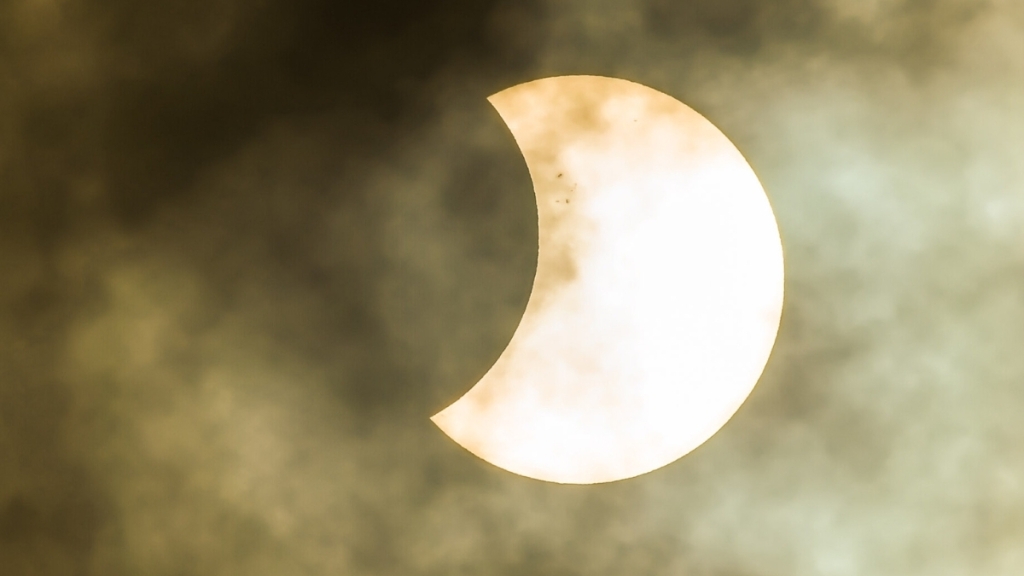
In April 2023, a team of Italian researchers published a study in the journal Royal Society Open Science that sent shockwaves through the scientific community—and beyond. Their claim? A grove of Norway spruce trees (Picea abies) in the Dolomite mountains appeared to “anticipate” a partial solar eclipse, displaying synchronized electrical signals across the forest before and during the celestial event. The study, which went viral on social media, suggested that older trees might be passing on “memories” of past eclipses to younger ones, sparking widespread fascination—and skepticism.
Now, a new analysis by ecologists Ariel Novoplansky and Hezi Yizhaq from Ben-Gurion University of the Negev in Israel is challenging the sensational interpretation. In their paper, published in Trends in Plant Science, the duo argues that the trees’ electrical activity was likely triggered by more mundane—but scientifically well-documented—factors: a passing thunderstorm, a drop in temperature, and several nearby lightning strikes. These environmental changes, they say, are known to cause similar electrical responses in plants, making the eclipse connection far less extraordinary.
“We’re not saying the trees weren’t responding to something,” Novoplansky explains. “But attributing it to an eclipse—without considering simpler explanations—is a leap into pseudoscience.”
The original study, which analyzed data from just three living trees and five stumps, claimed the spruce trees exhibited “individual and collective bioelectrical responses” to the eclipse. The researchers proposed that the trees were “sensing” the impending environmental change and coordinating a response, a theory that aligned with earlier research on plant anticipation of environmental stressors like drought.
However, Novoplansky and Yizhaq point out several flaws in this interpretation. First, solar eclipses are highly variable in their path, magnitude, and duration, making it impossible for trees to “remember” and predict them. Second, the gravitational changes associated with an eclipse would have been minimal—comparable to those during a new moon. Third, the partial eclipse in question only reduced sunlight by about 10.5% for two hours, a change far less dramatic than daily fluctuations caused by cloud cover.
“The eclipse was barely noticeable to the trees,” Novoplansky says. “Frequent changes in cloud cover at the study site cause much bigger swings in light and temperature.”
The researchers also question the methodology of the original study, which they argue was too limited in scope to draw broad conclusions about forest-wide communication. Instead, they suggest that the electrical signals were likely the result of individual trees responding to localized environmental stimuli, such as lightning strikes.
While the debate over tree communication and anticipation continues, one thing is clear: the field of plant electrophysiology is still in its infancy. “The electrical activity of trees is a real phenomenon,” Novoplansky acknowledges. “But claiming it encodes memory or collective responsiveness requires extraordinary evidence, which this study didn’t provide.”
As scientists continue to explore the mysteries of plant behavior, the forest remains a source of wonder—no pseudoscience required.
Tags:
SolarEclipse #TreeCommunication #PlantScience #Electrophysiology #NatureMysteries #ScienceDebate #ForestPhenomena #LightningStrikes #EnvironmentalScience #ViralScience #PlantAnticipation #Pseudoscience #ScientificControversy #NatureIsAmazing #TreeSyncing #EclipseEffects #PlantBehavior #ScientificSkepticism #NatureWonders #ScienceFacts
Viral Sentences:
“Trees ‘sync’ during eclipse—but was it science or hype?”
“The forest is wondrous enough without inventing irrational yet superficially fantastic claims.”
“Could a forest’s response to a solar eclipse have really been just a thunderstorm?”
“Plants have been known to ‘anticipate’ environmental changes—but can they predict eclipses?”
“Science or pseudoscience? The debate over tree communication heats up.”
“Nature’s mysteries: Are trees really talking to each other?”
“The truth behind the viral ‘tree syncing’ phenomenon.”
“Lightning strikes, not eclipses, may explain the forest’s electrical signals.”
“Plant science takes a controversial turn with claims of tree ‘memory.'”
“Debunking the myth: Why trees didn’t ‘anticipate’ the eclipse.”
,


Leave a Reply
Want to join the discussion?Feel free to contribute!