
Fresh understanding of the causes of migraine reveals new drug targets
New Wave of Migraine Treatments on the Horizon as Scientists Revisit Long-Dismissed Pathway
In a groundbreaking development that could transform the lives of over a billion people worldwide who suffer from migraines, researchers are revisiting a neurological pathway that was previously abandoned after failed drug trials. This renewed focus on substance P, a neuropeptide released by the trigeminal nerve, has yielded promising results that have the medical community buzzing with excitement.
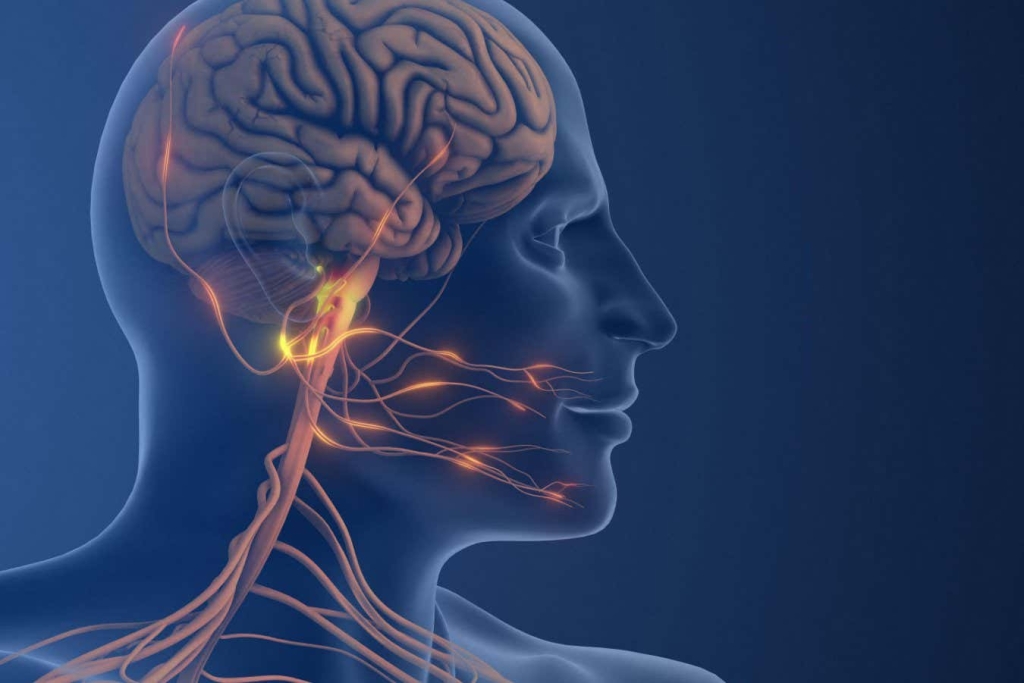
For decades, the trigeminal nerve has been implicated in migraines, with substance P playing a crucial role in inducing pain by dilating blood vessels, causing inflammation in the meninges (the thin membranes surrounding the brain), and amplifying pain signaling. However, after five experimental drugs targeting substance P showed no benefit over placebo in the late 1990s, the pathway was largely dismissed.
Now, a team led by Messoud Ashina at the University of Copenhagen has reignited interest in this approach. Their recent studies have demonstrated that infusions of substance P led to headaches in 71% of people who don’t typically experience migraines, along with dilation of the superficial temporal artery – a phenomenon linked to the condition. When the same experiment was conducted on migraine sufferers, a similarly sized effect was observed, further supporting substance P’s involvement in migraine pathology.
The key to this renewed interest lies in our improved understanding of substance P’s mechanisms. Previous drug trials likely failed because they only targeted one of substance P’s receptors: the neurokinin-1 receptor (NK1-R). We now know that substance P also binds to MRGPRX2 receptors, causing inflammation, and acts directly on sensory neurons to boost pain signals.
“This is a prime example of how new knowledge can open up treatment possibilities that were previously overlooked,” says Michael Moskowitz of Harvard University, who was instrumental in uncovering the role of the trigeminal nerve in migraines. “With our current ability to produce monoclonal antibodies that can block molecules directly, we have a much better chance of targeting the wide range of substance P effects.”
The potential of this approach is further bolstered by recent developments in the field. Earlier this month, Danish pharmaceutical company Lundbeck announced early results from a randomized controlled trial of its anti-PACAP monoclonal antibody, called bocunebart. According to the announcement, infusions of bocunebart significantly reduced monthly migraine days compared to a placebo. While full data is yet to be shared, this news has generated considerable excitement among researchers.
This shift in focus could potentially reduce our reliance on calcitonin gene-related peptide (CGRP) inhibitors, which have revolutionized migraine management since their approval in 2018. These treatments have halved the number of migraine days per month and shortened the duration of remaining attacks for many patients. However, they don’t work for up to 40% of people, leaving a significant portion of migraine sufferers without effective treatment options.
“We’re at an exciting juncture in migraine research,” says Peter Goadsby of King’s College Hospital in London, who discovered the role of CGRP in migraines in the 1990s. “Finding the next breakthrough that will benefit the hundreds of millions of people who don’t respond well to current therapies remains a crucial challenge.”
The medical community is now eagerly awaiting further evidence on the real-world effects of blocking these problematic peptides. Some researchers, like Moskowitz, suggest that blocking several pathways in combination may be the key to reducing the number of non-responders. However, others, like Lars Edvinsson of Lund University in Sweden, believe that while these new targets are promising, they may not have as big an impact as CGRP inhibitors.
“I don’t think [these targets] will replace CGRP,” says Edvinsson. “I see them more like the sprinkles on top of the ice cream – a valuable addition, but not the main event.”
As research in this field continues to advance, there is renewed hope for the millions of people worldwide who struggle with debilitating migraines. The potential to provide relief for the 1 in 3 people with the condition who don’t respond to current treatments could be life-changing. With ongoing studies and the promise of new therapies on the horizon, we may be witnessing the dawn of a new era in migraine treatment – one that could finally bring relief to those who have long suffered in silence.
Tags:
migraine #headache #neurology #substanceP #trigeminalnerve #medicalbreakthrough #painrelief #CGRP #PACAP #monoclonalantibodies #research #health #pharmaceuticals #Lundbeck #Copenhagen #Harvard #King’sCollegeLondon #LundUniversity #painmanagement #inflammation #neuromedicine #drugdevelopment #clinicaltrials #placebo #medicalresearch #brainhealth #chronicpain #treatmentoptions #nonresponders #medicalinnovation #healthnews #science #technology #viral #trending #breakthrough
Viral Sentences:
- “Scientists are revisiting a long-dismissed pathway in the quest for better migraine treatments.”
- “New research suggests that substance P could be the key to unlocking relief for millions of migraine sufferers.”
- “The medical community is buzzing with excitement over potential new migraine therapies.”
- “Could monoclonal antibodies be the game-changer in migraine treatment?”
- “A billion people worldwide could benefit from this groundbreaking research.”
- “The future of migraine treatment may lie in targeting multiple pathways simultaneously.”
- “From failed drug trials to renewed hope: the story of substance P in migraine research.”
- “Lundbeck’s anti-PACAP monoclonal antibody shows promising results in early trials.”
- “The quest for better migraine treatments takes an exciting new turn.”
- “Could this be the breakthrough that finally brings relief to non-responders?”
,


Leave a Reply
Want to join the discussion?Feel free to contribute!