
From blood tests to orbital labs: Europe’s next generation of cancer tech
Europe’s Cancer-Fighting Startups: The Future of Oncology is Already Here
As the world marks World Cancer Day on February 4, the grim statistics remain sobering: cancer claims approximately 10 million lives annually—more than HIV/AIDS, malaria, and tuberculosis combined. Yet amidst this global health crisis, a wave of European innovation is transforming how we detect, treat, and manage cancer, offering hope where once there was only despair.
The Blood Test That Could Revolutionize Lung Cancer Detection
In Luxembourg, Aerion Bioscience is developing a groundbreaking blood test that could fundamentally change how we screen for lung cancer. Unlike current detection methods that rely heavily on expensive CT scans and invasive biopsies—both of which involve radiation exposure and aren’t suitable for widespread population screening—Aerion’s approach analyzes specific protein patterns circulating in the bloodstream.
This isn’t just another diagnostic tool; it’s a potential paradigm shift. Imagine a future where a simple blood draw during your annual check-up could flag high-risk patients months or even years earlier than current methods allow. When it comes to cancer treatment, timing isn’t just everything—it’s often the difference between life and death. Earlier detection means treatment can begin when it’s most effective, potentially saving hundreds of thousands of lives annually.
The technology builds upon biomarker research originally developed at the Luxembourg Institute of Health, demonstrating how academic research can successfully transition into practical clinical applications. By designing their platform specifically for clinical laboratory use rather than purely experimental settings, Aerion is positioning itself at the forefront of the next generation of cancer diagnostics.
The Blue Box: Breast Cancer Screening Without the Squeeze
Breast cancer remains one of the most common cancers worldwide, yet traditional screening methods come with significant limitations. Mammograms can be uncomfortable, involve radiation exposure, and struggle with accuracy in women with dense breast tissue—affecting approximately 40% of women screened.
Enter The Blue Box, a London-based deep-tech biomedical startup that’s reimagining breast cancer screening entirely. Their innovative solution uses a simple urine sample instead of traditional mammography, combining a proprietary electronic nose with artificial intelligence to detect cancer-related volatile biomarkers.
The technology works by identifying subtle molecular signatures that cancer cells release into the body. The electronic nose captures these volatile organic compounds, while machine learning algorithms analyze the patterns, recognizing the fingerprint of early-stage disease. This pain-free, low-cost, radiation-free approach could outperform traditional mammograms, particularly for women with dense breast tissue where conventional screening often falls short.
Perhaps most exciting is the potential for accessibility. While traditional screening requires specialized equipment and trained radiologists, The Blue Box’s technology could eventually enable reliable screening through local clinics or even at-home solutions, democratizing access to life-saving early detection.
Engineering T Cells to Conquer Solid Tumors
For decades, immunotherapy has shown remarkable success against blood cancers, but solid tumors have remained stubbornly resistant. Captain T Cell, based in Germany, is tackling this challenge head-on with next-generation T cell therapies specifically designed to attack solid tumors.
The company’s approach involves engineering tumor-specific T cells that express optimized T-cell receptors (TCRs). These aren’t ordinary T cells—they’re enhanced with superior persistence and the remarkable ability to survive and attack cancer cells even within the hostile tumor microenvironment, where traditional immune cells often become exhausted or suppressed.
What sets Captain T Cell apart is their versatile platform that supports both personalized autologous therapies (using a patient’s own cells) and “off-the-shelf” allogeneic products that can be used across multiple patients. This dual approach could dramatically reduce costs and waiting times while maintaining the precision needed for effective cancer treatment.
Predicting Cancer Treatment Success Before It Begins
Perhaps the most frustrating aspect of cancer treatment isn’t just its difficulty—it’s the uncertainty. Will this particular drug work for this particular patient? Currently, we often don’t know until after months of treatment and significant side effects. Concr, a London-based biotech company, is using technology originally developed for astrophysics to eliminate this guesswork.
Their FarrSight platform creates digital twins—sophisticated simulations of a patient’s molecular biology—to predict which treatments will work best for individual patients. This isn’t theoretical modeling; it’s practical, actionable intelligence that helps oncologists make better decisions from day one.
The implications extend beyond individual patient care. By helping drug developers design more effective clinical trials, Concr’s technology could accelerate the development of new cancer treatments while reducing the staggering 96% failure rate that plagues drug development. Their partnerships with major players like the NHS, Roche, and the Institute of Cancer Research underscore the transformative potential of their approach.
Fighting Chemotherapy’s Hidden Costs
While chemotherapy remains one of our most powerful weapons against cancer, its side effects can be devastating. Hair loss and peripheral nerve damage affect millions of patients, often causing psychological trauma that lingers long after treatment ends.
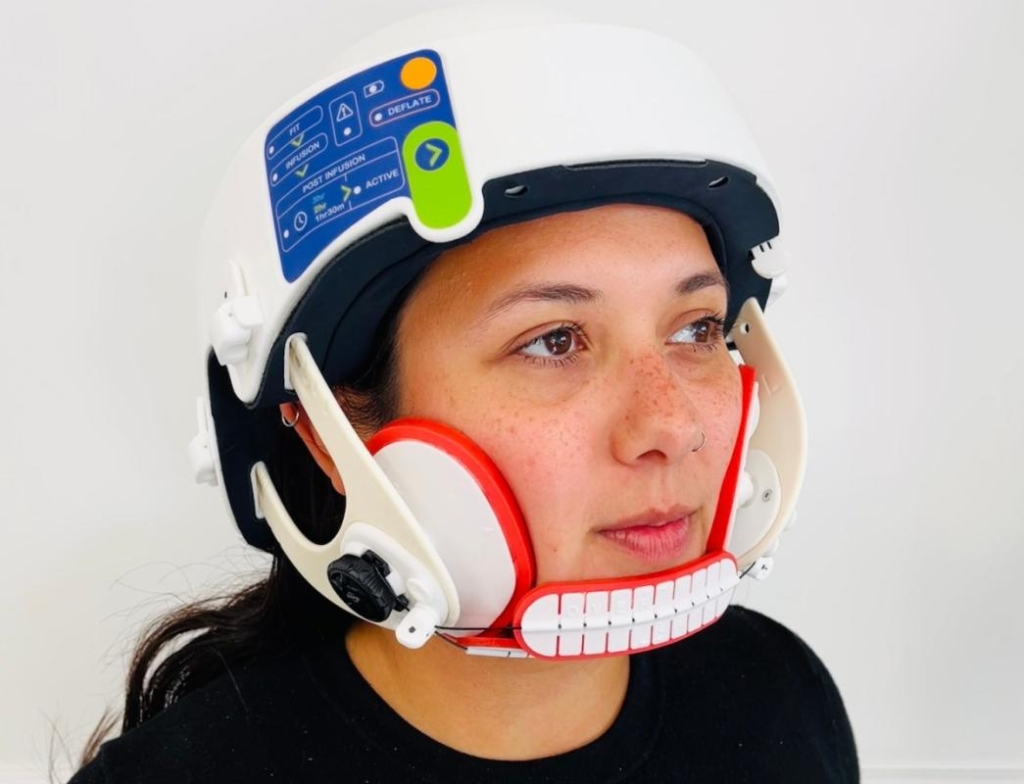
Luminate Medical, based in Ireland, is addressing these challenges with innovative wearable medical devices. Their flagship products use targeted compression technology to limit how much chemotherapy reaches certain parts of the body, protecting hair follicles and peripheral nerves without compromising the treatment’s effectiveness against cancer cells.
But Luminate’s vision extends beyond managing side effects. They’re working to fundamentally change how cancer care is delivered, developing infusion and monitoring systems that could allow certain low-risk treatments to be administered remotely under clinical supervision. This shift from hospital-based to home-based care could improve quality of life for millions of patients while reducing the burden on healthcare systems.
Taking Cancer Research to New Heights—Literally
Sometimes the most innovative solutions come from the most unexpected places. SPARK Microgravity, a German startup, is developing Europe’s first dedicated commercial orbital cancer lab, bringing cancer research to the microgravity environment of low Earth orbit.
The rationale is scientifically sound: microgravity creates unique conditions for studying cancer biology that simply can’t be replicated on Earth. In the absence of gravity, cells grow in three dimensions more naturally, forming structures that better mimic actual tumors. This environment enables advanced 3D tumor growth models, more accurate drug screening, and personalized oncology studies that could reveal biological behaviors and therapeutic targets invisible in traditional laboratory settings.
By making space-based research accessible without requiring researchers to manage their own space missions, SPARK Microgravity is opening an entirely new frontier in cancer research. The potential discoveries could transform our understanding of how cancer develops and spreads, leading to treatments we can’t yet imagine.
The Viral Impact: Why These Innovations Matter Now
These European startups aren’t just developing interesting technologies—they’re addressing some of the most pressing challenges in global cancer care. Their work represents a fundamental shift from reactive to proactive oncology, from one-size-fits-all treatments to personalized precision medicine, from hospital-centric care to patient-centered solutions.
The timing couldn’t be more critical. As cancer rates continue to rise globally, particularly in developing nations where healthcare infrastructure is limited, these innovations offer scalable solutions that could reach millions who currently lack access to adequate cancer care.
What makes this European innovation ecosystem particularly powerful is its diversity. From blood tests and urine analysis to space-based research and wearable devices, these companies are attacking cancer from every angle. They’re proving that the future of oncology isn’t about finding a single miracle cure—it’s about developing an integrated ecosystem of technologies that work together to detect earlier, treat more effectively, and support patients through every stage of their journey.
As we observe World Cancer Day, these startups remind us that while cancer remains one of humanity’s greatest challenges, our capacity for innovation and compassion continues to grow. The war on cancer isn’t being fought in distant laboratories alone—it’s being waged by brilliant minds across Europe who understand that every percentage point improvement in detection rates, every month of extended survival, and every reduction in treatment side effects represents thousands of lives saved and families kept whole.
The future of cancer care is being written today, not in some distant tomorrow. And thanks to these European innovators, that future looks increasingly bright.
Tags & Viral Phrases
Cancer detection breakthrough, European health tech revolution, blood test for lung cancer, AI-powered breast cancer screening, T cell therapy for solid tumors, personalized cancer treatment, chemotherapy side effects solutions, space-based cancer research, World Cancer Day innovation, next-generation oncology, non-invasive cancer diagnostics, cancer care at home, orbital cancer laboratory, predictive cancer medicine, biotech startup success stories, fighting cancer with technology, future of cancer treatment, European cancer research, medical device innovation, precision oncology solutions, cancer survival rates improvement, accessible cancer screening, revolutionary cancer diagnostics, immunotherapy advancements, cancer research frontier, healthcare technology transformation, life-saving medical innovations, cancer care accessibility, breakthrough cancer technologies
,

Leave a Reply
Want to join the discussion?Feel free to contribute!